



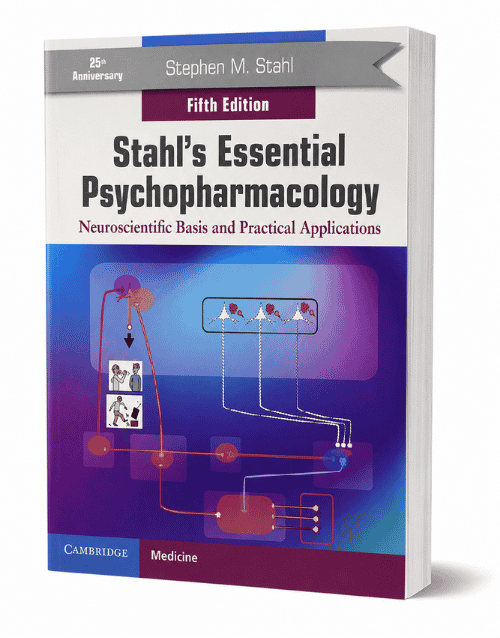





Understanding psychiatric medication requires more than memorizing drug names. Stahl’s Essential Psychopharmacology 5th Edition explains the neuroscience behind how psychotropic medications work, connecting brain chemistry, neural pathways, receptor activity, and psychiatric conditions in a clinically relevant framework. Written by Stephen M. Stahl and published by Cambridge University Press, this textbook is titled Stahl’s Essential Psychopharmacology: Neuroscientific Basis and Practical Applications. ISBN 9781108971638 identifies the fifth-edition paperback for readers seeking this specific publication.
A central focus of the book is chemical neurotransmission and the biological mechanisms through which medications influence the nervous system. It examines neurotransmitters, transporters, receptors, enzymes, and ion channels as targets of psychopharmacological drug action. By connecting these mechanisms with clinical applications, the text helps readers build a more structured understanding of why different medication classes affect mood, perception, cognition, sleep, and behavior in different ways.
The book devotes substantial attention to psychosis and schizophrenia, exploring the roles of dopamine, serotonin, and glutamate in relevant neurotransmitter networks. Separate chapters examine antipsychotic medications, antidepressants, and mood stabilizers alongside the neurobiology of mood disorders. This organization allows readers to study drug mechanisms in relation to the conditions they are used to treat, rather than approaching pharmacology as an isolated list of medication classes.
Beyond psychosis and mood disorders, the fifth edition addresses anxiety, trauma, chronic pain, sleep and wakefulness disorders, attention-deficit/hyperactivity disorder (ADHD), dementia, impulsivity, compulsivity, and addiction. Its coverage of histamine, orexin, acetylcholine, norepinephrine, and gamma-aminobutyric acid (GABA) illustrates how different neurotransmitter systems contribute to the discussion of psychiatric and neurological conditions. The book also incorporates revised and expanded visual material, using diagrams and illustrations to help explain biological processes that can be difficult to follow through text alone.
Stahl’s Essential Psychopharmacology: Neuroscientific Basis and Practical Applications (9781108971638) is intended for readers who want to connect foundational neuroscience with clinical psychopharmacology. Psychiatrists, psychiatric trainees, clinical psychologists, neuroscience students, researchers, and other mental health professionals may use it for advanced study, teaching, and professional reference. Its combination of biological explanations and treatment-related discussion makes it relevant to readers developing a deeper understanding of psychotropic medication mechanisms. It is an educational resource, not a substitute for individualized clinical assessment or prescribing guidance.
For buyers searching for Stahl’s Essential Psychopharmacology Fifth Edition, this paperback provides a focused reference on the scientific principles underlying psychiatric drug treatment. The fifth edition brings together thirteen chapters spanning neurotransmission, medication mechanisms, and major clinical subject areas, followed by selected references and an index. If you need this specific edition for coursework, professional learning, or a clinical reference library, verify the title, edition, format, and ISBN before ordering to distinguish it from related Stahl titles and prescribing handbooks.
There are no reviews yet.