



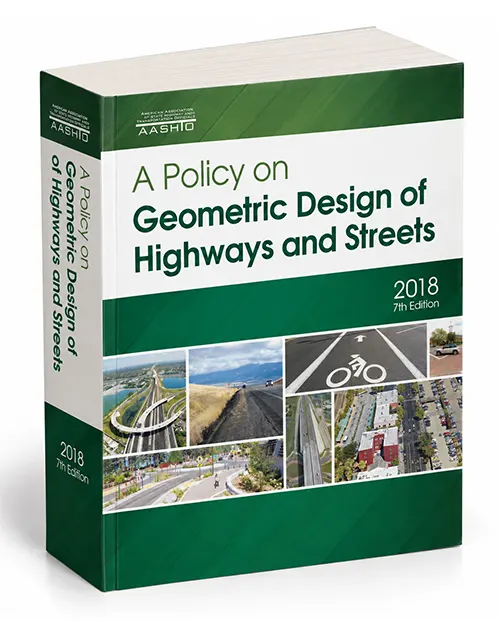



A Policy on Geometric Design of Highways and Streets, 7th Edition (2018) is an essential technical reference published by the American Association of State Highway and Transportation Officials (AASHTO). Commonly known as the AASHTO Green Book, this publication presents established practices and research for the geometric design of highways and streets. It is intended to support transportation engineers, highway designers, civil engineering professionals, and students working with roadway planning and infrastructure design.
The seventh edition introduces an updated framework for geometric design that emphasizes flexibility, multimodal transportation, and performance-based decision-making. It helps engineers consider the different needs of road users and develop design solutions that account for project-specific conditions, operational requirements, and surrounding environments.
Comprehensive Highway and Street Design Guidance
Geometric design is a fundamental component of transportation engineering. It involves determining the physical layout of roadways, including alignment, roadway width, cross sections, curves, grades, intersections, and connections between roads. These design elements influence traffic operations, accessibility, safety, and the overall functionality of transportation infrastructure.
The AASHTO Green Book provides guidance for evaluating these elements and understanding how they work together within a roadway system. It supports engineering decisions by presenting established design practices supplemented by relevant research. The guidance is intended to help professionals assess different design constraints and develop appropriate solutions for individual projects.
Updated Framework for Geometric Design
A major feature of the 2018 seventh edition is its emphasis on a more flexible and context-sensitive approach to roadway design. Rather than relying exclusively on traditional roadway classifications, the book also considers the surrounding context in which a road operates.
The framework recognizes contexts such as rural areas, rural towns, suburban areas, urban areas, and urban cores. These classifications help designers consider the relationship between roadways, land use, surrounding communities, and the different transportation modes that use the network.
This approach is useful when developing designs that must balance mobility, accessibility, operational needs, and the character of the surrounding environment. It encourages engineers to evaluate individual projects according to their specific objectives and constraints.
Roadway Classification and Design Criteria
The publication covers traditional roadway functional classifications, including local roads and streets, collector roads, arterials, and freeways. These classifications provide a foundation for understanding the different roles that roadways perform within a transportation network.
The book also addresses design controls and criteria, helping professionals understand the factors that influence geometric design decisions. These considerations are important when evaluating roadway alignment, cross-section characteristics, design elements, and the relationship between physical roadway features and traffic operations.
By consulting these topics, engineers and students can develop a clearer understanding of how roadway classifications and project requirements influence design choices.
Cross Sections, Intersections, and Interchanges
Roadway cross sections and intersection layouts are important components of transportation infrastructure. The Green Book addresses cross-section elements and provides guidance for the design of different roadway types, including local streets, collector roads, arterials, and freeways.
It also covers intersections and grade separations, including interchanges. These subjects help readers understand the geometric considerations involved when roadways meet, cross, or connect with one another.
The publication’s coverage of these topics makes it a useful reference for professionals involved in roadway improvement projects, transportation planning, infrastructure development, and the evaluation of existing road networks.
Multimodal Transportation Considerations
Modern transportation projects often need to accommodate more than motor vehicles. Pedestrians, cyclists, public transportation users, and other road users may have different needs within the same roadway environment.
The seventh edition’s updated framework recognizes the relationship between geometric design elements and multiple transportation modes. It also discusses how roadway design features relate to traffic operations. This perspective helps designers consider the broader function of a roadway rather than viewing each design element in isolation.
For transportation professionals, this context-sensitive approach can support more informed discussions about accessibility, roadway use, and the interaction between infrastructure and its surrounding community.
Applications in Transportation Engineering
A Policy on Geometric Design of Highways and Streets can support a variety of professional and academic activities. Engineers may consult it during roadway design, infrastructure planning, design review, and the evaluation of alternative geometric configurations. Transportation agencies and engineering organizations may also use it as a technical reference when developing or reviewing roadway projects.
Civil engineering students can use the Green Book to become familiar with established highway design principles and terminology. It can also support coursework, independent study, professional development, and preparation for transportation engineering examinations.
Because actual design decisions depend on applicable regulations, project conditions, and agency requirements, users should consult the relevant governing standards and project-specific guidance when applying the publication to real-world work.
Who Should Use the AASHTO Green Book?
This publication is suitable for highway engineers, transportation planners, civil engineers, roadway designers, consulting engineering firms, public transportation agencies, infrastructure professionals, and students studying transportation engineering.
It is particularly useful for readers who need a structured reference on highway and street geometric design, roadway classifications, cross-section elements, intersections, freeways, and interchanges.
A Policy on Geometric Design of Highways and Streets, 7th Edition (2018) is a valuable addition to a professional engineering library or academic reference collection. Its updated design framework and comprehensive coverage make it a practical resource for understanding established geometric design practices and evaluating the considerations involved in planning and designing highway and street infrastructure.
Key Features:
- Published by the American Association of State Highway and Transportation Officials (AASHTO)
- Known as the AASHTO Green Book
- Seventh edition published in 2018
- Provides guidance on highway and street geometric design
- Introduces a flexible, multimodal, and performance-based design framework
- Covers roadway functional and context classifications
- Addresses design controls, criteria, and cross-section elements
- Includes guidance on local roads, collectors, arterials, and freeways
- Covers intersections, grade separations, and interchanges
- Useful for transportation engineers, civil engineering students, and infrastructure professionals
There are no reviews yet.