



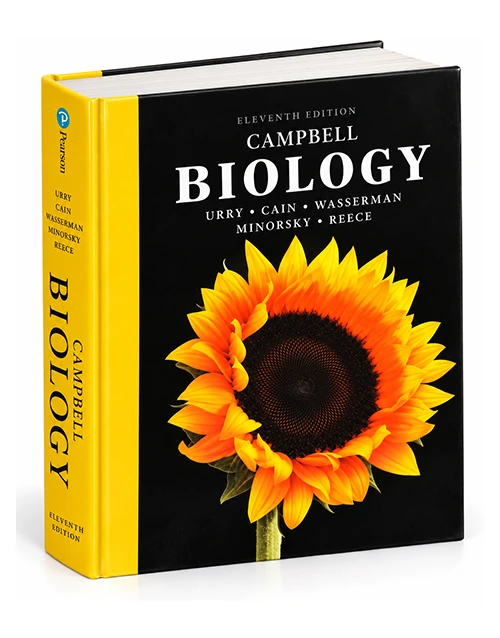



Campbell Biology 11th Edition by Lisa A. Urry, Michael L. Cain, Steven A. Wasserman, Peter V. Minorsky, and Jane B. Reece is a comprehensive textbook designed to help students develop a strong understanding of biological science. Published by Pearson, this edition presents essential biology concepts through clear explanations, detailed illustrations, scientific examples, and learning resources that support students throughout their academic studies.
Campbell Biology 11th Edition is suitable for college and university students studying introductory biology and related life science subjects. It explores the fundamental principles of life, from the molecular structures that support living organisms to the complex interactions between organisms and their environments. The book’s organized approach helps readers build foundational knowledge before progressing to more advanced biological topics.
Comprehensive Coverage of Biological Concepts
Biology involves the study of living organisms, their structures, functions, development, and interactions. Campbell Biology introduces these concepts in a structured manner, helping students understand how different biological systems connect. The textbook covers essential principles that are relevant to introductory biology courses, making it a useful resource for coursework, independent study, and examination preparation.
Readers can explore the chemical foundations of life, the organization of biological systems, and the processes that enable organisms to survive and reproduce. These foundational concepts provide a starting point for understanding more specialized subjects, including molecular biology, genetics, physiology, evolution, and ecology.
Cell Biology and Molecular Processes
Cell biology is an important area of study covered in Campbell Biology 11th Edition. Students can learn about cell structure, cellular membranes, organelles, energy transformations, cellular respiration, photosynthesis, and cell communication. These topics explain how cells perform essential functions and how cellular activities contribute to the operation of larger biological systems.
The book also introduces molecular concepts that help students understand the relationship between biological structures and their functions. By studying these processes, readers can develop a stronger understanding of how living organisms obtain energy, maintain internal organization, and respond to their surroundings.
Genetics, DNA, and Heredity
Understanding genetics is essential for studying modern biology. Campbell Biology 11th Edition explores the principles of heredity, DNA, gene expression, chromosome behavior, and genetic variation. These topics help students understand how characteristics are transmitted between generations and how genetic information influences the development and functioning of organisms.
The textbook also connects genetic principles with broader biological questions, helping readers understand the relationships between molecular processes, inheritance, and variation within populations. This foundation is useful for students pursuing further studies in genetics, biotechnology, medicine, and other life science disciplines.
Evolution and the Diversity of Life
Evolution is another central topic in Campbell Biology. The book introduces natural selection, adaptation, evolutionary relationships, and the processes responsible for changes in populations over time. These concepts help students understand the scientific explanation for the diversity of living organisms and the relationships between different forms of life.
By exploring evolutionary principles, readers can learn how biological characteristics change across generations and how environmental conditions influence populations. This knowledge also supports a broader understanding of biodiversity and the relationships among organisms.
Organismal Biology and Physiology
Campbell Biology 11th Edition examines biological structures and functions across different groups of organisms. Its subject coverage supports the study of plant biology, animal biology, reproduction, development, and physiological processes.
Students can build an understanding of how organisms obtain nutrients, transport materials, exchange gases, regulate internal conditions, and respond to environmental changes. These concepts provide a foundation for studying anatomy, physiology, zoology, botany, and related scientific disciplines.
Ecology and Environmental Biology
Ecology explores the relationships between organisms and their environments. Campbell Biology introduces important ecological principles, including population dynamics, community interactions, ecosystem processes, energy flow, nutrient cycling, and biodiversity.
These subjects help students understand how organisms interact with one another and how environmental conditions influence biological communities. The ecological material also provides context for studying conservation, environmental challenges, and the importance of maintaining healthy ecosystems.
Visual Learning and Academic Study
The 11th Edition uses an engaging educational approach that combines explanatory text with illustrations, photographs, and learning activities. Visual learning resources can help students understand complex processes that may be difficult to grasp through text alone.
The book is designed to support both classroom instruction and individual study. Students can use it to review lecture topics, strengthen their understanding of biological terminology, prepare for examinations, and develop a foundation for advanced science courses. Its broad subject coverage makes it a practical reference for students who need to study multiple areas of introductory biology within one textbook.
Who Should Use Campbell Biology 11th Edition?
This textbook is suitable for undergraduate biology students, life science majors, and learners enrolled in general biology courses. It may also be useful to students pursuing related academic programs who need a detailed introduction to biological principles.
Whether you are studying cell biology, genetics, evolution, organismal biology, or ecology, Campbell Biology 11th Edition offers a broad educational resource for developing scientific knowledge and strengthening your understanding of life sciences.
Campbell Biology 11th Edition is a valuable addition to a college or university textbook collection. With its comprehensive subject coverage, organized explanations, and visual learning approach, it helps students explore the major principles of biology and build a foundation for further academic study.
Key Features:
- Comprehensive introduction to biology and life sciences
- Detailed coverage of cell biology and molecular processes
- Explains genetics, DNA, heredity, and biological variation
- Introduces evolution, natural selection, and biodiversity
- Explores plant biology, animal biology, and physiology
- Covers ecological principles and environmental relationships
- Uses illustrations and visual learning resources to support understanding
- Suitable for college and university biology courses
- Useful for coursework, revision, and examination preparation
- Published by Pearson for academic learning and reference
There are no reviews yet.