



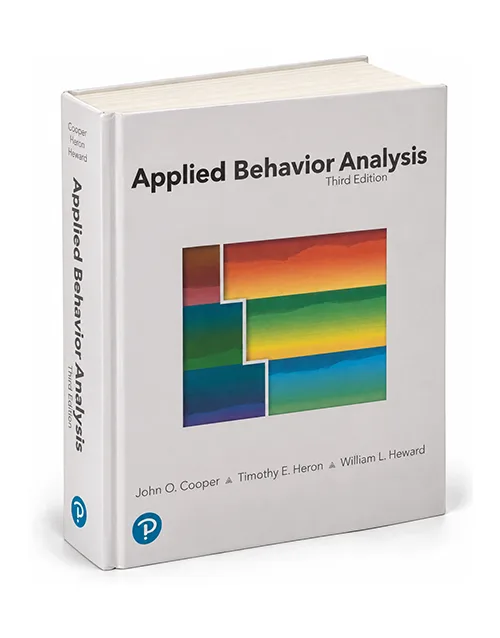







Behavior analysis turns observations of behavior into systematic ways to understand learning and evaluate change. The Applied Behavior Analysis 3rd Edition Book By Cooper, Heron and Heward explores the scientific principles and research methods behind this field, connecting foundational concepts with practical applications. Written by John O. Cooper, Timothy E. Heron, and William L. Heward and published by Pearson, this widely used textbook examines how behavior is defined, measured, analyzed, and changed through evidence-based procedures. ISBN 9780134752556 identifies the third edition for readers seeking this specific title.
A key part of the book is its explanation of how environmental conditions influence behavior. Readers study reinforcement, punishment, stimulus control, motivating operations, and verbal behavior to understand the processes involved in learning and behavior change. Rather than treating these ideas as isolated definitions, the text connects behavioral principles with the decisions practitioners make when selecting goals, assessing outcomes, and evaluating interventions. This foundation is relevant to students learning the discipline as well as professionals strengthening their understanding of behavioral science.
Measurement and research methodology receive substantial attention throughout the textbook. Topics include defining target behaviors in observable terms, selecting appropriate measurement procedures, assessing the quality of collected data, and interpreting graphical displays. The book also examines single-case experimental designs, including reversal, multielement, multiple-baseline, and changing-criterion designs. These methods help readers understand how behavior analysts evaluate whether an intervention is associated with meaningful behavioral change. Functional behavior assessment, generalization, maintenance, and ethical practice further connect research concepts with professional decision-making.
The third edition also expands the discussion of equivalence-based instruction and emergent learning through dedicated chapters. These subjects explore how learned relations between stimuli can support the development of additional skills without requiring every response to be taught directly. Alongside coverage of theoretical foundations, basic research, and applied research, this material gives readers a broader view of the scientific developments informing applied behavior analysis. The textbook’s detailed explanations make it suitable for sustained study rather than quick reference alone.
For students in psychology, special education, and behavior analysis, the applied behaviour analysis 3rd edition book (9780134752556) offers a structured introduction to the terminology, principles, and methods used across the discipline. Graduate students, behavior analysts, educators, researchers, and professionals working in behavioral services may also consult it when studying assessment, intervention planning, experimental methods, and ethical responsibilities. Its connection to the Behavior Analyst Certification Board (BACB) task list referenced for the third edition is also relevant to readers studying professional behavior-analysis competencies.
If you need a substantial academic reference on applied behavior analysis, Cooper, Heron, and Heward’s 3rd edition brings behavioral theory, measurement, experimental evaluation, and practical applications together in one textbook. It can support university coursework, independent study, and professional development in behavior analysis. Before ordering, confirm the edition and ISBN against your course reading list or reference requirements to ensure you receive the intended publication rather than a different edition or digital version.
There are no reviews yet.