

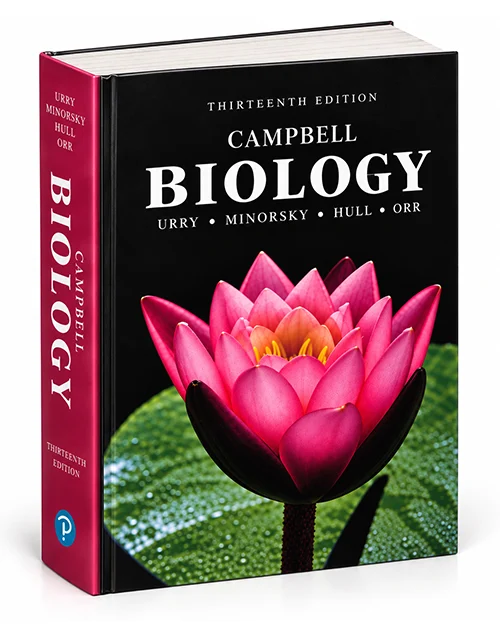


Campbell Biology 13th Edition by Jane B. Reece, Lisa A. Urry, Michael L. Cain, Steven A. Wasserman, Peter V. Minorsky, and Rebecca B. Orr is a comprehensive introductory biology textbook designed to help students develop a strong understanding of the fundamental principles of biology and the life sciences. Widely used in college and university biology courses, this edition combines detailed explanations, engaging examples, scientific illustrations, and an organized presentation to make complex biological concepts easier to understand and apply.
Campbell Biology 13th Edition begins with the fundamental principles that form the foundation of biological science. Students are introduced to the characteristics of life, the organization of living systems, scientific inquiry, and the chemical principles that support biological processes. The book provides a strong foundation for understanding how biological systems work at molecular, cellular, organismal, and ecological levels.
One of the major strengths of this biology textbook is its comprehensive coverage of cell biology. Readers can explore the structure and function of cells, membranes, cellular organelles, energy transformation, cellular respiration, photosynthesis, and cell communication. These topics help students understand how cells maintain life and how individual cellular processes contribute to the functioning of larger organisms. Clear explanations and detailed visual representations support students as they learn challenging biological mechanisms and processes.
The textbook also provides extensive coverage of genetics and heredity. Students can learn about chromosomes, DNA structure, DNA replication, gene expression, genetic inheritance, mutations, biotechnology, and the molecular basis of genetics. These topics are essential for understanding how traits are passed from one generation to another and how changes in genetic material can influence organisms and populations.
Campbell Biology 13th Edition also explores the principles of evolution, one of the central concepts of modern biology. The book explains natural selection, adaptation, population genetics, speciation, evolutionary relationships, and the evidence supporting evolutionary theory. By connecting evolutionary concepts with real biological examples, the textbook helps students understand how populations change over time and how the diversity of life has developed.
Another important area covered in this edition is biological diversity and organismal biology. Students can study the major groups of organisms and examine their structures, functions, evolutionary relationships, and ecological roles. The material provides opportunities to understand how organisms interact with their environments and how biological characteristics are connected to survival and reproduction.
The book also offers detailed coverage of plant biology and animal biology. Topics include plant structure and function, plant nutrition, reproduction, transport systems, animal form and function, nervous systems, hormonal regulation, circulation, digestion, respiration, immunity, and reproduction. These chapters provide students with a broader understanding of how organisms maintain homeostasis and respond to changing environmental conditions.
Ecology is another significant component of Campbell Biology 13th Edition. Students can explore population ecology, community interactions, ecosystems, energy flow, nutrient cycling, biodiversity, conservation biology, and global environmental challenges. The ecological concepts presented in the book help connect biological principles to real-world issues involving ecosystems, natural resources, climate, and conservation.
The textbook is designed with students in mind, using a combination of structured explanations and visual learning elements to support comprehension and review. Biology can involve many interconnected concepts, terminology, diagrams, and processes, and the organization of this edition helps students move from basic principles toward more advanced topics. The visual presentation is particularly useful for students who benefit from diagrams and illustrations when studying cellular processes, genetics, anatomy, physiology, evolution, and ecology.
Campbell Biology 13th Edition can be a valuable resource for students enrolled in introductory biology, general biology, pre-medical programs, life science courses, and other science-related academic programs. It can also serve as a useful reference for independent study, coursework, homework, laboratory preparation, and exam review. Its broad subject coverage makes it suitable for students who need a single comprehensive biology textbook throughout an introductory course.
Whether you are learning biology for the first time, reviewing important concepts before an examination, completing college coursework, or looking for a reliable academic reference, Campbell Biology 13th Edition provides extensive coverage of the major principles and disciplines within modern biology. From molecules and cells to genetics, evolution, organisms, and ecosystems, the book connects individual biological concepts to the larger picture of how life functions and changes.
Key Features:
- Comprehensive introduction to modern biology and life sciences
- Detailed coverage of cell biology, genetics, evolution, ecology, and biodiversity
- Explains fundamental biological principles in an organized and accessible format
- Includes topics covering molecular biology, cellular processes, heredity, and gene expression
- Provides extensive coverage of evolution, natural selection, and biological diversity
- Explores plant and animal structure, function, reproduction, and physiology
- Includes important concepts in population, community, and ecosystem ecology
- Useful for college and university introductory biology courses
- Suitable for coursework, studying, exam preparation, and academic reference
- Helpful visual approach for understanding complex biological processes and relationships
Campbell Biology 13th Edition is an excellent choice for students seeking a detailed and comprehensive biology textbook that brings together the essential concepts of modern biological science. Its broad coverage and structured approach make it a practical academic resource for building foundational biology knowledge and developing a deeper understanding of the science of life.
There are no reviews yet.