

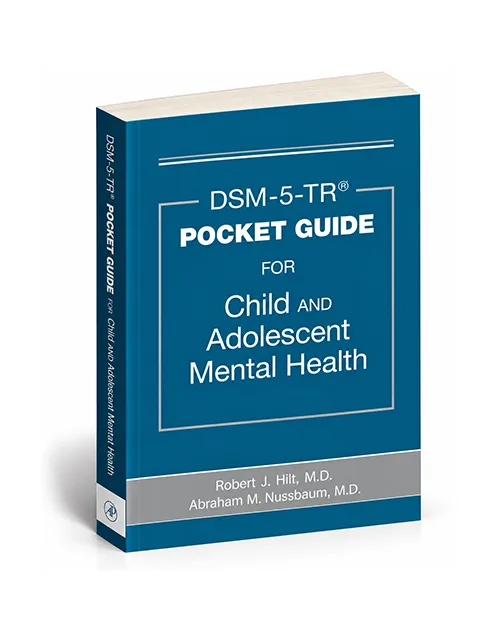


DSM-5-TR Pocket Guide for Child and Adolescent Mental Health
DSM-5-TR Pocket Guide for Child and Adolescent Mental Health by Robert J. Hilt and Abraham M. Nussbaum is a practical clinical reference designed to support the assessment, diagnosis, and treatment of mental health concerns in children and adolescents. Published by American Psychiatric Association Publishing, this guide translates DSM-5-TR diagnostic concepts into an accessible framework for professionals working with young people in different healthcare and community settings.
Evaluating children’s and adolescents’ mental health requires attention to developmental stages, emotional experiences, family relationships, social environments, and clinical symptoms. This book connects diagnostic principles with practical interviewing techniques and person-centered approaches to help professionals understand a young person’s needs and develop appropriate care plans.
Understand DSM-5-TR Diagnosis in Young People
The guide introduces common DSM-5-TR diagnostic concepts and explains how they can be considered when evaluating children and adolescents. It helps readers connect diagnostic terminology with the symptoms, experiences, and developmental characteristics that may emerge during a clinical assessment.
Rather than treating diagnosis as a simple checklist, the book emphasizes understanding the young person’s presentation and circumstances. It encourages clinicians to gather relevant information, consider developmental context, and use diagnostic criteria as part of a broader professional assessment.
Build a Therapeutic Alliance with Children and Adolescents
Establishing a therapeutic alliance is an important starting point when working with young people. The book includes guidance on beginning clinical relationships, creating a supportive environment, and encouraging children and adolescents to participate in conversations about their mental health.
Its person-centered approach recognizes that young clients may have different communication styles, levels of understanding, and comfort with clinical settings. The material helps professionals consider how to engage young people respectfully while developing trust and encouraging meaningful participation.
Conduct Effective Diagnostic Interviews
A major feature of the book is its practical guidance for conducting diagnostic interviews of different lengths. Dedicated sections address 15-minute, 30-minute, and 45-minute interviews, helping professionals organize conversations according to the time available and the purpose of the encounter.
The guide discusses how to gather important clinical information, explore presenting concerns, and work toward an appropriate diagnostic understanding. These interview approaches are useful in settings where clinicians must balance limited appointment time with the need to understand a young person’s experiences and concerns.
Meet Young People Experiencing Mental Distress
The book provides guidance on meeting children and adolescents who are experiencing mental distress. It emphasizes the importance of listening, understanding the reason for the visit, exploring symptoms, and recognizing the circumstances affecting the young person.
Readers can learn about approaches for creating a supportive clinical interaction and gathering information that may help guide further assessment. This material is relevant to professionals working in pediatric, psychiatric, primary care, and community mental health settings.
Respond to Mental Health Crises
Children and adolescents experiencing a mental health crisis may need timely assessment, support, and appropriate intervention. The guide includes a dedicated chapter on engaging a young person experiencing a mental health crisis.
This section helps clinicians consider how to approach crisis conversations and understand the immediate concerns affecting a young person. It also places crisis care within the broader process of assessment and treatment planning.
Work Together on Common Clinical Issues
Effective pediatric mental health care often involves collaboration between young people, caregivers, and healthcare professionals. The book explores working together on common clinical concerns and creating a supportive approach to care.
It also includes material on positive psychology interviews, encouraging professionals to recognize strengths and resources rather than focusing exclusively on symptoms and difficulties. This approach supports a more balanced understanding of the young person’s experiences and needs.
Organize Comprehensive Pediatric Mental Health Assessments
The guide examines how to organize a comprehensive pediatric mental health assessment. This includes gathering information about a young person’s developmental history, current concerns, functioning, and relevant family or environmental circumstances.
Readers can explore the role of structured assessment in developing a clearer clinical picture. The book also discusses rating scales and alternative assessment approaches that may provide additional information during an evaluation.
Use Rating Scales and Recognize Developmental Red Flags
Rating scales can help organize information about symptoms and functioning in children and adolescents. The book includes a section on using rating scales and alternative assessment methods as part of pediatric mental health evaluation.
It also addresses recognizing developmental red flags. These discussions help professionals consider developmental concerns that may require closer evaluation, additional information, or referral for further assessment.
The guide encourages clinicians to consider assessment findings alongside the young person’s history, presentation, and developmental context rather than relying on a single questionnaire or score.
Prepare Clear Pediatric Mental Health Reports
Clinical documentation and communication are important parts of pediatric mental health practice. The book includes guidance on crafting pediatric mental health reports and organizing assessment findings into useful clinical information.
Clear reporting helps professionals communicate their observations, assessment findings, and recommendations to relevant healthcare providers and other appropriate members of the care team. The material supports a structured approach to documenting the clinical assessment.
Explore Psychosocial Interventions and Psychotherapy
The guide moves beyond diagnosis to discuss psychosocial interventions and the development of psychotherapy for young people. These sections introduce practical considerations involved in selecting and initiating appropriate treatment approaches.
Readers can explore how psychosocial support and psychotherapy fit into pediatric mental health care. The book emphasizes the importance of considering the young person’s individual circumstances, developmental needs, and clinical presentation when planning interventions.
Understand Medication Initiation and Monitoring
The pocket guide includes a section on initiating medications and monitoring treatment. It also features medication tables updated to reflect the evidence base identified by the publisher.
This material provides a clinical reference for professionals involved in pediatric mental health treatment and medication-related decision-making. Medication selection, dosing, monitoring, and safety require appropriate prescribing qualifications, patient-specific evaluation, and current prescribing information.
Advance Mental Health Care for Children and Adolescents
The final section considers ways to advance mental health care for young people. It brings together the guide’s person-centered approach, diagnostic methods, assessment strategies, and treatment considerations.
By connecting practical interviewing with diagnosis and intervention, the book provides a useful framework for clinicians seeking to improve how they engage with young patients and organize their mental health care across different settings.
Who Should Read the DSM-5-TR Pocket Guide?
DSM-5-TR Pocket Guide for Child and Adolescent Mental Health is suitable for child and adolescent psychiatrists, pediatricians, clinical psychologists, mental health counselors, psychiatric nurses, social workers, and other professionals involved in youth mental health care.
It may also be useful for medical residents, psychiatry trainees, psychology students, and healthcare professionals learning about pediatric diagnostic interviews and DSM-5-TR assessment. Its practical organization makes it a convenient reference for reviewing assessment and clinical interviewing approaches.
Why Choose This Pocket Guide?
- DSM-5-TR focused: Connects diagnostic principles with child and adolescent mental health practice.
- Person-centered approach: Emphasizes understanding and engaging young people in clinical conversations.
- Flexible interviews: Provides guidance for 15-, 30-, and 45-minute diagnostic interviews.
- Crisis care: Includes approaches for engaging young people experiencing mental health crises.
- Assessment resources: Covers comprehensive assessment, rating scales, and developmental red flags.
- Treatment guidance: Discusses psychosocial interventions, psychotherapy, and medication monitoring.
- Professional reference: Designed for clinicians and trainees working with children and adolescents.
About the Book
Title: DSM-5-TR Pocket Guide for Child and Adolescent Mental Health
Authors: Robert J. Hilt, M.D., and Abraham M. Nussbaum, M.D.
Publisher: American Psychiatric Association Publishing
Edition: First Edition
Copyright Year: 2024
Print ISBN-13: 9781615375462
Format: Paperback
Pages: 396
Language: English
For healthcare professionals seeking an accessible reference for child and adolescent mental health assessment, DSM-5-TR Pocket Guide for Child and Adolescent Mental Health combines diagnostic interviewing, developmental considerations, assessment methods, and practical treatment guidance in one convenient clinical resource.
Clinical note: This book is an educational reference. It does not replace professional qualifications, current clinical guidelines, individual assessment, or appropriate supervision.
There are no reviews yet.