

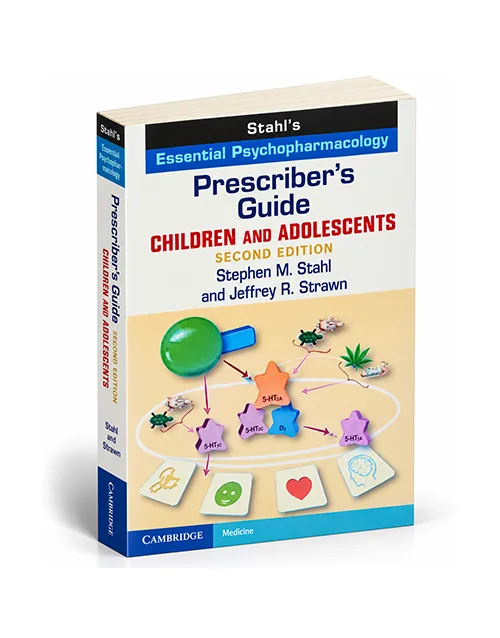


Stahl’s Prescriber’s Guide – Children and Adolescents, Second Edition
Stahl’s Prescriber’s Guide – Children and Adolescents, 2nd Edition by Stephen M. Stahl, in association with Jeffrey R. Strawn, is a specialized clinical reference focused on psychopharmacology for children and adolescents. Published by Cambridge University Press, this extensively revised edition provides practical information about psychiatric medications, treatment considerations, dosing, safety, and medication monitoring in younger patient populations.
Psychopharmacological treatment in children and adolescents requires careful consideration of developmental differences, individual symptoms, medication characteristics, tolerability, and treatment response. This guide brings together evidence-based information and clinically informed guidance to help qualified prescribers understand the medications used in pediatric mental health care.
Understand Essential Psychopharmacology for Young Patients
The book introduces a broad range of psychotropic medications used in the treatment of mental health conditions affecting children and adolescents. It provides a structured reference for understanding how different medications are used and what clinical factors should be considered during treatment.
The second edition substantially expands the medication coverage compared with the first edition. Its updated drug information and organized presentation help readers navigate medication-related topics and review the characteristics of individual treatments.
Explore Medication Selection and Therapeutic Applications
Choosing an appropriate psychiatric medication involves considering the clinical presentation, treatment goals, potential benefits, safety information, and individual patient characteristics. The guide organizes medication information to make these considerations easier to review.
Each drug follows a consistent presentation format, allowing readers to examine its therapeutic applications, safety and tolerability, dosing and use, expected outcomes, and the broader clinical art of psychopharmacology.
This format helps prescribers compare important medication information while maintaining a structured approach to reviewing different treatment options.
Understand Pharmacokinetics in Children and Adolescents
A major addition to the second edition is its expanded coverage of pharmacokinetics in children and adolescents. Pharmacokinetics examines how medications are absorbed, distributed, metabolized, and eliminated by the body.
These considerations are important in pediatric psychopharmacology because medication handling and physiological development can differ across age groups. The guide introduces relevant pharmacokinetic information to help clinicians consider how developmental factors may influence medication use.
This material supports a more informed understanding of medication characteristics and reinforces the importance of individualized clinical evaluation when considering psychiatric treatment.
Explore Pharmacogenetics and Medication Metabolism
The second edition includes new sections on pharmacogenetics, an important area of personalized medicine that examines how genetic differences may influence medication response and metabolism.
Readers can explore the relationship between genetic variation, drug metabolism, and treatment considerations in children and adolescents. This subject provides context for understanding why individuals may respond differently to the same medication.
The guide also connects pharmacogenetic information with its broader medication profiles, helping readers consider genetic and metabolic factors as part of comprehensive prescribing decisions.
Study Treatments for Anxiety Disorders
Anxiety disorders are among the common mental health concerns addressed in pediatric psychopharmacology. The guide includes treatment algorithms for anxiety-related conditions and provides medication information relevant to clinical decision-making.
Readers can examine how therapeutic considerations, medication safety, expected outcomes, and individual clinical characteristics relate to treatment planning. The algorithm-based approach helps organize important information for reviewing common treatment pathways.
Understand Pharmacological Approaches to Depression
The book includes clinical algorithms addressing depression in children and adolescents. These resources help prescribers review treatment considerations and the psychotropic medications associated with depressive disorders.
Its structured medication profiles provide information about therapeutic applications, dosing and use, safety, tolerability, metabolism, and expected outcomes. These subjects support a broader understanding of pharmacological treatment and the importance of monitoring individual responses.
Explore Bipolar Disorder Treatment
Bipolar disorder requires careful clinical assessment and consideration of treatment options. The guide includes an algorithm for bipolar disorder, alongside medication information relevant to psychiatric treatment in younger patients.
Readers can use the organized presentation to review therapeutic considerations and the safety and monitoring information associated with different medications. These resources are intended to support qualified clinical decision-making rather than replace individualized assessment.
Understand ADHD Medication Management
Attention-deficit/hyperactivity disorder (ADHD) is another major area covered in the second edition. The book includes an ADHD treatment algorithm and information about medications used in its management.
The guide’s consistent drug presentation helps readers review dosing and use, expected outcomes, safety, tolerability, and relevant medication characteristics. Its practical organization makes this material useful for professionals involved in pediatric and adolescent mental health care.
Explore Treatment Approaches for OCD
Obsessive-compulsive disorder (OCD) is included among the frequently encountered conditions addressed in the updated clinical algorithms.
The guide connects this condition with relevant psychopharmacological treatment information and encourages a structured understanding of medication-related considerations. Readers can review therapeutic uses, safety, tolerability, and other important factors associated with treatment.
Review Dosing, Titration, and Safe Medication Use
A central feature of the guide is its illustrated information about dosing and titration. These sections help prescribers review medication-specific dosing considerations and understand the importance of carefully managed treatment adjustments.
The drug profiles also distinguish between therapeutics, safety and tolerability, dosing and use, and what to expect from treatment. This organization helps readers locate important medication information without having to navigate an inconsistent format for every drug.
Because pediatric medication decisions depend on the individual patient and current clinical evidence, dosing information must always be interpreted by appropriately qualified professionals using current prescribing information and applicable guidelines.
Understand Safety, Tolerability, and Treatment Monitoring
Medication safety is an essential consideration in pediatric psychopharmacology. The book provides dedicated sections addressing safety and tolerability, helping clinicians review potential medication-related concerns alongside therapeutic considerations.
It also examines what to expect during treatment and provides clinically informed guidance for evaluating medication use. These topics are relevant to monitoring treatment response, considering tolerability, and reassessing clinical decisions over time.
Learn Through Color-Coded Medication Profiles
A distinctive feature of Stahl’s Prescriber’s Guide – Children and Adolescents is its full-color, template-driven navigation system. The consistent presentation format organizes important drug information into clearly identified sections.
Color-coded sections distinguish therapeutic applications, safety and tolerability, dosing and use, what to expect, and the art of psychopharmacology. Illustrated guidance and updated references further support the book’s practical clinical format.
This design makes the guide convenient for reviewing specific medication information and locating relevant subjects during clinical study and professional reference work.
Who Should Read Stahl’s Prescriber’s Guide?
Stahl’s Prescriber’s Guide – Children and Adolescents, 2nd Edition is intended for child and adolescent psychiatrists, psychiatric nurse practitioners, pediatric mental health professionals, clinical pharmacists, and other qualified clinicians involved in psychotropic medication management.
It may also be useful for psychiatry residents, advanced nursing students, clinical trainees, and healthcare professionals studying pediatric psychopharmacology. The guide’s organized medication profiles make it particularly useful for reviewing treatment options, pharmacological principles, and medication safety considerations.
Why Choose the Second Edition?
- Expanded medication coverage: Features nearly twice as many medications as the first edition, according to the publisher.
- Pharmacokinetics: Includes new material on medication handling in children and adolescents.
- Pharmacogenetics: Explores genetic factors associated with medication response and metabolism.
- Clinical algorithms: Addresses anxiety, depression, bipolar disorder, ADHD, and OCD.
- Detailed drug profiles: Covers therapeutic applications, dosing, safety, tolerability, and expected outcomes.
- Illustrated guidance: Provides information about dosing, titration, and pharmacogenetics through an organized visual format.
- Updated references: Includes new and revised references supporting further clinical reading.
About the Book
Title: Prescriber’s Guide – Children and Adolescents
Series: Stahl’s Essential Psychopharmacology
Author: Stephen M. Stahl, MD
Edited in Association With: Jeffrey R. Strawn, MD
Publisher: Cambridge University Press
Edition: Second Edition
Publication Date: May 2, 2024
ISBN-13: 9781009267502
Format: Paperback
Pages: 604
For clinicians and healthcare professionals working in child and adolescent mental health, Stahl’s Prescriber’s Guide – Children and Adolescents, Second Edition provides a structured reference covering psychotropic medications, treatment algorithms, pharmacokinetics, pharmacogenetics, dosing, safety, and medication monitoring.
Professional note: This guide is an educational clinical reference. It does not replace current prescribing information, professional qualifications, patient-specific evaluation, or clinical judgment. Pediatric psychiatric medications should be prescribed and monitored by appropriately qualified healthcare professionals.
There are no reviews yet.