

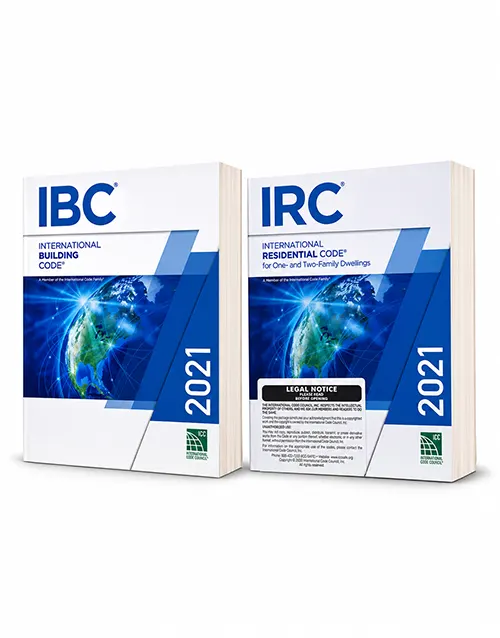


2021 International Building Code and International Residential Code – Complete Two-Book Set
The 2021 International Building Code (IBC) and International Residential Code (IRC) – Complete 2-Book Set brings together two important building and construction code publications from the International Code Council (ICC). Designed as technical references for the construction industry, these books provide requirements and guidance covering building safety, construction practices, structural considerations, residential design, and essential building systems.
The collection includes the 2021 IBC, which addresses the construction, use, and occupancy of buildings and structures, and the 2021 IRC, which establishes requirements for one- and two-family dwellings and townhouses up to three stories. Together, they offer a broader reference for professionals working with commercial, institutional, and residential building projects.
Book 1: 2021 International Building Code (IBC)
Understand Building Construction and Occupancy Requirements
The 2021 International Building Code establishes provisions for the construction, use, and occupancy of buildings and structures. It provides a framework for addressing building design, safety, and construction requirements across different types of buildings.
Architects, engineers, contractors, plan reviewers, and building officials can use the code as a reference when evaluating building projects and understanding applicable construction requirements.
Explore Building Planning and Occupancy Classification
Building planning involves understanding how a structure will be used and how its design relates to applicable building requirements. The IBC addresses building use and occupancy, providing a basis for evaluating different building types and their associated requirements.
These provisions are relevant to the planning and review of residential, commercial, industrial, institutional, and other building projects.
Study Structural and Building Design Requirements
The IBC includes provisions that influence structural design and construction. It addresses requirements relevant to building materials, structural systems, construction types, and associated safety considerations.
The 2021 edition includes updated provisions for mass timber construction, including three additional construction types: Type IV-A, Type IV-B, and Type IV-C. These provisions support the use of mass timber in taller buildings and larger construction projects.
Understand Fire Protection and Building Safety
Fire protection and life safety are important parts of building code compliance. The IBC addresses requirements involving building protection, fire-resistant construction, sprinkler systems, and other safety-related considerations.
The 2021 edition includes changes relating to automatic sprinkler protection in certain open parking garages, firestop inspections in specified residential-use buildings, and other fire protection requirements.
Review Special Building Types and Construction Methods
The code addresses different building types and construction methods, including special applications that require additional consideration.
The 2021 edition specifically includes provisions addressing intermodal shipping containers used as buildings. It also includes updates relating to exterior wall materials, mass timber construction, and special inspection requirements for selected structural connections.
Explore Updated Technical Provisions
The 2021 IBC includes technical updates relating to snow and rain loads, roof requirements, frost protection for egress doors, concrete construction tolerances, and referenced standards.
These provisions provide important reference material for professionals involved in building design, engineering review, construction planning, inspections, and code compliance.
Book 2: 2021 International Residential Code (IRC)
Understand Residential Building Requirements
The 2021 International Residential Code establishes minimum requirements for one- and two-family dwellings and townhouses using prescriptive provisions. It provides a residential construction framework covering building design and important building systems.
The IRC is particularly relevant to residential architects, home builders, contractors, construction inspectors, engineers, and other professionals involved in residential projects.
Study Scope, Administration, and Building Planning
The IRC begins with scope and administration requirements and introduces the definitions and building planning provisions used throughout the code.
Readers can refer to these sections when reviewing residential project requirements, understanding code terminology, and organizing construction work according to the applicable residential provisions.
Explore Foundations, Floors, and Wall Construction
Residential construction requires appropriate foundations and structural components to support the building and its intended use. The IRC covers foundations, floors, wall construction, and wall coverings.
These chapters provide reference material for professionals working on residential structural layouts, framing, and building envelope construction.
Understand Roof and Ceiling Construction
The IRC addresses roof and ceiling construction, roof assemblies, and related residential building requirements.
It also includes provisions relating to chimneys and fireplaces, helping residential construction professionals reference requirements for these building components.
Review Residential Energy Efficiency
Energy efficiency is an important consideration in residential building design. The IRC includes an energy efficiency chapter with provisions relevant to residential construction and building performance.
These requirements provide a reference for professionals involved in designing and constructing energy-conscious homes.
Study Mechanical Systems and Equipment
The residential mechanical provisions cover general mechanical system requirements, heating and cooling equipment, exhaust systems, duct systems, combustion air, chimneys, vents, and other specialized equipment.
The code also includes requirements relating to boilers, water heaters, hydronic piping, special piping systems, and solar thermal energy systems.
Understand Fuel Gas Requirements
Fuel gas installations involve important safety and technical requirements. The IRC includes a dedicated fuel gas chapter addressing residential fuel gas systems and related installation considerations.
This material is useful for contractors, mechanical professionals, plumbing professionals, and inspectors working with residential gas installations.
Explore Residential Plumbing Systems
The plumbing provisions cover general plumbing requirements, fixtures, water heaters, water supply and distribution, sanitary drainage, vents, traps, and storm drainage.
These chapters provide a comprehensive reference for residential plumbing systems and their installation requirements.
Review Residential Electrical Requirements
The IRC also includes electrical provisions addressing electrical definitions, services, branch circuits, feeder requirements, wiring methods, power and lighting distribution, devices, luminaires, and appliance installation.
It further covers swimming pools and class 2 remote-control, signaling, and power-limited circuits.
Explore Residential Construction Appendices
The 2021 IRC includes numerous appendices that provide additional information on residential construction and specialized building applications.
Appendix subjects include gas piping, venting systems, appliance inspection, manufactured housing, radon control, patio covers, private sewage disposal, existing buildings, sound transmission, permit fees, tiny houses, strawbale construction, solar-ready provisions, cob construction, and 3D-printed building construction.
How the IBC and IRC Work Together
The two publications address different but related areas of building regulation. The IBC provides broad building code provisions, while the IRC focuses on residential construction within its defined scope.
Using both books provides readers with a wider reference for understanding how building requirements relate to different project types. The 2021 IRC was designed to be compatible with the ICC family of International Codes, including the IBC, International Energy Conservation Code, International Fire Code, International Mechanical Code, International Plumbing Code, and other related publications.
This makes the two-book collection useful for professionals whose work involves residential construction as well as broader building design, review, inspection, and compliance.
Who Should Use This 2021 ICC Code Set?
The 2021 IBC and IRC Complete 2-Book Set is suitable for architects, civil and structural engineers, general contractors, residential builders, construction managers, building inspectors, code officials, designers, and architecture and engineering students.
It is especially useful for professionals who need to reference both general building construction requirements and residential construction requirements in their work.
Why Choose This Two-Book Collection?
- Two essential ICC publications: Includes the 2021 International Building Code and 2021 International Residential Code.
- Broad building coverage: References construction, building use, and occupancy requirements.
- Residential construction: Covers requirements for one- and two-family dwellings and qualifying townhouses.
- Structural and safety provisions: Includes foundations, building planning, construction types, and fire protection.
- Building systems: Covers mechanical, plumbing, fuel gas, and electrical provisions in the residential code.
- Technical reference: Useful for design, construction, inspection, and code-related study.
- Official ICC publications: Both books are published by the International Code Council.
About the Two-Book Set
Collection Title: 2021 International Building Code (IBC) and International Residential Code (IRC)
Collection Type: Complete Two-Book Set
Publisher: International Code Council (ICC)
Code Year: 2021
Language: English
Format: Softcover
Book 1: 2021 International Building Code – 832 pages
Book 2: 2021 International Residential Code – 1,108 pages
Combined Page Count: 1,940 pages
IBC ISBN-13: 9781609839550
IRC ISBN-13: 9781609839574
For construction professionals and students seeking a combined reference for general building and residential construction requirements, this ICC two-book collection brings together the 2021 International Building Code and the 2021 International Residential Code in one convenient package.
Edition note: These are the 2021 code editions. The ICC has also published 2024 editions of the IBC and IRC. Building code adoption and enforcement depend on the applicable jurisdiction, so readers should check which edition is adopted for their project location.
There are no reviews yet.