

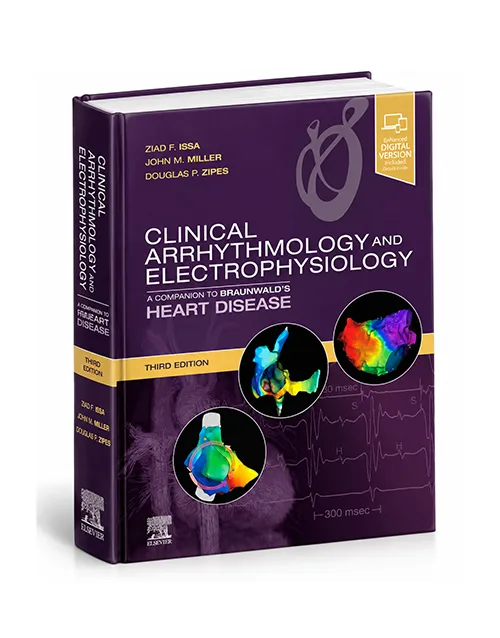


Clinical Arrhythmology and Electrophysiology: A Companion to Braunwald’s Heart Disease, Third Edition
Clinical Arrhythmology and Electrophysiology, 3rd Edition, edited by Ziad F. Issa, John M. Miller, and Douglas P. Zipes, is a specialized medical reference focused on cardiac arrhythmias and clinical electrophysiology. Published by Elsevier, this textbook combines the basic science of cardiac electrical activity with diagnostic techniques and approaches to the management of rhythm disorders.
Cardiac arrhythmias arise from changes in the generation or conduction of electrical impulses in the heart. Understanding these conditions requires knowledge of cardiac electrophysiology, electrocardiography, diagnostic testing, mapping technologies, and treatment options. This reference organizes these subjects to help clinicians and trainees understand the mechanisms behind arrhythmias and the clinical considerations involved in evaluating them.
Understand the Mechanisms of Cardiac Arrhythmias
The book examines the molecular and electrophysiological processes involved in normal cardiac electrical activity and the development of abnormal heart rhythms. Readers can explore cardiac ion channels, impulse generation, conduction pathways, and the mechanisms responsible for different arrhythmia patterns.
Understanding these foundations helps connect the physiological basis of a rhythm disorder with its clinical presentation. The text provides a framework for studying how electrical abnormalities can arise and how knowledge of those mechanisms informs diagnostic assessment and treatment planning.
Explore Electrophysiological Testing and Diagnostic Techniques
Clinical electrophysiology uses specialized investigations to evaluate the electrical activity of the heart. The third edition covers electrophysiological testing, associated tools and techniques, conventional intracardiac mapping, and advanced mapping and navigation modalities.
These topics help readers understand the principles behind identifying the origin and pathways of abnormal electrical activity. The book also includes material on interpreting clinical findings and connecting diagnostic techniques with the underlying mechanisms of arrhythmias.
Learn About Catheter Ablation and Treatment Technologies
Catheter ablation is an important treatment approach for selected cardiac arrhythmias. The textbook explores ablation energy sources and related electrophysiological techniques, supported by illustrations and video resources described by the publisher.
The material helps explain how mapping and navigation technologies can support procedures and how different techniques relate to the electrical mechanisms being treated. Actual treatment selection and procedural decisions require appropriate specialist training, patient-specific assessment, and current clinical guidance.
Study Atrial Arrhythmias and Conduction Disorders
The book addresses several important categories of rhythm disorders, including sinus node dysfunction, atrioventricular conduction abnormalities, intraventricular conduction abnormalities, focal atrial tachycardia, atrial flutter, and atrial fibrillation.
It also examines supraventricular tachycardias and disorders associated with accessory pathways. This structured coverage helps readers compare different arrhythmias, understand their underlying electrophysiological mechanisms, and review the diagnostic considerations associated with each condition.
Understand Ventricular Arrhythmias and Complex Cardiac Conditions
Ventricular arrhythmias can occur in association with ischemic heart disease, cardiomyopathies, congenital heart disease, and other cardiac conditions. The textbook discusses different forms of ventricular tachycardia, including idiopathic focal ventricular tachycardia, fascicular ventricular tachycardia, and arrhythmias associated with structural heart disease.
It also covers arrhythmias in hypertrophic cardiomyopathy and arrhythmogenic right ventricular cardiomyopathy. These subjects help readers understand why the clinical context and underlying cardiac condition are important when evaluating rhythm disorders.
Connect Basic Science with Clinical Management
A central feature of Clinical Arrhythmology and Electrophysiology is its connection between the science behind cardiac electrical activity and the practical management of patients with arrhythmias. The book discusses diagnostic and treatment considerations across a wide range of rhythm disorders.
Its consistent organization presents arrhythmia topics in a comparable format, supporting focused review and making it easier to navigate the reference. The third edition also adds clinical content on diagnosis and management options, including drug-based, device-based, and combined treatment approaches.
Illustrations and Video-Based Learning
The publisher describes clear illustrations and dozens of videos demonstrating electrophysiology procedures and techniques. The video resources include mapping approaches, fluoroscopic views of catheter positioning, and selected procedural methods.
These visual materials complement the written explanations and help readers develop an understanding of the technologies used in clinical electrophysiology. Availability of digital materials may depend on the specific edition and whether an included access code has already been redeemed.
Who Should Read Clinical Arrhythmology and Electrophysiology?
Clinical Arrhythmology and Electrophysiology, 3rd Edition is intended for cardiologists, cardiac electrophysiologists, cardiology fellows, medical residents, and other healthcare professionals interested in cardiac rhythm disorders. It may also be useful in academic medical libraries, cardiology departments, and specialist training programs.
The book is particularly relevant for readers seeking a more detailed understanding of cardiac arrhythmia mechanisms, electrophysiological investigations, mapping techniques, ablation, and clinical management. It is a specialist reference that complements formal medical training, current guidelines, and clinical judgment.
Why Choose the Third Edition?
- Specialized cardiology coverage: Focuses on cardiac arrhythmias and clinical electrophysiology.
- Scientific foundations: Explains cardiac electrical activity, ion channels, and arrhythmia mechanisms.
- Diagnostic methods: Covers electrophysiological testing, mapping, and navigation techniques.
- Procedural knowledge: Explores catheter ablation and relevant treatment technologies.
- Broad arrhythmia coverage: Includes atrial and ventricular rhythm disorders and conduction abnormalities.
- Visual learning resources: Includes illustrations and publisher-described videos.
- Professional reference: Suitable for cardiology trainees, electrophysiology specialists, and medical libraries.
About the Book
Title: Clinical Arrhythmology and Electrophysiology: A Companion to Braunwald’s Heart Disease
Edition: Third Edition
Authors: Ziad F. Issa, John M. Miller, and Douglas P. Zipes
Publisher: Elsevier
Publication Year: 2018
Print ISBN-13: 9780323523561
Format: Hardcover
Pages: 1120 Pages
For professionals seeking a detailed resource on cardiac arrhythmias and electrophysiology, this third edition offers a structured reference connecting electrophysiological mechanisms, diagnostic approaches, mapping technologies, and treatment concepts.
Medical reference note: This textbook supports professional education and study. It does not replace current clinical guidelines, specialist training, or patient-specific medical assessment.
There are no reviews yet.