

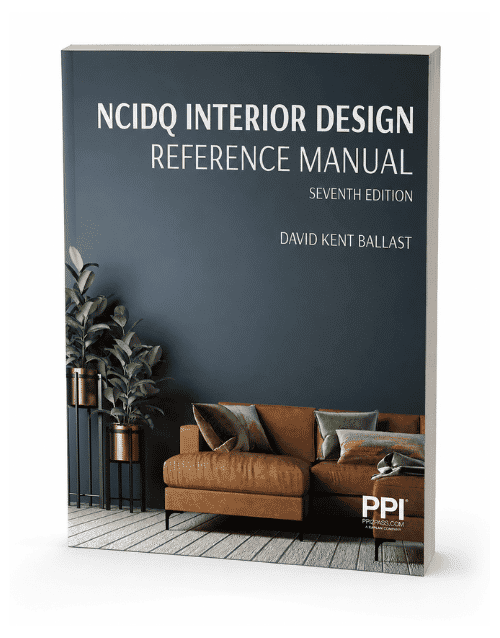


Interior design involves far more than selecting colors, furniture, and finishes. It requires knowledge of space planning, building systems, materials, construction methods, accessibility, and project documentation. The PPI NCIDQ Interior Design Reference Manual 7th Edition by David Kent Ballast brings these professional subjects together in a structured study resource for interior designers and candidates preparing for the National Council for Interior Design Qualification (NCIDQ) examination. Published by PPI, a Kaplan company, this paperback reference is identified by ISBN 9781591268420.
A major focus of the manual is the connection between design decisions and the technical requirements of interior environments. Its coverage begins with design concepts and programming, including design principles, human factors, site analysis, and space planning. These topics help readers understand how client needs, functional requirements, spatial relationships, and visual considerations inform the development of an interior design project. The material provides a foundation for examining the reasoning behind design choices rather than treating individual elements in isolation.
The manual also explores design constraints and building systems and construction. Readers encounter subjects related to construction assemblies, structural components, electrical systems, HVAC, lighting, acoustics, fire protection, and building codes. Understanding these relationships is important when coordinating interior layouts with building infrastructure and evaluating how materials and construction details affect a finished space. The reference also addresses research, analysis, and the selection of products and details, including the practical considerations involved in specifying finishes, furnishings, fixtures, and equipment.
Another important area is communication and documentation. Interior design projects depend on clear drawings, dimensions, specifications, schedules, and coordinated project information. The manual covers documentation practices alongside project and business management, giving readers a broader view of the professional responsibilities involved in delivering interior design work. Its coverage extends beyond creative development to include coordination, budgets, contracts, and the organizational aspects of managing projects.
For NCIDQ examination candidates, the Interior Design Reference Manual 7th Edition covers content areas associated with the three examination sections: Fundamentals (IDFX), Professional (IDPX), and Practicum (PRAC). Study guidelines, exam tips, tables, and more than 200 figures support the presentation of technical concepts and design details. Illustrations using both SI and U.S. customary measurements help readers interpret dimensions and construction-related information. The manual is also relevant to interior design students, educators, and practicing professionals who want a consolidated reference for reviewing technical knowledge.
Written by an author with experience in architecture, interior construction, and professional design education, this reference combines conceptual foundations with practical building-related information. It can support structured study, topic review, and deeper exploration of the technical principles underlying interior design practice, although candidates should check the applicable NCIDQ examination specifications before relying on any particular edition for exam preparation.
If you are looking for the PPI NCIDQ Interior Design Reference Manual 7th Edition, this paperback offers a focused resource covering design concepts, construction, product selection, documentation, and project management. Confirm ISBN 9781591268420 when ordering to ensure you receive the intended edition rather than a different version of the manual.
There are no reviews yet.