

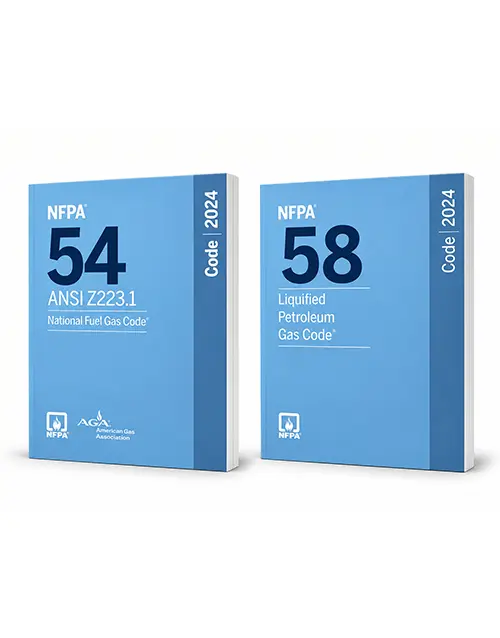


The NFPA 54 and NFPA 58 2024 combo contains two separate code books from the National Fire Protection Association. NFPA 54, also designated ANSI Z223.1, is the National Fuel Gas Code. It covers fuel gas piping and the installation of gas appliances and related equipment. NFPA 58 is the Liquefied Petroleum Gas Code. It covers the storage, handling, transportation, and use of liquefied petroleum gas, commonly called LP-Gas or LPG. Both books in this set are the 2024 editions.
NFPA 54 covers natural gas and certain LP-Gas installations within the scope of the code. Its provisions follow the fuel gas piping system from the point of delivery to the appliance connections. The book addresses piping design, materials, components, installation, inspection, and testing. It also covers gas appliance installation, the air needed for combustion and ventilation, and the venting of combustion products. The point of delivery is an important term because it defines where the code’s coverage of piping begins. The 2024 paperback National Fuel Gas Code is identified by ISBN 9781455930463.
For readers comparing the 2024 National Fuel Gas Code with its previous edition, Annex G includes explanatory material on combustion air and vent drafting for Category I appliances. This material is separate from the mandatory provisions in the code.
NFPA 58 focuses specifically on LP-Gas systems, including those that use propane. It addresses storage containers, associated fittings and equipment, piping, and the transfer of LP-Gas. Its scope also includes transportation and use, so the book covers more than stationary storage tanks. The 2024 edition adds provisions for LP-Gas systems on mobile food facilities and revises requirements for certain horizontal container installations. It also adds requirements for purging LP-Gas systems into and out of service. The 2024 paperback Liquefied Petroleum Gas Code is identified by ISBN 9781455930876.
The difference between the two codes is easiest to see in a building supplied by an outdoor propane container. NFPA 58 addresses the container and the LP-Gas supply system. NFPA 54 addresses piping within its scope from the defined point of delivery to the appliance connections, along with appliance installation and venting. The distinction is not simply natural gas versus propane. NFPA 54 can apply to parts of a propane installation, while NFPA 58 is specific to LP-Gas. The scope provisions in each book explain where its requirements apply.
The books also cover different questions about equipment. A reader looking up combustion air for a gas appliance would turn to NFPA 54. A reader researching provisions for LP-Gas container installation or fuel transfer would turn to NFPA 58. In this set, each book retains its own code designation, edition, and ISBN. The bundle contains the code publications themselves, not the separate handbook editions.
There are no reviews yet.