

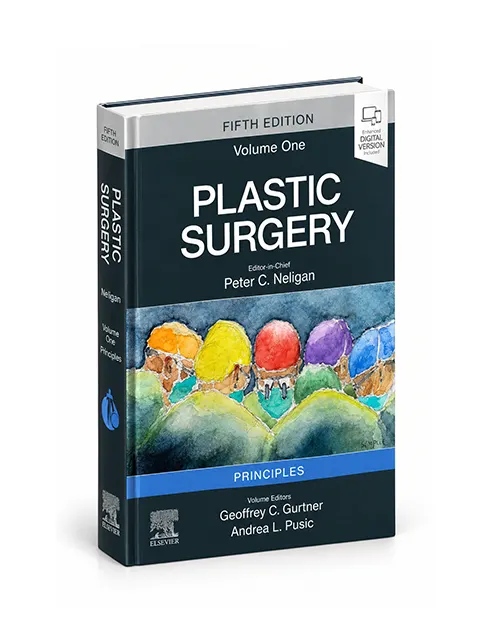


Plastic Surgery, Fifth Edition – Volume 1: Principles
Plastic Surgery, 5th Edition, Volume 1: Principles is an advanced medical reference covering the scientific foundations, clinical principles, and professional responsibilities underlying modern plastic and reconstructive surgery. Published by Elsevier, this volume is part of the comprehensive six-volume Plastic Surgery reference series, designed for surgical trainees and experienced practitioners seeking detailed knowledge of the specialty.
Under Editor-in-Chief Peter C. Neligan, with volume editors Geoffrey C. Gurtner and Andrea L. Pusic as identified on the supplied cover, this volume explores the core concepts that support reconstructive and aesthetic surgical practice. The content connects basic science with patient care, surgical decision-making, research, and emerging technologies.
Understand the Foundations of Plastic and Reconstructive Surgery
The volume introduces the evolution of plastic surgery and the principles that guide the specialty. It examines the history of reconstructive and aesthetic surgery, innovation in medicine, and the changing role of technology in surgical practice.
Readers can explore how the specialty has developed and how clinical practice incorporates scientific advances, professional standards, patient needs, and evidence-informed decisions. These foundational perspectives help surgical trainees understand the broader context in which specialized procedures are planned and performed.
Explore Patient Safety, Ethics, and Professional Practice
Safe surgical care involves more than technical proficiency. The textbook addresses patient safety, anesthesia and pain management, ethical responsibilities, and medico-legal considerations relevant to plastic surgery.
It also examines value-based healthcare, patient-reported outcomes, business principles for plastic surgeons, and health services research. These subjects help readers understand the organizational, ethical, and professional dimensions of delivering surgical care and evaluating its outcomes.
Study Wound Healing, Scars, and Tissue Repair
Wound healing is a fundamental topic in reconstructive surgery. The volume examines the biological principles of tissue repair and related clinical considerations, including scar prevention, treatment, and revision.
Readers can also explore skin grafting and the repair, grafting, and engineering of cartilage, bone, peripheral nerves, and adipose tissue. These topics provide a scientific foundation for understanding how tissues heal, how tissue defects may be addressed, and how reconstructive approaches are selected for different clinical circumstances.
Learn About Flaps and Microvascular Surgery
Flap physiology, classification, and applications are important subjects in reconstructive surgery. The book explores the principles that support flap-based reconstruction and the biological factors that influence tissue survival and clinical application.
It also covers principles and techniques of microvascular surgery, tissue expansion, and implants. This material supports a deeper understanding of reconstructive strategies and the anatomical and physiological concepts that inform surgical planning. Actual operative techniques require appropriate specialist training and supervised clinical experience.
Explore Biomaterials, Implants, and Tissue Engineering
Plastic surgery increasingly incorporates advances in biomaterials, tissue engineering, and reconstructive technologies. The volume examines implants and biomaterials alongside approaches to tissue development, repair, and transplantation.
These subjects help readers understand how material science and biological research contribute to reconstructive options. The textbook also addresses transplantation in plastic surgery and the role of new technologies in advancing clinical practice.
Understand Skin Tumors and Principles of Cancer Management
The volume includes principles of cancer management and coverage of benign and malignant nonmelanocytic tumors of the skin and soft tissue, as well as melanoma. These topics introduce key considerations involved in evaluating and managing conditions that may require plastic surgical expertise.
The content places these subjects within a wider framework of reconstruction, wound management, and multidisciplinary care. Treatment decisions must be tailored to the specific diagnosis, patient circumstances, and current clinical evidence.
Explore Surgical Innovation and Digital Technology
Modern plastic surgery continues to evolve through new devices, digital systems, and innovative clinical approaches. The fifth edition includes chapters on robotics in plastic surgery, digital technology, noninvasive aesthetic technologies, and practical guidance for surgeon innovators.
The book also addresses digital photography and preoperative and intraoperative imaging. These topics help readers understand how imaging, documentation, visualization, and emerging technology can contribute to surgical planning, education, and evaluation.
Learn About Contemporary and Global Issues in Plastic Surgery
The volume includes material on education and teaching in plastic surgery, global plastic surgery, and gender-affirming surgery. It also explores health services research and patient-reported outcomes, reflecting the broader professional considerations involved in contemporary surgical care.
These topics encourage readers to consider how education, access, outcomes, and changing clinical needs influence the specialty. They complement the scientific and operative principles covered throughout the volume.
Visual Learning and Digital Resources
The fifth edition features new full-color clinical photographs and updated material throughout the series. The publisher also describes procedural videos, video lectures, and editor-narrated slide presentations intended to support learning and provide visual explanations of clinical techniques.
The standard publisher edition includes an eBook with searchable text, figures, and references, plus tools for notes, highlighting, and read-aloud access. Availability of digital resources may depend on the purchased package and whether an included access code has already been redeemed.
Who Should Read Plastic Surgery, Volume 1: Principles?
Plastic Surgery, 5th Edition, Volume 1: Principles is intended for plastic surgery residents, reconstructive surgeons, experienced specialists, and medical institutions building reference collections. It may also be useful to clinicians and surgical educators seeking a structured reference on the foundations of plastic surgery.
Its coverage of wound healing, tissue repair, microsurgery, implants, surgical innovation, patient safety, and professional practice makes it valuable for advanced medical education and specialist reference. The book complements formal surgical training and current clinical guidance rather than replacing them.
Why Choose the Fifth Edition?
- Comprehensive foundational coverage: Explores the science and professional principles of plastic surgery.
- Reconstructive topics: Covers wound healing, grafts, flaps, tissue engineering, and microvascular surgery.
- Patient-centered practice: Addresses safety, ethics, pain management, and patient-reported outcomes.
- Updated clinical perspectives: Includes developments in digital technology, robotics, and surgical innovation.
- Contemporary subject matter: Covers global plastic surgery, education, and gender-affirming surgery.
- Visual and digital learning: Includes color clinical images and publisher-described digital learning resources.
About the Book
Title: Plastic Surgery
Volume: Volume 1: Principles
Edition: Fifth Edition
Editor-in-Chief: Peter C. Neligan
Volume Editors on Supplied Cover: Geoffrey C. Gurtner and Andrea L. Pusic
Publisher: Elsevier
Publication Date: November 21, 2023
Copyright Year: 2024
ISBN-13: 9780323810388
Format: Hardcover
Pages: 848 according to Elsevier’s product listing
For plastic surgery trainees and experienced practitioners seeking a broad reference on the scientific, clinical, and professional foundations of the specialty, Plastic Surgery, 5th Edition, Volume 1: Principles offers a structured resource for advanced study and clinical education.
There are no reviews yet.