

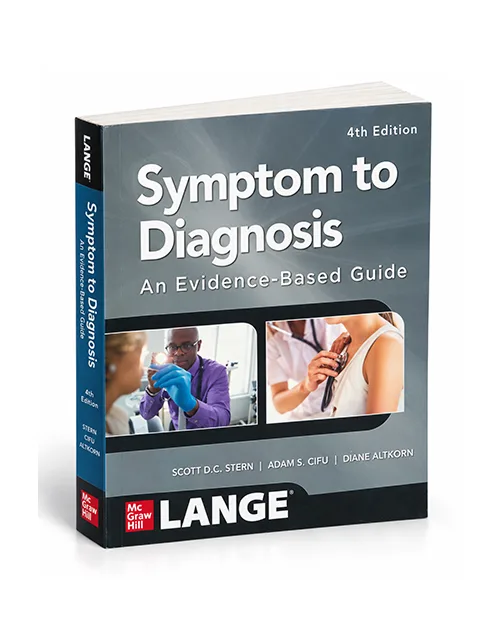


Symptom to Diagnosis: An Evidence-Based Guide, Fourth Edition
Symptom to Diagnosis: An Evidence-Based Guide, 4th Edition by Scott D.C. Stern, Adam S. Cifu, and Diane Altkorn is a comprehensive clinical medicine textbook focused on developing diagnostic reasoning skills. Published by McGraw Hill under the LANGE imprint, this book teaches readers how to evaluate patient complaints, identify possible causes, select appropriate diagnostic tests, interpret clinical findings, and determine suitable treatment approaches.
Making an accurate diagnosis is one of the most important responsibilities in clinical medicine. Patients often present with symptoms rather than a clearly identified disease, and several conditions may produce similar clinical findings. This textbook addresses that challenge through an evidence-based, step-by-step approach that connects patient presentations with clinical reasoning and differential diagnosis.
Understand the Diagnostic Process
The book begins by explaining the diagnostic process and the reasoning involved in moving from a patient’s initial complaint toward an appropriate diagnosis. It introduces a structured way to collect clinical information, consider possible explanations, and evaluate the evidence supporting different diagnostic possibilities.
Readers learn to consider the patient’s history, physical examination findings, and diagnostic test results as connected parts of the evaluation. Rather than immediately settling on one explanation, the approach encourages clinicians to develop a differential diagnosis and systematically evaluate the leading possibilities.
Learn Evidence-Based Clinical Reasoning
A central feature of Symptom to Diagnosis is its emphasis on evidence-based clinical reasoning. The book explains how clinical clues and diagnostic tests contribute to the evaluation of a patient’s symptoms.
Each chapter is organized around a common patient complaint. As the clinical case develops, the authors explain the reasoning behind the diagnostic choices and show how new information affects the differential diagnosis.
Summary tables highlight important clinical clues and tests associated with the leading diagnostic hypotheses and alternative possibilities. This format helps readers understand not only which conditions should be considered, but also why particular findings support or weaken a diagnostic hypothesis.
Explore Screening and Health Maintenance
The textbook includes coverage of screening and health maintenance, introducing the role of preventive healthcare in clinical medicine. Readers can study how screening considerations differ from evaluating an individual who presents with an active symptom or complaint.
This section provides context for understanding preventive assessments and the clinical decisions involved in evaluating people who may not have an obvious presenting illness.
Evaluate Abdominal Pain and Gastrointestinal Complaints
Abdominal pain is one of the major clinical presentations covered in the book. The chapter-based approach helps readers consider possible causes, relevant clinical findings, and the diagnostic tests that may assist in evaluating a patient.
Other gastrointestinal topics include acute diarrhea, gastrointestinal bleeding, and jaundice or abnormal liver enzymes. These chapters help students understand how different symptoms and laboratory abnormalities may point toward conditions involving the digestive system, liver, and related organs.
Understand Cardiovascular and Respiratory Symptoms
The book addresses chest pain, hypotension, hypertension, edema, and other clinical findings that may be associated with cardiovascular conditions. It explains how patient complaints and examination findings can guide the development of a differential diagnosis.
Respiratory topics include cough and respiratory infections, shortness of breath, wheezing, and stridor. Readers can explore the diagnostic reasoning involved in assessing these complaints and distinguishing among possible underlying conditions.
Study Neurological and Cognitive Presentations
Neurological and cognitive complaints are another important area of coverage. The textbook includes chapters on headache, dizziness, delirium, dementia, and transient loss of consciousness or syncope.
These subjects help readers consider how symptoms may arise from different neurological, cardiovascular, metabolic, or systemic conditions. The structured case discussions demonstrate the importance of using clinical information and appropriate investigations to narrow diagnostic possibilities.
Learn About Hematological and Metabolic Abnormalities
The book examines anemia and bleeding disorders, covering clinical presentations that may be associated with abnormalities in blood cells, clotting, and related physiological processes.
It also discusses acid-base abnormalities, hypercalcemia, hyponatremia, and other electrolyte disturbances. The material helps students understand how laboratory abnormalities can provide important clues during a medical evaluation.
Explore Renal and Urinary Tract Complaints
Urinary symptoms and kidney-related conditions are represented through chapters on dysuria, hematuria, and acute kidney injury. These subjects introduce the diagnostic considerations involved in evaluating urinary complaints and changes in renal function.
Readers can develop an understanding of how clinical history, laboratory findings, and other investigations contribute to evaluating possible urinary and kidney disorders.
Understand Musculoskeletal, Dermatological, and General Symptoms
The textbook also examines joint pain and rash, helping readers consider the range of conditions that may produce musculoskeletal and dermatological symptoms.
General complaints such as fatigue and unintentional weight loss receive dedicated attention. These symptoms can have numerous possible explanations, making a systematic approach to history-taking, examination, and diagnostic testing especially important.
Study Infectious Disease and Other Clinical Presentations
The fourth edition includes coverage of AIDS and HIV infection, cough and respiratory infections, sore throat, and other presentations associated with infectious disease.
These topics illustrate how clinical complaints may require consideration of different infectious and noninfectious causes. Readers can follow the diagnostic process and examine how specific clinical findings and tests contribute to identifying an appropriate explanation.
Follow the Case-Based Learning Method
A defining feature of Symptom to Diagnosis is that its chapters unfold through patient cases. Each case introduces a complaint and develops as additional history, examination findings, and diagnostic information become available.
This stepwise format reflects the process of real clinical evaluation. Readers can see how new evidence changes the diagnostic possibilities and how clinicians decide which tests may provide useful information.
Rather than presenting diseases only as isolated descriptions, the textbook emphasizes the connection between patient presentation, differential diagnosis, evidence-based testing, and treatment.
Use Diagnostic Algorithms and Summary Tables
The fourth edition includes updated algorithms, summary tables, and questions designed to guide clinical evaluation. These resources help readers organize diagnostic information and understand the relationship between clinical findings and possible diseases.
Clinical pearls are included throughout the chapters to highlight useful points for diagnostic reasoning. The book also reviews disease presentation, important disease characteristics, evidence-based diagnosis, and treatment considerations.
Understand Diagnostic Tests and Clinical Guidelines
The textbook discusses the role of diagnostic tests in confirming or excluding possible diagnoses. It explains how test selection is connected to the clinical information gathered during an evaluation and why the results must be interpreted in the context of the patient’s presentation.
The fourth edition was updated with research, diagnostic tools, and guidelines available at the time of publication. Revised approaches are highlighted in several areas, including chest pain, syncope, dizziness, diarrhea, jaundice, cough and fever, screening, diabetes, and hypertension.
Connect Diagnosis with Treatment
Once the most likely diagnosis has been established, treatment becomes the next important consideration. Each disease discussion includes a treatment section that introduces fundamental therapeutic approaches.
The authors focus on basic treatment principles rather than highly detailed regimens that may quickly become outdated. This allows readers to understand the relationship between diagnosis and management while recognizing that current clinical guidelines and patient-specific factors must guide actual treatment decisions.
Who Should Read Symptom to Diagnosis?
Symptom to Diagnosis: An Evidence-Based Guide, 4th Edition is suitable for medical students, internal medicine residents, physician assistant students, and other healthcare professionals who want to improve their clinical reasoning and diagnostic skills.
It can support medical education courses, clinical rotations, examination preparation, and independent study. Established clinicians may also find it useful as a reference when reviewing less straightforward clinical presentations and considering alternative explanations for common complaints.
Why Choose the Fourth Edition?
- Evidence-based approach: Connects clinical complaints with diagnostic hypotheses and supporting evidence.
- Case-based learning: Uses patient presentations to demonstrate diagnostic reasoning step by step.
- Differential diagnosis: Explores leading and alternative explanations for common symptoms.
- Diagnostic algorithms: Includes algorithms, summary tables, and questions that guide evaluation.
- Broad clinical coverage: Addresses gastrointestinal, cardiovascular, respiratory, neurological, renal, hematological, and other complaints.
- Clinical pearls: Highlights useful diagnostic insights throughout the chapters.
- Treatment considerations: Connects diagnostic conclusions with fundamental therapeutic approaches.
About the Book
Title: Symptom to Diagnosis: An Evidence-Based Guide
Edition: Fourth Edition
Authors: Scott D.C. Stern, Adam S. Cifu, and Diane Altkorn
Publisher: McGraw Hill Education
Imprint: LANGE
Publication Date: October 31, 2019
Copyright Year: 2020
Print ISBN-13: 9781260121117
Format: Paperback
Pages: 612
For medical students and healthcare professionals seeking to strengthen diagnostic reasoning, Symptom to Diagnosis: An Evidence-Based Guide, Fourth Edition provides a practical framework for evaluating patient complaints, building differential diagnoses, selecting diagnostic tests, and connecting clinical findings with treatment considerations.
Clinical note: This textbook reflects the medical evidence and guidance available for its 2020 publication. It is an educational reference and should be supplemented with current clinical guidelines, updated diagnostic recommendations, and patient-specific professional judgment.
There are no reviews yet.