

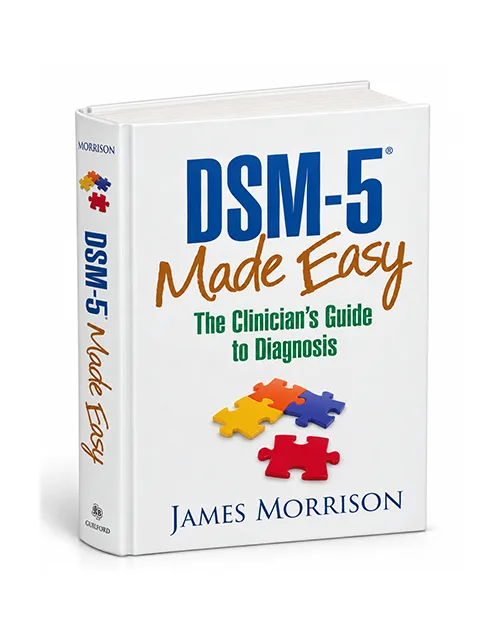


DSM-5 Made Easy: The Clinician’s Guide to Diagnosis by James Morrison
DSM-5 Made Easy: The Clinician’s Guide to Diagnosis by James Morrison is a practical psychiatric reference designed to make mental health diagnosis easier to understand and apply. Published by Guilford Press, this book explains the diagnostic concepts and criteria in the Diagnostic and Statistical Manual of Mental Disorders, Fifth Edition (DSM-5), using clear descriptions, clinical examples, and detailed case vignettes.
Clinical diagnosis involves more than identifying symptoms and matching them to a list of criteria. Mental health professionals must consider the patient’s history, presentation, duration of symptoms, functional difficulties, and other possible explanations. This textbook helps readers understand that process by connecting diagnostic criteria with realistic clinical presentations and differential diagnosis.
Understand DSM-5 Diagnostic Criteria
The book presents a broad range of mental disorders included in DSM-5 and explains their major diagnostic characteristics in accessible language. It is designed to help clinicians understand how diagnostic criteria relate to actual patient presentations.
Rather than relying exclusively on complicated diagnostic terminology, James Morrison uses straightforward explanations and organized summaries to introduce the essential features of each disorder. Readers can understand important symptoms, historical background, relevant demographics, and the clinical characteristics associated with different diagnoses.
Learn a Practical Approach to Clinical Diagnosis
A central feature of DSM-5 Made Easy is its prototype-based approach to diagnosis. The author explains how clinicians can compare the information gathered during an evaluation with the typical presentation of a mental disorder.
The book introduces a five-point rating approach for considering how closely a patient’s presentation matches a diagnostic prototype. This framework helps readers think systematically about diagnostic possibilities while recognizing the importance of evaluating the complete clinical picture.
The approach is intended to make diagnostic reasoning more understandable and practical for students and clinicians who are learning how to evaluate mental health conditions.
Explore Neurodevelopmental Disorders
The textbook begins its disorder-specific coverage with neurodevelopmental disorders. Readers can explore conditions involving developmental functioning, intellectual abilities, communication, and behavioral characteristics.
The chapter introduces diagnostic features and explanations that help readers understand how these conditions may present and how they can be distinguished from other possible diagnoses.
Understand Schizophrenia Spectrum and Other Psychotic Disorders
The book examines schizophrenia spectrum and other psychotic disorders, explaining the symptoms and diagnostic characteristics associated with these conditions.
Readers can learn about the clinical features that help distinguish different psychotic presentations and understand the considerations involved in evaluating symptoms, patterns of illness, and alternative explanations.
Study Mood Disorders and Anxiety Disorders
Mood disorders and anxiety disorders receive dedicated chapters. The textbook explains the diagnostic characteristics of depressive and bipolar conditions, along with the important features of different anxiety-related presentations.
It also discusses how clinicians can distinguish among conditions with overlapping symptoms. These explanations support a more organized understanding of emotional symptoms, clinical presentations, and the diagnostic considerations associated with different disorders.
Explore Obsessive-Compulsive and Related Disorders
The book includes a chapter on obsessive-compulsive and related disorders. It introduces their essential diagnostic characteristics and discusses how these conditions can be differentiated from other disorders that may involve similar symptoms or behaviors.
This material helps readers become familiar with the terminology and clinical features used when evaluating obsessive-compulsive presentations.
Understand Trauma-Related and Dissociative Disorders
The textbook covers trauma- and stressor-related disorders as well as dissociative disorders. These chapters explain the diagnostic features associated with reactions to traumatic or stressful experiences and disruptions involving memory, identity, or other aspects of psychological functioning.
Readers can study the distinctions between different diagnostic categories and understand why clinical history and symptom presentation are important when considering these conditions.
Study Somatic Symptom, Feeding, and Eating Disorders
The book explores somatic symptom and related disorders, explaining the diagnostic concepts associated with physical symptoms and psychological distress.
It also addresses feeding and eating disorders, including the characteristics and diagnostic considerations associated with different eating-related conditions. These chapters help readers understand the importance of evaluating symptoms in their broader clinical context.
Explore Sleep-Wake Disorders and Sexual Dysfunctions
DSM-5 Made Easy includes dedicated coverage of sleep-wake disorders and sexual dysfunctions. These sections introduce relevant symptoms, diagnostic criteria, and distinctions among conditions within each category.
The material helps readers understand how these disorders are organized within DSM-5 and what information may be relevant when considering a diagnosis.
Understand Gender Dysphoria and Disruptive Behavior Disorders
The textbook includes chapters on gender dysphoria and disruptive, impulse-control, and conduct disorders. Readers can study the diagnostic characteristics and clinical considerations associated with these categories.
The following chapter addresses substance-related and addictive disorders, introducing the diagnostic framework used to understand conditions associated with substance use, intoxication, withdrawal, and related clinical presentations.
Explore Cognitive and Personality Disorders
The book examines cognitive disorders and personality disorders, explaining their important diagnostic features and the considerations involved in distinguishing among different conditions.
The cognitive disorders chapter provides an organized discussion of the relevant diagnostic categories, while the personality disorders chapter introduces the patterns of functioning and behavior associated with these diagnoses.
Study Paraphilic Disorders and Other Factors Affecting Clinical Diagnosis
Additional chapters cover paraphilic disorders and other factors that may require clinical attention. These subjects complete the book’s broad coverage of DSM-5 diagnostic categories and related clinical considerations.
The final chapter, Patients and Diagnoses, brings the diagnostic material together and reinforces the importance of considering the patient’s overall presentation when developing a clinical understanding.
Understand Differential Diagnosis
Differential diagnosis is an important part of the book’s approach. When a patient presents with a group of symptoms, several conditions may initially appear to be possible explanations.
The author provides diagnostic pointers and discusses alternative conditions that clinicians should consider when evaluating a presentation. The text emphasizes the importance of considering medical conditions, substance-related factors, and other treatable explanations when distinguishing between possible diagnoses.
This approach encourages readers to consider not only which diagnosis appears to fit but also which competing diagnoses need to be evaluated or ruled out.
Learn Through More Than 130 Clinical Case Vignettes
A major strength of DSM-5 Made Easy is its use of more than 130 detailed clinical case vignettes. These examples illustrate typical patient presentations and help readers connect diagnostic concepts with realistic clinical situations.
Each discussion explains how the diagnostic reasoning process develops and why certain diagnoses may be more appropriate than alternative possibilities. These case-based explanations make the material useful for students learning psychopathology and clinicians developing their diagnostic skills.
Use Diagnostic Codes and Essential Reference Tables
The book includes ICD-10-CM and ICD-9-CM codes associated with the disorders discussed. It also provides essential reference tables covering important diagnostic and clinical information.
Additional material includes the Global Assessment of Functioning (GAF) Scale from DSM-IV-TR, accompanied by the author’s discussion of its continued use. Readers should remember that this is historical edition-specific content and consult current diagnostic standards and coding requirements when applying information in professional practice.
Who Should Read DSM-5 Made Easy?
DSM-5 Made Easy: The Clinician’s Guide to Diagnosis is suitable for psychiatrists, clinical psychologists, mental health counselors, clinical social workers, psychiatric nurses, psychology students, graduate students, and mental health professionals.
It can support coursework in psychopathology, psychiatric diagnosis, psychological assessment, and clinical evaluation. The combination of accessible explanations, diagnostic summaries, and clinical cases makes it useful for both structured learning and professional reference.
Why Choose DSM-5 Made Easy?
- Accessible diagnostic explanations: Makes DSM-5 concepts easier to understand through clear clinical descriptions.
- Broad diagnostic coverage: Explores a wide range of mental and behavioral disorders.
- Prototype-based learning: Introduces a practical approach to understanding diagnostic presentations.
- Differential diagnosis: Discusses alternative conditions and important diagnostic considerations.
- 130+ clinical vignettes: Uses detailed cases to illustrate typical patient presentations.
- Diagnostic coding: Includes ICD-9-CM and ICD-10-CM codes in the original edition.
- Essential reference tables: Provides supplementary diagnostic and clinical information.
About the Book
Title: DSM-5 Made Easy: The Clinician’s Guide to Diagnosis
Author: James Morrison, MD
Publisher: The Guilford Press
Edition: First Edition
Publication Date: April 2014
Copyright Year: 2014
ISBN-13: 9781462514427
Pages: 652
For students and mental health professionals seeking a practical introduction to DSM-5 psychiatric diagnosis, DSM-5 Made Easy provides a structured reference combining diagnostic explanations, differential diagnosis, clinical examples, and essential reference materials.
Edition note: This book is based on DSM-5 (2013), not the later DSM-5-TR text revision (2022). For current clinical work, readers should consult the applicable updated diagnostic and coding standards.
There are no reviews yet.