

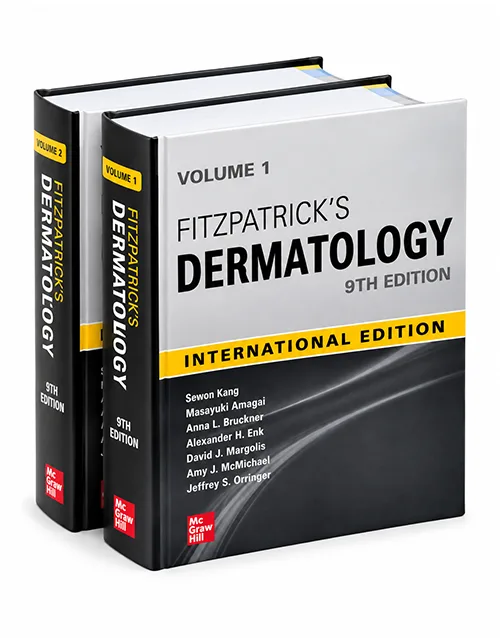


Fitzpatrick’s Dermatology, Ninth Edition – Complete Two-Volume Set
Fitzpatrick’s Dermatology, 9th Edition – International Edition is a comprehensive medical reference edited by Sewon Kang, Masayuki Amagai, Anna L. Bruckner, Alexander H. Enk, David J. Margolis, Amy J. McMichael, and Jeffrey S. Orringer. Published by McGraw Hill, this two-volume set provides an extensive examination of dermatological science, clinical diagnosis, disease mechanisms, and treatment approaches.
Dermatology involves the study of the skin, hair, nails, and related structures, including the many conditions that affect their function and appearance. Skin disorders can result from genetic factors, immune-system abnormalities, infections, environmental exposures, inflammation, and systemic diseases. This textbook connects the basic science of skin with the practical clinical knowledge needed to evaluate and manage dermatological conditions.
The ninth edition was extensively reorganized and updated by an international editorial team. Its coverage combines scientific foundations with disease-specific information, including pathophysiology, clinical features, diagnosis, clinical course, and management.
Volume 1: Foundations, Skin Structure, and Clinical Dermatology
Volume 1 establishes the scientific and clinical foundations of dermatology. It introduces the structure and function of skin and then explores major inflammatory, immune-mediated, and related dermatological conditions.
Understand the Foundations of Clinical Dermatology
The opening section introduces the fundamentals of clinical dermatology, including skin morphology and special clinical considerations. Readers can develop an understanding of how dermatological findings are described, evaluated, and interpreted during clinical examination.
The book also covers the pathology of skin lesions, epidemiology, and public health in dermatology. These topics help connect visible clinical findings with underlying disease processes and population-level patterns of skin disorders.
Explore the Structure and Function of Skin
The second major section examines the biological organization and physiological functions of the skin. It covers developmental biology, epidermal growth and differentiation, and the structure and function of sebaceous, eccrine, and apocrine glands.
Additional topics include hair follicle biology, nail structure, cutaneous vasculature, and the skin’s immune system. Readers can also study the skin barrier, epidermal and dermal adhesion, the skin microbiome, cutaneous photobiology, pigmentation, melanocyte biology, and neurobiology.
The section further explores genetics in relation to skin and the biological mechanisms involved in carcinogenesis. Together, these subjects provide a foundation for understanding the skin as an active biological organ rather than simply a protective covering.
Study Dermatitis and Inflammatory Skin Conditions
The textbook includes extensive coverage of dermatitis and related inflammatory conditions. Readers can explore atopic dermatitis, nummular eczema, lichen simplex chronicus, prurigo nodularis, allergic contact dermatitis, irritant dermatitis, and seborrheic dermatitis.
Occupational skin diseases are also addressed, helping clinicians understand how workplace exposures and environmental conditions may contribute to inflammatory skin problems.
Understand Psoriasiform and Lichenoid Disorders
Volume 1 examines psoriasiform conditions, including psoriasis, pityriasis rubra pilaris, parapsoriasis, pityriasis lichenoides, and pityriasis rosea.
It also covers lichenoid and granulomatous disorders, such as lichen planus, lichen nitidus, lichen striatus, granuloma annulare, and sarcoidosis. These discussions help readers understand different clinical patterns and the pathological processes associated with these conditions.
Explore Neutrophilic, Eosinophilic, and Reactive Erythematous Disorders
The volume covers several inflammatory conditions involving neutrophils, eosinophils, and mast cells. Topics include Sweet syndrome, pyoderma gangrenosum, autoinflammatory disorders, eosinophilic diseases, urticaria, angioedema, and mastocytosis.
It also examines reactive erythemas, including erythema multiforme, epidermal necrolysis, cutaneous drug reactions, and other figurate erythemas.
Study Disorders of Cornification and Vesiculobullous Disease
The book explores disorders involving abnormal keratinization and skin cornification. Coverage includes ichthyoses, inherited palmoplantar keratodermas, keratosis pilaris, acantholytic disorders, and porokeratosis.
Readers can also study vesiculobullous conditions, including pemphigus, bullous pemphigoid, mucous membrane pemphigoid, linear immunoglobulin A dermatosis, dermatitis herpetiformis, and inherited epidermolysis bullosa.
Understand Autoimmune and Connective Tissue Disorders
The first volume includes extensive coverage of autoimmune connective tissue and rheumatologic disorders affecting the skin. Topics include lupus erythematosus, dermatomyositis, systemic sclerosis, morphea, lichen sclerosus, psoriatic arthritis, rheumatoid arthritis, and Sjögren syndrome.
It also examines dermal connective tissue disorders, such as anetoderma and genetic conditions affecting connective tissue, along with subcutaneous tissue disorders including panniculitis and lipodystrophy.
Explore Pigmentary and Acneiform Disorders
Further chapters cover melanocytic and pigmentary conditions, including albinism, other genetic pigmentation disorders, vitiligo, and hypermelanoses.
The volume also addresses acneiform disorders, including acne vulgaris, rosacea, and related acneiform eruptions. These subjects support the clinical understanding of common and complex skin presentations.
Volume 2: Advanced Dermatological Conditions and Treatment
Volume 2 continues the clinical coverage of the ninth edition and expands into additional skin disorders, environmental conditions, neoplasms, systemic disease manifestations, infections, and treatment approaches.
Study Disorders of Hair, Nails, and Sweat Glands
Hair, nails, and sweat glands are important structures within the integumentary system. Volume 2 includes coverage of disorders affecting eccrine and apocrine glands, hair follicles, and nail structures.
Readers can explore the clinical features of these conditions and understand the diagnostic considerations involved in evaluating disorders of skin appendages.
Understand Environmental and Occupational Skin Diseases
Environmental and workplace exposures can contribute to numerous dermatological problems. The book explores skin conditions associated with external exposures and occupational factors.
This material helps clinicians understand how environmental agents and work-related activities may affect skin health and contribute to dermatological disease.
Explore Psychosocial and Age-Related Skin Conditions
The textbook examines the psychosocial aspects of skin disease and the influence of dermatological conditions on quality of life. It also covers skin changes associated with different stages of life.
These subjects encourage a broader approach to dermatology that considers the patient’s overall well-being, age, and clinical circumstances.
Study Skin Neoplasms and Skin Cancer
Volume 2 includes dedicated coverage of cutaneous neoplasia and skin tumors. Readers can examine different forms of skin growth and neoplastic conditions, along with their clinical features and diagnostic considerations.
This material is particularly relevant to professionals involved in skin examinations, lesion assessment, and the management of suspicious skin lesions.
Understand Systemic, Metabolic, Genetic, and Vascular Skin Disorders
The volume explores dermatological manifestations of metabolic, genetic, and systemic diseases. It also examines vascular disorders affecting the skin and the clinical findings associated with abnormal cutaneous blood vessels.
These sections demonstrate the relationship between dermatology and other areas of medicine, helping readers understand why skin findings can provide important clues about underlying systemic conditions.
Explore Bacterial, Fungal, and Viral Skin Infections
Infectious dermatology is an important part of the volume’s clinical coverage. It examines bacterial, fungal, and viral diseases affecting the skin, helping readers understand the different organisms and clinical presentations involved.
Further coverage includes sexually transmitted infections with dermatological manifestations and conditions associated with infestations, bites, and stings.
Review Dermatologic Treatments and Procedures
The textbook includes coverage of topical and systemic dermatological therapies, connecting disease diagnosis with treatment considerations.
It also explores physical treatments, dermatologic surgery, and cosmetic dermatology. These topics provide a broader understanding of the different medical and procedural approaches used in specialist skin care.
Connect Basic Science with Clinical Diagnosis and Management
A major strength of Fitzpatrick’s Dermatology is its integration of scientific knowledge with practical clinical dermatology. Rather than presenting diseases only as isolated descriptions, the textbook connects relevant pathophysiology with clinical findings, diagnosis, disease progression, and management.
This approach helps readers understand not only what a skin condition looks like but also why it develops and how it can be evaluated and treated.
Learn Through Extensive Clinical Images and Illustrations
The ninth edition features more than 3,000 illustrations across the complete work, including more than 2,700 full-color photographs. These visual resources support the identification and comparison of dermatological findings and help explain complex disease presentations.
The edition also includes revised tables and At-a-Glance summaries, along with an improved index designed to make clinical information easier to locate.
Benefit from International Dermatology Expertise
The complete reference draws on contributions from more than 500 dermatology specialists. Its international editorial team brings together different areas of expertise to present a broad view of dermatological science and clinical practice.
The extensive specialist contributions make the set useful for advanced medical education, specialist training, clinical reference, and continued professional development.
Who Should Read Fitzpatrick’s Dermatology?
Fitzpatrick’s Dermatology, Ninth Edition – Complete Two-Volume Set is suitable for practicing dermatologists, dermatology residents, medical students, postgraduate medical trainees, and healthcare professionals involved in skin disease diagnosis and treatment.
It is particularly useful for specialist dermatology education, hospital reference collections, clinical training programs, and advanced study of inflammatory, infectious, neoplastic, and systemic skin conditions.
Why Choose the Ninth Edition Complete Set?
- Complete two-volume reference: Provides broad coverage of dermatological science, diagnosis, and treatment.
- Scientific foundations: Explores skin anatomy, physiology, immunology, genetics, and pathophysiology.
- Extensive disease coverage: Includes inflammatory, autoimmune, infectious, vascular, and neoplastic conditions.
- Clinical treatment guidance: Covers topical and systemic therapies, dermatologic surgery, and physical treatments.
- Advanced specialist topics: Addresses hair and nail disorders, systemic disease manifestations, and cosmetic dermatology.
- International contributions: Features expertise from more than 500 contributors.
- Visual learning: Includes thousands of illustrations and full-color clinical photographs across both volumes.
- Improved navigation: Features revised tables, At-a-Glance summaries, and an improved index.
About the Book
Title: Fitzpatrick’s Dermatology
Edition: Ninth Edition
Set: Complete Two-Volume Set
Edition Type: International Edition
Editors: Sewon Kang, Masayuki Amagai, Anna L. Bruckner, Alexander H. Enk, David J. Margolis, Amy J. McMichael, and Jeffrey S. Orringer
Publisher: McGraw Hill Education
Publication Year: 2019
Print ISBN-13: 9781260441215
Format: Hardcover
Volumes Included: Volume 1 and Volume 2
Total Pages: 1,866 pages as listed by an International Edition catalogue
Language: English
For dermatologists and medical professionals seeking an extensive clinical reference, Fitzpatrick’s Dermatology, Ninth Edition – Complete Two-Volume International Edition provides detailed coverage of skin structure and function, dermatological disorders, infections, skin tumors, systemic conditions, and treatment approaches.
International Edition note: The pictured books are marked International Edition. The product should be accurately identified as such, and regional distribution or resale restrictions should be checked with your supplier before selling into the United States.
There are no reviews yet.