

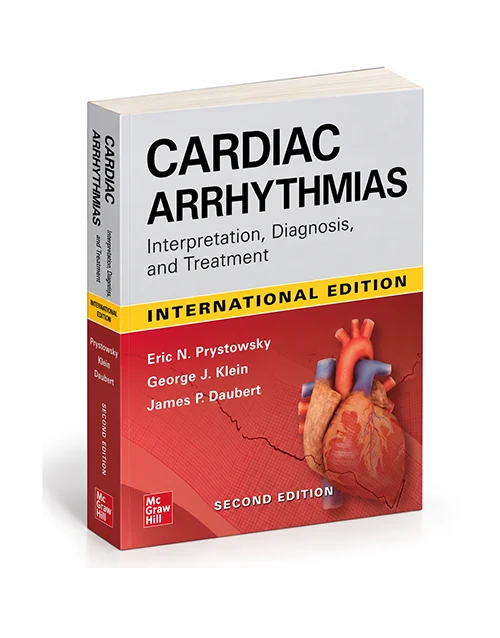


Cardiac Arrhythmias: Interpretation, Diagnosis, and Treatment, Second Edition
Cardiac Arrhythmias: Interpretation, Diagnosis, and Treatment, 2nd Edition by Eric N. Prystowsky, George J. Klein, and James P. Daubert is a specialized medical textbook focused on understanding, diagnosing, and treating cardiac rhythm disorders. Published by McGraw Hill, this reference explains the practical application of cardiac electrophysiology and electrocardiographic principles in clinical practice.
Cardiac arrhythmias occur when the electrical activity of the heart develops an abnormal rhythm or conduction pattern. Understanding these conditions requires knowledge of cardiac conduction, electrocardiography, electrophysiological mechanisms, diagnostic procedures, and therapeutic options. This textbook connects these subjects through clinical explanations, illustrations, cases, and discussions of modern treatment technologies.
Understand Cardiac Conduction and Electrophysiology
The book introduces the electrical conduction system of the heart and the electrophysiological principles that regulate normal cardiac rhythm. Readers can explore how electrical impulses originate, travel through cardiac tissue, and coordinate atrial and ventricular activity.
It examines cardiac conduction abnormalities and the electrocardiographic consequences of atrial and ventricular ectopy. These foundational concepts help readers understand how changes in electrical conduction can produce different rhythm patterns and clinical findings.
Learn Electrocardiographic Interpretation
Electrocardiography is an essential diagnostic tool for evaluating cardiac rhythm disorders. The textbook explores ECG observations and their relationship to underlying electrophysiological mechanisms.
Readers can study topics such as bundle branch block, narrow QRS tachycardia, wide QRS tachycardia, and other electrocardiographic abnormalities. These discussions help connect ECG findings with possible mechanisms and clinical presentations.
The book also examines electrocardiographic abnormalities in asymptomatic individuals, helping readers understand that abnormal findings must be interpreted in the appropriate clinical context.
Explore the Mechanisms of Cardiac Arrhythmias
Understanding why an arrhythmia occurs is important for selecting appropriate diagnostic and treatment approaches. The book discusses the mechanisms responsible for tachycardia and other abnormal rhythms.
Readers can develop an understanding of supraventricular and ventricular tachycardias, preexcitation syndromes, sustained monomorphic ventricular tachycardia, and bradycardia. The subject matter connects electrical abnormalities with the clinical features and diagnostic considerations associated with different rhythm disorders.
Study Supraventricular Tachycardia and Atrial Fibrillation
The textbook provides detailed coverage of supraventricular tachycardia and related rhythm disorders. It examines the mechanisms, clinical presentation, and approaches used to evaluate these conditions.
Atrial fibrillation receives dedicated attention, including discussion of its electrophysiological basis and catheter ablation. These topics are particularly relevant to cardiology professionals studying the evaluation and treatment of common atrial arrhythmias.
Understand Ventricular Tachycardia and Serious Rhythm Disorders
Ventricular arrhythmias are important topics in clinical electrophysiology because certain forms may be associated with significant cardiovascular risk. The book discusses ventricular tachycardia, sustained monomorphic ventricular tachycardia, and other relevant rhythm abnormalities.
It also examines cardiac arrest and arrhythmias associated with acute myocardial infarction. These discussions help readers understand the relationship between rhythm disorders, underlying cardiac conditions, clinical presentation, and treatment considerations.
Explore Syncope, Dizziness, and Palpitations
Patients with rhythm disorders may present with symptoms such as fainting, dizziness, and palpitations. The textbook addresses undiagnosed syncope, dizzy spells, and palpitations as important clinical presentations requiring careful assessment.
It connects these symptoms with possible cardiac rhythm disturbances and discusses the diagnostic information that can be obtained through patient history, physical examination, laboratory investigations, and appropriate cardiac testing.
Learn Electrophysiological Testing and Noninvasive Diagnostic Methods
The book explains techniques in electrophysiological testing and noninvasive methods used to evaluate cardiac rhythm disorders. These procedures help clinicians investigate abnormal electrical activity and understand the mechanisms responsible for particular arrhythmias.
Readers can explore how diagnostic findings contribute to the assessment of patients and support decisions about further investigation or treatment. The material is useful for medical students, cardiology trainees, and clinicians developing a deeper understanding of electrophysiology.
Understand Pharmacological and Device-Based Treatment
The textbook covers pharmacological therapy and the clinical principles involved in treating cardiac arrhythmias. It discusses the role of drugs in managing rhythm disorders and the considerations involved in evaluating therapeutic approaches.
It also explores implanted cardiac electrical devices, newer technologies, and device-based treatment of tachycardia. These subjects help readers understand how medications and cardiac devices contribute to the management of different rhythm disorders.
Explore Catheter Ablation and Modern Treatment Technologies
Catheter ablation has become an important treatment approach for selected cardiac arrhythmias. The second edition includes expanded coverage of new technologies and a wide range of catheter ablation procedures.
Dedicated chapters address atrial fibrillation ablation and ventricular tachycardia ablation. Readers can explore the clinical and electrophysiological principles behind these treatment methods and their place in modern arrhythmia management.
The book also includes updated information on implantable cardiac electrical devices, clinical trials, and newer treatment approaches. These additions help explain how advances in technology have influenced contemporary electrophysiology practice.
Clinical Cases, Illustrations, and Practical Learning
The second edition includes updated figures, additional clinical cases, and full-color electrocardiographic tracings. It also provides new and classic articles associated with individual chapters to support further reading.
These resources help readers connect theoretical electrophysiological concepts with clinical observations and practical diagnostic situations. The combination of cases, illustrations, and detailed discussions makes the textbook useful for both structured study and professional reference.
Who Should Read Cardiac Arrhythmias?
Cardiac Arrhythmias: Interpretation, Diagnosis, and Treatment, 2nd Edition is suitable for cardiologists, electrophysiology fellows, medical students, internal medicine residents, internists, family physicians, physician assistants, and nurse practitioners.
It is particularly useful for healthcare professionals who want to strengthen their understanding of electrocardiography, cardiac conduction, arrhythmia mechanisms, clinical electrophysiology, and treatment options. Its integrated approach makes complex electrophysiological concepts more accessible to readers who do not specialize exclusively in cardiac electrophysiology.
Why Choose the Second Edition?
- Comprehensive electrophysiology coverage: Explains cardiac conduction, ECG interpretation, and mechanisms of arrhythmias.
- Clinical diagnostic guidance: Covers patient presentations, syncope, palpitations, and diagnostic techniques.
- Arrhythmia coverage: Includes supraventricular tachycardia, atrial fibrillation, ventricular tachycardia, and bradycardia.
- Modern treatment approaches: Discusses pharmacological therapy, implantable devices, and catheter ablation.
- Updated clinical information: Includes new clinical trials, cases, figures, and treatment advances.
- Visual learning resources: Features full-color ECG tracings, illustrations, and chapter-associated articles.
- Professional reference: Suitable for cardiology education, medical training, and clinical reference.
About the Book
Title: Cardiac Arrhythmias: Interpretation, Diagnosis, and Treatment
Edition: Second Edition
Authors: Eric N. Prystowsky, George J. Klein, and James P. Daubert
Publisher: McGraw Hill
Publication Year: 2020
International Edition ISBN-13: 9781260460827
Subject: Cardiology and Clinical Electrophysiology
For healthcare professionals seeking a practical reference on cardiac rhythm disorders, Cardiac Arrhythmias: Interpretation, Diagnosis, and Treatment, Second Edition provides a structured overview of cardiac electrophysiology, ECG interpretation, diagnostic methods, and contemporary treatment approaches.
Medical education note: This textbook is intended for professional education and reference. It does not replace current cardiology guidelines, specialist training, or patient-specific clinical judgment.
There are no reviews yet.