

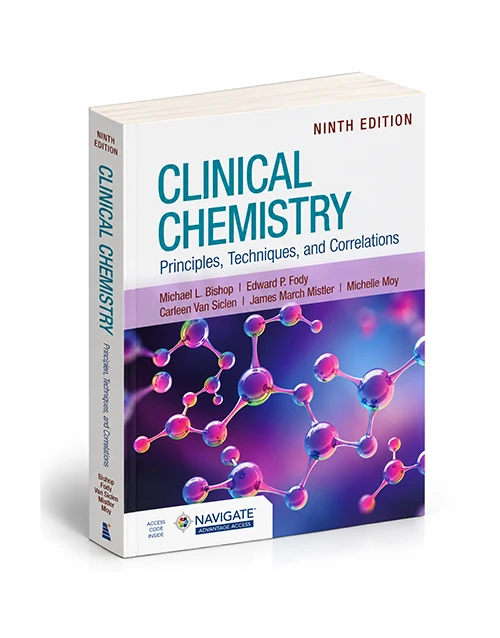


Clinical Chemistry: Principles, Techniques, and Correlations, Ninth Edition
Clinical Chemistry: Principles, Techniques, and Correlations, 9th Edition is a comprehensive textbook designed to develop the knowledge and practical understanding required in clinical chemistry and medical laboratory science. Edited by Michael L. Bishop, Edward P. Fody, Carleen Van Siclen, James March Mistler, and Michelle Moy, this edition is published by Jones & Bartlett Learning.
Clinical chemistry plays an important role in modern healthcare by examining the chemical components of blood, body fluids, and other biological specimens. Laboratory results help healthcare professionals evaluate organ function, identify abnormalities, monitor diseases, and assess treatment responses. This textbook connects the scientific principles behind laboratory testing with analytical procedures and the clinical interpretation of results.
Understand the Basic Principles of Clinical Chemistry
The book begins with the fundamental concepts and practices used in clinical chemistry laboratories. Readers explore laboratory mathematics, chemical solutions, concentrations, pH, buffers, reference materials, and the preparation and handling of laboratory samples.
It also introduces laboratory safety and regulations, quality management, and the importance of maintaining reliable testing procedures. These foundational subjects help students understand how laboratories establish consistent processes and produce accurate, dependable results.
Explore Laboratory Analytical Techniques
Analytical techniques are essential for measuring chemical substances in biological specimens. The textbook explains the scientific principles behind common laboratory methods and their application in clinical testing.
Topics include spectrophotometry, electrophoresis, immunoassay methods, analytical measurement techniques, and clinical chemistry automation. Readers can learn how laboratory instruments and analytical procedures are used to identify and measure substances in patient samples.
The book also explores automation in clinical laboratories and the role of technology in improving laboratory workflow, consistency, and testing efficiency.
Study Amino Acids, Proteins, and Enzymes
Proteins and enzymes are important components of numerous biological and metabolic processes. The textbook examines their chemical properties, functions, and clinical significance.
Readers can study amino acids, protein analysis, nonprotein nitrogen compounds, and enzymes, along with their relationships to different physiological and pathological conditions. These subjects provide a foundation for understanding how biochemical measurements contribute to clinical laboratory evaluation.
Understand Carbohydrates, Lipids, and Electrolytes
The book covers major analytical procedures involving carbohydrates, lipids, lipoproteins, and electrolytes. These areas are central to many routine clinical chemistry investigations.
Students can explore glucose metabolism, lipid measurements, electrolyte balance, and the interpretation of related laboratory findings. The chapters help connect laboratory measurements with physiological processes and common disease conditions.
Additional coverage of blood gases, pH, and buffer systems explains the chemical principles involved in maintaining acid-base balance and interpreting related test results.
Explore Endocrinology and Hormone Testing
Clinical chemistry testing plays an important role in evaluating the endocrine system. The textbook includes dedicated coverage of basic endocrinology and laboratory assessment of thyroid, hypothalamic, pituitary, adrenal, gonadal, and parathyroid function.
Readers can develop an understanding of hormone measurements and the clinical relationships associated with endocrine disorders. This material helps explain how laboratory testing supports the investigation of hormonal abnormalities and the assessment of endocrine health.
Understand Organ-System Testing and Clinical Correlations
The textbook connects analytical procedures with clinical conditions affecting major organ systems. It explores liver function, cardiac function, renal function, and pancreatic function, explaining how laboratory findings are associated with different disease processes.
Readers can study the role of clinical chemistry tests in evaluating organ function and understanding changes in laboratory values. These chapters emphasize the importance of interpreting results in relation to clinical information rather than viewing individual measurements in isolation.
Study Specialty Areas of Clinical Chemistry
The ninth edition includes a dedicated section on specialty areas of clinical chemistry. Topics include body fluid analysis, pregnancy and prenatal testing, therapeutic drug monitoring, toxicology, trace elements, toxic elements, vitamins, tumor markers, point-of-care testing, and newborn, pediatric, and geriatric clinical chemistry.
This coverage introduces readers to specialized testing areas that support different patient populations and clinical requirements. It also helps students understand how laboratory methods and result interpretation vary according to the type of test and the patient’s clinical circumstances.
Connect Laboratory Results with Disease Conditions
A key emphasis of the textbook is the relationship between analytical methods and clinical interpretation. Understanding how a test works is only one part of laboratory science; professionals must also recognize what a result may indicate and what factors can influence its reliability.
By connecting laboratory procedures with disease states and physiological processes, the book helps students develop analytical and interpretive skills relevant to clinical laboratory work. This approach supports learning in medical laboratory science programs and professional training environments.
Navigate Advantage Learning Resources
The pictured edition carries a Navigate Advantage Access label. The publisher describes digital study resources such as an eBook, knowledge-check questions, quizzes, case studies, appendices, flashcards, a glossary, an image bank, learning objectives, and reference tables.
Access to these resources depends on the package and the validity of the included access code. For resale, do not promise working digital access unless you have confirmed that the code is included, unused, and redeemable.
Who Should Read Clinical Chemistry, Ninth Edition?
Clinical Chemistry: Principles, Techniques, and Correlations, 9th Edition is suitable for medical laboratory science students, clinical laboratory technology students, medical technology learners, clinical laboratory professionals, and healthcare educators.
It is particularly relevant for courses involving clinical chemistry, laboratory methods, diagnostic testing, quality management, and interpretation of laboratory results. The book can support classroom instruction, laboratory education, examination preparation, and professional reference.
Why Choose the Ninth Edition?
- Comprehensive clinical chemistry coverage: Introduces fundamental principles, analytical procedures, and clinical correlations.
- Laboratory methods: Explores analytical techniques, automation, quality management, and laboratory safety.
- Clinical applications: Connects laboratory measurements with endocrine and organ-system disorders.
- Specialty testing: Includes toxicology, therapeutic drug monitoring, tumor markers, and body fluid analysis.
- Patient-specific testing: Covers pregnancy, prenatal, newborn, pediatric, and geriatric clinical chemistry.
- Digital learning support: Offers publisher-described Navigate Advantage resources with the appropriate access package.
- Professional education: Suitable for clinical laboratory science students and healthcare professionals.
About the Book
Title: Clinical Chemistry: Principles, Techniques, and Correlations
Edition: Ninth Edition
Editors: Michael L. Bishop, Edward P. Fody, Carleen Van Siclen, James March Mistler, and Michelle Moy
Publisher: Jones & Bartlett Learning
Copyright Year: 2023
Print ISBN-13: 9781284238860
Format: Paperback + Navigate Advantage package
Pages: 736
For students and professionals seeking a detailed introduction to clinical laboratory science, Clinical Chemistry: Principles, Techniques, and Correlations, 9th Edition provides a structured reference covering analytical principles, laboratory techniques, clinical testing, and the interpretation of results across a broad range of medical conditions.
There are no reviews yet.