

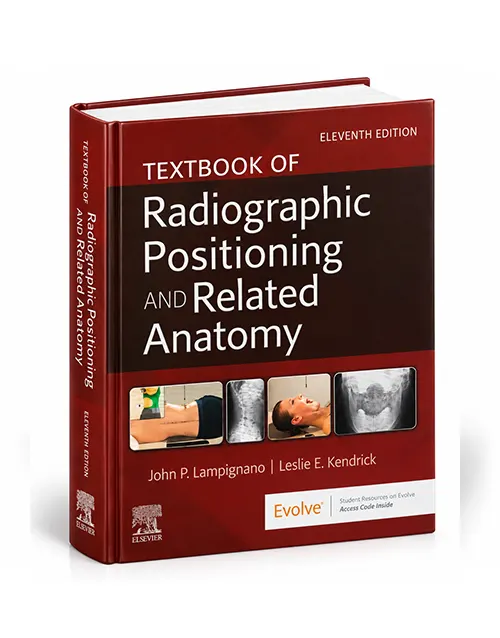


Textbook of Radiographic Positioning and Related Anatomy, 11th Edition
Textbook of Radiographic Positioning and Related Anatomy, 11th Edition by John P. Lampignano and Leslie E. Kendrick is a comprehensive textbook for learning radiographic positioning, anatomical relationships, and diagnostic imaging procedures. Published by Mosby, an imprint of Elsevier, this book supports students preparing for careers in radiologic technology and professionals reviewing foundational imaging techniques.
Producing useful diagnostic radiographs requires accurate patient positioning, a clear understanding of anatomy, appropriate technical factors, and careful image evaluation. This textbook brings these elements together in a practical learning resource, helping readers understand how positioning choices affect the anatomical structures demonstrated and the diagnostic quality of an image.
Learn Radiographic Positioning and Imaging Principles
The book introduces the terminology, positioning concepts, and imaging principles used in diagnostic radiography. Readers can study the relationship between patient position, anatomical alignment, image receptor placement, central-ray direction, and exposure considerations.
These foundational concepts help radiography students understand how to prepare for an examination, select an appropriate projection, and follow a consistent procedure. A structured approach to positioning can also help minimize avoidable imaging errors and reduce the need for repeat examinations when clinically appropriate.
Study Related Anatomy and Anatomical Landmarks
A strong knowledge of anatomy is essential for radiologic positioning. This textbook connects anatomical structures with the projections used to demonstrate them, helping students understand the relationship between body positioning and the resulting radiographic image.
The content covers anatomy and positioning for different body regions, including the chest, abdomen, upper and lower limbs, shoulder and pelvic girdles, spine, bony thorax, cranium, and facial bones. This organization allows readers to study particular anatomical areas and review the positioning principles associated with each region.
Understand Positioning Procedures Across Body Regions
The book provides guidance on a broad range of radiographic procedures. Its chapter organization includes examinations of the chest, abdomen, extremities, spine, skull, facial bones, paranasal sinuses, and gastrointestinal and urinary systems.
Readers can use this coverage to build familiarity with routine projections and the technical considerations involved in obtaining diagnostic-quality images. The systematic presentation is useful for coursework, laboratory practice, clinical preparation, and review of commonly performed radiographic examinations.
Evaluate Radiographic Images and Identify Errors
Image evaluation is an important skill in radiologic technology. The textbook includes evaluation criteria that help students understand how to assess the positioning, anatomical coverage, and technical quality of radiographic images.
Critique images at the end of positioning chapters give readers opportunities to consider common positioning and technical errors. These learning activities can help students develop a more systematic approach to image review and recognize when an image may not meet the intended examination criteria.
Consider Different Patient Needs
Radiologic technologists must adapt procedures to the needs and limitations of individual patients. The 11th edition includes considerations for pediatric, geriatric, and bariatric patients, helping readers recognize that positioning approaches may need to account for differences in mobility, body habitus, comfort, and clinical circumstances.
The book also covers trauma, mobile, and surgical radiography. These topics introduce readers to imaging situations in which standard positioning may need to be adapted to the patient’s condition and the requirements of the clinical setting.
Explore Specialized Imaging Procedures
In addition to routine projections, the textbook covers specialized areas of diagnostic imaging. Its subject matter includes angiography, interventional procedures, computed tomography, and other special radiographic procedures and diagnostic or therapeutic modalities.
This broader coverage helps students understand the range of imaging environments encountered in radiologic practice. It also provides context for how positioning knowledge contributes to imaging procedures beyond routine diagnostic radiography.
Prepare for Clinical Practice and Certification
The 11th edition incorporates updated photographs and radiographs demonstrating digital imaging technology and equipment. The publisher also identifies alignment with current ARRT content specifications and ASRT curriculum guidelines as features of this edition.
These resources can support students as they connect classroom learning with clinical training and prepare for professional certification examinations. Review questions are available through the Evolve resources associated with the book; access may depend on the product package and the status of any access code included with a particular copy.
Who Should Use This Radiographic Positioning Textbook?
Textbook of Radiographic Positioning and Related Anatomy, 11th Edition is suitable for radiologic technology students, radiography instructors, imaging science learners, and practicing technologists who want to review positioning principles and related anatomy.
It can support classroom instruction, laboratory practice, clinical preparation, and examination review. By bringing positioning instructions, anatomical illustrations, radiographic examples, and image evaluation criteria together, the book provides a structured resource for learning the practical foundations of diagnostic radiography.
Why Choose the 11th Edition?
- Comprehensive positioning coverage: Explores routine and specialized radiographic procedures across multiple body regions.
- Related anatomical knowledge: Connects positioning procedures with the anatomy demonstrated on radiographs.
- Image evaluation: Includes evaluation criteria and critique images for reviewing positioning and technical errors.
- Patient-specific considerations: Addresses pediatric, geriatric, bariatric, and trauma-related imaging situations.
- Updated imaging material: Includes updated photographs, radiographs, and equipment-related illustrations.
- Educational support: Provides a structured resource for radiography coursework, clinical learning, and certification preparation.
About the Book
Title: Textbook of Radiographic Positioning and Related Anatomy
Edition: Eleventh Edition
Authors: John P. Lampignano and Leslie E. Kendrick
Publisher: Mosby, an imprint of Elsevier
Publication Date: June 14, 2024
Copyright: 2025
ISBN-13: 9780323936132
Page Count: 856 pages
For students and professionals seeking a detailed resource on radiographic procedures, anatomical positioning, and diagnostic image evaluation, this 11th edition provides a practical foundation for radiologic technology education and clinical reference.
There are no reviews yet.