

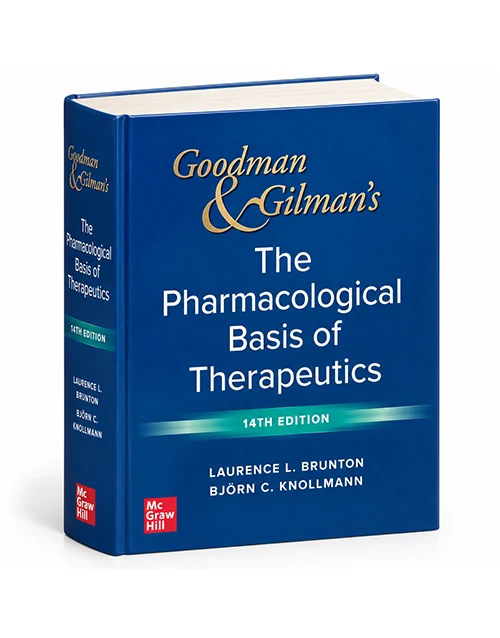


Goodman & Gilman’s The Pharmacological Basis of Therapeutics, 14th Edition
Goodman & Gilman’s The Pharmacological Basis of Therapeutics, 14th Edition, edited by Laurence L. Brunton and Björn C. Knollmann, is a comprehensive medical reference on the scientific principles and clinical applications of pharmacology. Published by McGraw Hill, this established textbook explains how medicines interact with biological systems, how drugs produce therapeutic effects, and how pharmacological knowledge supports informed treatment decisions.
Pharmacology connects basic biomedical science with the prevention, diagnosis, and treatment of disease. Understanding drug actions requires knowledge of molecular mechanisms, physiological processes, pharmacokinetics, pharmacodynamics, therapeutic effects, and adverse reactions. This textbook brings these subjects together to help readers develop a deeper understanding of medicines and their clinical applications.
Understand the Scientific Foundations of Pharmacology
The book introduces the general principles that explain how drugs act within the body. Readers can study the relationships between drug concentration, receptor interactions, biological responses, therapeutic effects, and unwanted reactions. These foundations help explain why medicines can produce different outcomes depending on their properties and the circumstances in which they are used.
The text explores pharmacokinetics, including the processes of absorption, distribution, metabolism, and excretion, as well as pharmacodynamics and the molecular mechanisms responsible for drug action. Together, these topics provide a framework for understanding drug behavior and the factors that influence therapeutic response.
Explore Drug Mechanisms and Molecular Pharmacology
Many medicines work by interacting with specific receptors, enzymes, ion channels, transporters, or other biological targets. The textbook examines these interactions and their relationships with physiological processes and disease mechanisms.
Understanding these principles helps students connect molecular biology and biochemistry with clinical therapeutics. The 14th edition includes revised and expanded coverage of pharmacodynamics and molecular mechanisms of drug action, supported by additional figures illustrating how therapeutic agents produce their effects.
Study Pharmacology Across Major Therapeutic Areas
The reference is organized into major subject areas, including general principles, neuropharmacology, cardiovascular and renal pharmacology, pulmonary pharmacology, inflammation, immunomodulation, hematopoiesis, endocrine pharmacology, gastrointestinal pharmacology, and the chemotherapy of infectious diseases.
It also covers pharmacotherapy of neoplastic disease and special systems pharmacology. This structure helps readers study how different drug classes interact with biological systems and how pharmacological principles apply to a broad range of diseases and therapeutic needs.
Understand Drug Therapy and Clinical Applications
Effective pharmacotherapy requires an understanding of both the scientific basis of a medicine and its intended clinical use. The book connects drug mechanisms with therapeutic applications, helping readers examine how medicines are selected, how responses are evaluated, and why safety considerations are central to treatment.
Clinical pharmacology also requires attention to factors that affect drug response, including patient characteristics, disease states, concomitant medicines, and differences in drug metabolism. The textbook provides a scientific framework for understanding these relationships and the role of pharmacological evidence in healthcare.
Explore New and Expanded Topics in the 14th Edition
The fourteenth edition introduces five new chapters covering pharmacovigilance, the blood-brain barrier, cannabis, antibodies and other biological agents, and the relationship between the gastrointestinal microbiome and drug response.
It also expands discussion of genetic polymorphisms and their use in designing appropriate therapies. These subjects connect established pharmacological principles with evolving areas of biomedical research and personalized approaches to treatment.
Learn About Biological Therapies and Modern Drug Development
Modern therapeutics includes a growing range of biological agents alongside traditional small-molecule medicines. The book’s expanded treatment of antibodies, immune checkpoint inhibitors, CAR-T cells, and other biological agents introduces readers to important developments in contemporary pharmacology.
The discussion of the blood-brain barrier and pharmacological interactions with the central nervous system also supports a broader understanding of drug delivery, therapeutic targets, and the challenges associated with treatment in different biological environments.
Understand Drug Safety and Pharmacovigilance
Evaluating medicine safety is an essential part of pharmacology. Pharmacovigilance involves identifying, assessing, understanding, and preventing adverse effects and other medicine-related problems. The dedicated chapter in this edition highlights the importance of monitoring the safety of therapeutic agents.
These principles help readers recognize why medicines must be evaluated not only for their intended effects but also for risks, interactions, and outcomes during use. The textbook is an educational reference and should be used alongside current prescribing information and applicable clinical guidance.
Extensive Illustrations and Reference Features
The fourteenth edition contains more than 600 color illustrations, including 50 new figures illustrating mechanisms of drug action. Drug Fact Tables summarize clinical pharmacology, while chapter outlines and abbreviation lists help readers navigate the material.
These resources support focused study and review by bringing important concepts and clinical information into an accessible reference format. Additional online updates are also identified among the publisher’s features; availability depends on the publisher’s access arrangements for the edition purchased.
Who Should Read Goodman & Gilman’s Pharmacology Textbook?
Goodman & Gilman’s The Pharmacological Basis of Therapeutics, 14th Edition is suitable for medical students, pharmacy students, physicians, pharmacists, pharmacologists, biomedical researchers, and other healthcare professionals seeking detailed information about drug actions and therapeutic applications.
It can serve as a reference for studying pharmacology, reviewing mechanisms of drug action, understanding drug classes, and exploring the scientific principles behind clinical therapeutics. Its broad coverage makes it relevant to academic coursework, professional development, and medical reference collections.
Why Choose the 14th Edition?
- Comprehensive coverage: Explores pharmacological principles and major therapeutic areas.
- Scientific depth: Connects drug mechanisms with physiology, pathophysiology, and clinical applications.
- Expanded topics: Includes pharmacovigilance, the blood-brain barrier, cannabis, biological therapies, and microbiome-related drug response.
- Genetics and personalized therapy: Expands discussion of genetic polymorphisms in therapeutic planning.
- Visual learning support: Features more than 600 color illustrations and Drug Fact Tables.
- Academic and professional value: Suitable for students and healthcare professionals seeking a detailed pharmacology reference.
About the Book
Title: Goodman & Gilman’s The Pharmacological Basis of Therapeutics
Edition: Fourteenth Edition
Editors: Laurence L. Brunton and Björn C. Knollmann
Publisher: McGraw Hill
Publication Date: November 1, 2022
Copyright: 2023
Print ISBN-13: 9781264258079
For readers seeking a detailed understanding of pharmacology and clinical therapeutics, the fourteenth edition of Goodman & Gilman’s The Pharmacological Basis of Therapeutics offers an extensive reference connecting drug mechanisms, biomedical science, safety considerations, and the clinical use of medicines.
Educational note: This reference supports medical and scientific learning. It does not replace professional judgment, current prescribing information, or individualized medical advice.
There are no reviews yet.