

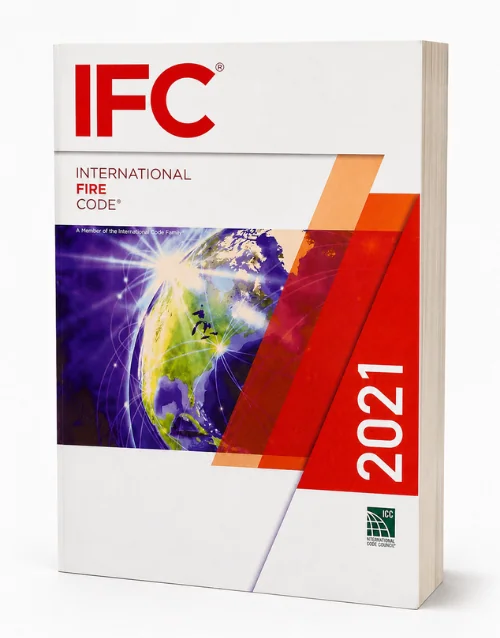


Fire safety planning involves more than selecting alarms and extinguishers. Building use, emergency access, hazardous materials, evacuation routes, and fire protection systems all influence how fire risks are addressed. The International Fire Code (IFC) 2021 Book, published by the International Code Council (ICC), brings these subjects together in a reference for professionals who review, manage, inspect, or work with fire and life safety requirements. This softcover edition carries ISBN 9781609839598 and contains 692 pages of code provisions.
A significant part of the 2021 International Fire Code focuses on the conditions that affect fire prevention and emergency response in buildings. Its provisions address fire department access, fire protection water supplies, building services, fire and smoke protection features, interior finishes, and means of egress. These subjects help readers examine how building features and operational conditions relate to fire safety. The Code also addresses emergency planning and preparedness, including procedures and occupant readiness during fires and other emergencies.
Fire protection and life safety systems receive dedicated coverage in Chapter 9. Related provisions address systems used for fire detection, occupant notification, smoke control, and fire suppression, with requirements varying according to the applicable building and occupancy conditions. Other chapters cover construction safeguards, existing-building considerations, energy systems, and equipment-related hazards. This range makes the 2021 International Fire Code book relevant to professionals who need to consult specific provisions while reviewing building plans, evaluating fire protection arrangements, or researching inspection requirements.
The Code also devotes substantial attention to hazardous materials and specialized operations. Its chapters address materials and hazards involving compressed gases, corrosive substances, flammable and combustible liquids, flammable gases, oxidizers, explosives, and other regulated substances. Separate provisions cover specialized occupancies and activities, including aviation facilities, industrial operations, storage facilities, and construction sites. For fire prevention professionals and facility managers, these sections provide a structured reference for investigating the requirements associated with particular materials, processes, and building uses.
The 2021 edition includes revisions addressing emerging and changing fire safety concerns. Examples include requirements related to additive manufacturing equipment, energy storage systems, emergency responder communication, and construction fire safety planning. The edition also introduces a dedicated chapter for the storage of distilled spirits and wines. Identifying the publication year is therefore important when researching a specific code cycle or comparing provisions across editions.
Fire marshals, fire inspectors, building officials, fire protection engineers, architects, plan reviewers, contractors, and facility managers may use the International Fire Code (IFC) 2021 for professional reference and technical research. Students and instructors can also consult its terminology, chapter organization, and code provisions when studying fire prevention and life safety. If you need the 2021 edition for a project, examination preparation, or reference library, verify that this is the required edition. Applicable codes and local amendments depend on the jurisdiction, and possession of the book alone does not establish compliance with local requirements.
There are no reviews yet.