



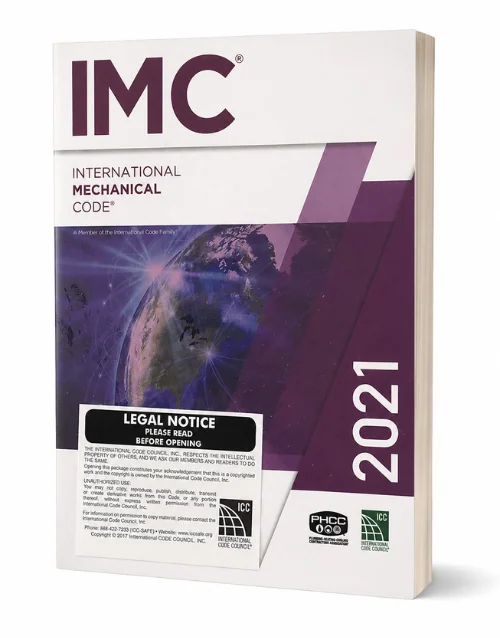










Mechanical systems influence how buildings manage indoor air, heating, cooling, exhaust, and equipment operation. The International Mechanical Code (IMC) 2021 edition provides a detailed reference for the code provisions governing these systems. Published by the International Code Council (ICC), this softcover book is intended for professionals who need to consult mechanical code requirements during building design, construction, inspection, and technical research. ISBN 9781609839642 identifies the 2021 softcover edition.
A significant part of the 2021 International Mechanical Code concerns how air moves through occupied buildings and how mechanical equipment is installed. Its provisions address ventilation, exhaust systems, duct construction, combustion air, and chimneys and vents. These subjects are closely connected in HVAC work: ventilation supplies air to building spaces, exhaust systems remove unwanted air and contaminants, and ductwork carries air through the building. The Code organizes these requirements into dedicated chapters, helping readers locate the provisions relevant to a particular system or installation question.
Equipment installation and serviceability are also important areas of coverage. The Code addresses appliance locations, access and service clearances, piping support, condensate disposal, temperature control, and heating and cooling load calculations. These provisions are relevant when reviewing mechanical layouts, assessing equipment placement, examining installation details, or researching the requirements associated with a building’s heating and cooling systems. The general regulations chapter provides a common starting point for understanding requirements that apply across different types of mechanical equipment.
Beyond conventional heating, ventilation, and air conditioning, the 2021 IMC code book covers specialized applications, including commercial kitchen exhaust, clothes dryer exhaust, hazardous exhaust, refrigeration systems, boilers, water heaters, pressure vessels, hydronic piping, and fuel oil storage. It also addresses solar thermal systems and includes referenced standards. This range of subjects makes the book relevant to projects involving different mechanical technologies, from air distribution and exhaust arrangements to equipment-specific installations. Readers can consult the applicable chapters to investigate technical requirements without relying exclusively on broad HVAC summaries.
Mechanical contractors, HVAC technicians, mechanical engineers, architects, building officials, inspectors, and plan reviewers may use this edition when researching mechanical code provisions. It can also support classroom instruction, apprenticeship training, and professional development by familiarizing readers with code terminology and the organization of mechanical requirements. For construction teams, having a shared reference can help when discussing equipment specifications, reviewing plans, or identifying the provisions relevant to a proposed installation.
Choosing the correct edition matters when working with project specifications or studying code requirements. The 2021 International Mechanical Code should be distinguished from the 2018 and 2024 editions, which may contain different provisions. Local jurisdictions determine which edition and amendments apply to a project, so verify the applicable requirements before using this book for construction or inspection decisions.
For professionals and students who specifically need the International Mechanical Code (IMC) 2021 edition, this ICC publication brings ventilation, exhaust, HVAC equipment, refrigeration, piping, and other mechanical-system requirements together in one printed reference. Its ISBN helps buyers identify the intended edition when selecting a book for a technical library, training program, or project-related reference collection.
There are no reviews yet.