



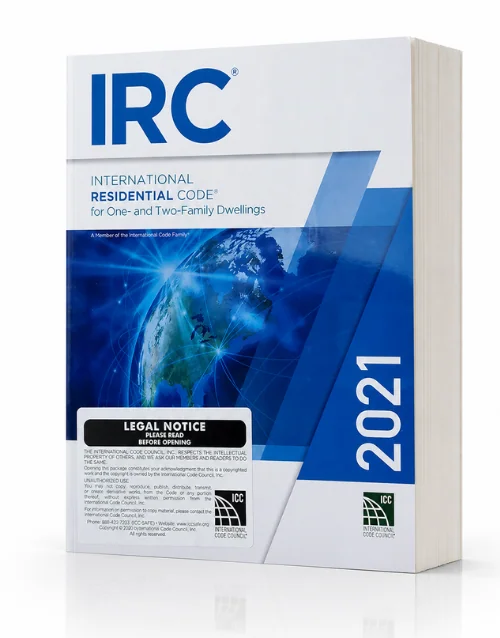










From the foundation beneath a home to the roof above it, residential construction involves interconnected structural components and building systems that must be considered together. The International Residential Code (IRC) 2021 Book brings these requirements into one reference for professionals working on one- and two-family dwellings and qualifying townhouses. Published by the International Code Council (ICC), this paperback edition carries ISBN 9781609839574 and is intended for readers who need to consult the 2021 residential building code for technical research, construction planning, education, or inspection work.
The 2021 IRC follows the major stages and components of residential construction. Its provisions address building planning, foundations, floor framing, wall construction, wall coverings, roof and ceiling assemblies, and building materials. These sections are relevant when reviewing house plans, researching framing details, or examining how structural elements relate to the overall design. The Code also addresses fire safety, means of egress, light, ventilation, and other considerations associated with residential building design.
A substantial part of the publication deals with systems that make a dwelling functional beyond its structural framework. Readers can consult provisions concerning plumbing fixtures, water supply and distribution, sanitary drainage, venting, mechanical equipment, heating and cooling, fuel gas, and electrical installations. By bringing these subjects together, the 2021 International Residential Code provides a shared reference for professionals coordinating different aspects of a residential project. Its organized chapters, tables, figures, and index help readers navigate specific topics rather than searching through unrelated technical publications.
The 2021 edition also includes provisions and revisions relevant to contemporary residential construction. Notable changes address deck construction, footing and post-height considerations, wind design information, emergency escape and rescue openings, and storm shelter design. Other updates concern dwelling separation, braced wall lines, and selected building-system requirements. These details can be particularly useful when comparing project documents with the provisions of this specific edition. Readers should consult the relevant sections and referenced standards for the complete requirements rather than relying on a brief summary of changes.
For residential builders, general contractors, remodelers, architects, structural engineers, designers, inspectors, and building officials, this International Residential Code (IRC) 2021 book offers a technical reference for plan review, construction research, and examination of residential code provisions. Apprentices, construction students, and instructors can also use it to become familiar with the terminology and organization of residential building regulations. Its relevance depends on the project: the IRC has a defined scope and is not a substitute for the International Building Code where that code applies.
If you specifically need the 2021 edition for residential construction work, training, or code-related documentation, this ICC publication provides a consolidated reference covering the principal elements of a dwelling and its associated systems. Before using it for an active project, check which code edition and local amendments have been adopted by the authority having jurisdiction. Confirming the ISBN also helps distinguish this paperback from other editions and formats of the International Residential Code.
There are no reviews yet.