

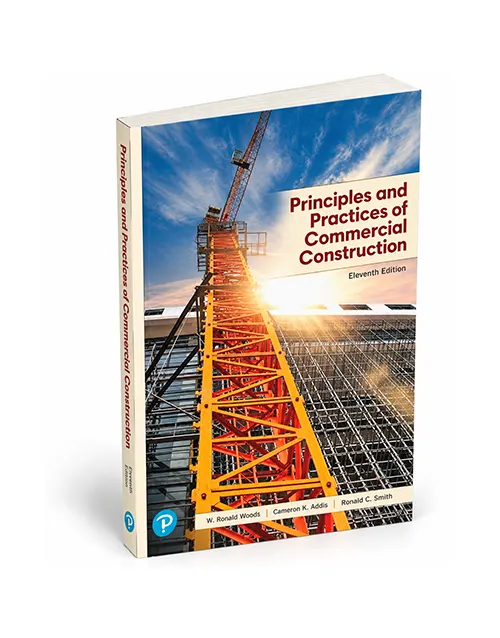


Principles and Practices of Commercial Construction, 11th Edition
Principles and Practices of Commercial Construction, 11th Edition by W. Ronald Woods, Cameron K. Andres, and Ronald C. Smith is a comprehensive educational reference covering the methods, materials, systems, and processes involved in commercial building construction. Published by Pearson, this textbook takes readers from basic construction concepts to more advanced building practices, connecting design theory with the different phases of a construction project.
Commercial construction requires coordination between site planning, materials, equipment, foundations, structural systems, building envelopes, and finishing work. Understanding how these elements function together is essential for construction professionals, contractors, architects, and engineering students. This book presents these subjects in a structured format, supported by construction illustrations, practical explanations, and chapter-ending review questions.
Understand the Practice of Commercial Construction
The textbook introduces the principles and professional practices involved in commercial construction. Readers can develop an understanding of the construction process, the responsibilities involved in managing building projects, and the relationship between design decisions and practical construction requirements.
It connects traditional building concepts with modern construction practices, helping students understand how a commercial project progresses from initial site considerations through structural work and final building finishes.
Explore Site Evaluation and Layout
Site evaluation is an important early stage of commercial construction. The book examines how building sites are assessed and organized before construction activities begin.
Readers can study site evaluation and layout principles, including the considerations involved in organizing building locations, planning construction areas, and establishing the relationships between a proposed structure and its surrounding site.
Study Site Development and Building Services
After site evaluation, construction projects require appropriate site development and services. The textbook covers these subjects and explains their role in preparing a site for building work.
This material provides a foundation for understanding how site-related construction activities support subsequent phases of a commercial project. It also helps readers recognize the importance of coordinating site development with building layouts and construction requirements.
Understand Material Movement, Excavations, and Equipment
Commercial construction involves moving materials, preparing excavations, and coordinating equipment throughout the building process. The book examines material movement, excavation activities, and equipment used in construction operations.
Readers can develop an understanding of how these activities contribute to project execution and why appropriate equipment planning is important for construction efficiency and site organization.
Learn About Foundation Systems
Foundations transfer building loads to the ground and provide essential support for structural systems. The textbook covers foundation construction as a major stage in commercial building projects.
Students can explore the relationship between site conditions, foundation requirements, and the structural components supported by the foundation. These concepts help explain why foundation planning is an important part of a building’s overall construction strategy.
Explore Formwork and Concrete Construction
Formwork is used to shape and support concrete during construction. The book examines formwork systems and concrete work, providing a foundation for understanding the processes involved in constructing concrete building components.
It also covers reinforced concrete frames, helping readers understand how concrete and reinforcement are combined in structural construction. These topics are important for students studying commercial building methods, structural systems, and construction technology.
Study Masonry and Structural Timber Construction
Masonry is an established construction method used in walls and other building assemblies. The textbook includes dedicated coverage of masonry construction and its place within commercial building projects.
The book also explores structural timber frames, allowing readers to understand timber-based structural construction and its relationship with other building systems. These chapters introduce different approaches to assembling structural elements and selecting appropriate construction methods.
Understand Structural Steel Frame Construction
Structural steel is widely used in commercial buildings because it can support a range of structural configurations and building applications. The textbook examines structural steel frame construction and its role in commercial structures.
Readers can study how steel framing relates to floors, walls, and other building components. This knowledge supports a broader understanding of structural coordination and the different systems used to create commercial buildings.
Explore Floor Systems and Building Enclosures
Floor systems connect building levels and support the loads associated with the use of a structure. The book covers floor systems as part of the broader study of commercial construction assemblies.
It also examines curtain wall construction, which is an important part of many modern commercial building envelopes. Readers can understand how exterior enclosure systems relate to the structural frame and contribute to the overall design and construction of a building.
Learn About Building Insulation and Roof Construction
Building insulation contributes to the thermal performance and comfort of a building. The textbook includes coverage of building insulation and its place within commercial construction assemblies.
Roof framing and coverings are also addressed, introducing readers to the structural and protective components that form commercial roofing systems. These topics help connect roof construction with weather protection, building enclosure design, and the wider performance of a structure.
Understand Building Finishing Processes
Finishing is the final major stage in the textbook’s construction sequence. The book examines finishing practices and their relationship with completed building spaces.
Finishing work contributes to the appearance, functionality, and usability of interior and exterior building areas. Understanding this phase helps students appreciate how the earlier construction stages support the final building environment.
Apply Design Theory to Practical Construction Projects
A central focus of Principles and Practices of Commercial Construction is the connection between design theory and practical construction. The textbook helps readers understand how design concepts are applied during different phases of a project, from site evaluation and layout to structural construction and finishing.
The eleventh edition expands its practical applications in structural design projects. These topics help learners connect classroom knowledge with the technical considerations encountered in commercial building work.
Prepare for Construction Coursework and Contractor Licensing Exams
Pearson notes that the textbook appears on approved reference lists used by several states requiring contractors to pass licensing examinations. Its flexible chapter organization also makes it suitable for construction, architectural, and engineering courses.
Hundreds of chapter-ending review questions help reinforce important concepts and provide opportunities to review construction terminology, building components, materials, and methods. This makes the book useful for coursework, technical study, and preparation for relevant contractor examinations.
Who Should Read Principles and Practices of Commercial Construction?
Principles and Practices of Commercial Construction, 11th Edition is suitable for construction management students, civil engineering students, architecture students, contractors, building professionals, and individuals studying commercial construction technology.
It can support university and college courses, technical training programs, construction management education, and independent study. Professionals involved in commercial building projects may also use it as a reference when reviewing traditional building methods and practical construction concepts.
Why Choose the 11th Edition?
- Comprehensive construction coverage: Explores the major phases of commercial building construction.
- Site development: Covers site evaluation, layout, development, excavation, and equipment.
- Structural systems: Explains foundations, reinforced concrete, masonry, timber, and steel frames.
- Building assemblies: Includes floor systems, curtain walls, insulation, and roof construction.
- Practical applications: Connects design theory with construction methods and structural design projects.
- Exam preparation: Includes hundreds of chapter-ending review questions.
- Academic and professional use: Suitable for construction, architectural, and engineering education.
About the Book
Title: Principles and Practices of Commercial Construction
Edition: Eleventh Edition
Authors: W. Ronald Woods, Cameron K. Andres, and Ronald C. Smith
Publisher: Pearson
Publication Date: November 2023
ISBN-13: 9780138268541
Format: Hardcover
Pages: 537
For students and professionals seeking a practical reference on commercial building methods, Principles and Practices of Commercial Construction, 11th Edition offers a structured overview of site work, foundations, structural systems, building envelopes, roofing, and finishing processes.
There are no reviews yet.