

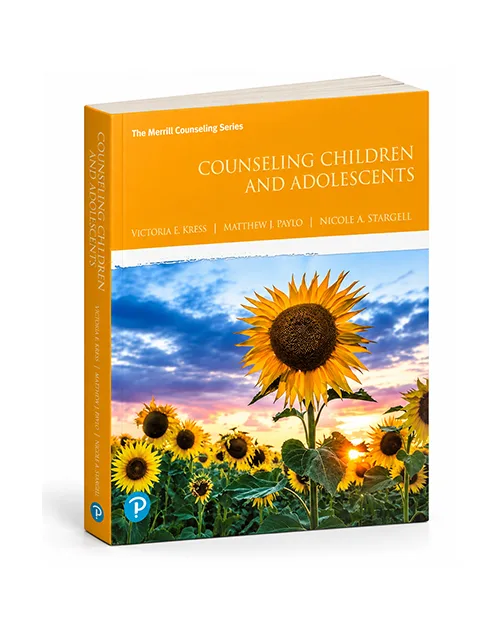


Counseling Children and Adolescents, First Edition
Counseling Children and Adolescents, 1st Edition by Victoria E. Kress, Matthew J. Paylo, and Nicole A. Stargell is a comprehensive educational textbook covering the theories, practices, and professional considerations involved in counseling children and teenagers. Published by Pearson as part of The Merrill Counseling Series, this book connects developmental psychology, family systems, counseling techniques, and evidence-informed interventions to help readers understand the needs of young clients.
Counseling children and adolescents requires an understanding of how young people develop and how their families, schools, communities, and relationships influence their emotional and behavioral well-being. This textbook presents a structured approach to youth counseling, combining developmental foundations with practical counseling methods and discussions of common challenges encountered by children and adolescents.
Understand Child and Adolescent Development
The book begins with developmentally informed youth counseling, introducing important stages and aspects of human development. It explores physical, cognitive, self, psychosocial, and emotional development and explains why these factors matter when working with younger clients.
Readers can study the developmental characteristics and counseling considerations associated with early childhood, middle childhood, early adolescence, and late adolescence. This knowledge helps counselors recognize that communication, emotional needs, behavior, and appropriate interventions can differ significantly according to a young person’s developmental stage.
Explore Family, School, and Community Influences
Children and adolescents are influenced by the environments in which they grow and interact. The textbook takes a systemic approach to youth counseling by examining family, school, and community factors that may create risks or provide protection.
Topics include family structure, boundaries, communication, family involvement, child maltreatment, violence in the home, school climate, peer relationships, bullying, school violence, neighborhood influences, and technology.
The book also emphasizes context, culture, and a strength-based philosophy. These perspectives encourage counselors to understand young clients within their broader environments rather than considering their difficulties in isolation.
Learn the Foundations of Individual Counseling
The textbook examines the counseling process and the qualities and professional behaviors associated with effective youth counselors. It discusses preliminary counseling considerations, creating a comfortable counseling experience, intake and assessment, and building a working alliance with young clients and their families.
Readers can also study communication approaches, motivation, the working stage of counseling, termination, premature termination, and referral. These subjects provide practical knowledge about the different stages of counseling and the importance of establishing an appropriate relationship with young clients.
Understand Ethical and Legal Responsibilities
Ethical and legal considerations are particularly important when counseling minors because parents, caregivers, schools, and other individuals may be involved in decisions about a young client’s care.
The book discusses professional competence, minors’ rights, legal consent, informed consent and assent, confidentiality, and the handling of confidential documents. It also explores counseling in school settings and issues involving the Health Insurance Portability and Accountability Act (HIPAA) and the Family Educational Rights and Privacy Act (FERPA).
Additional discussion addresses child maltreatment reporting, statutory requirements, evaluating reporting situations, making reports, and the considerations counselors may face after filing a report. This material introduces important responsibilities associated with professional youth counseling.
Explore Counseling Theories and Therapeutic Approaches
The book examines counseling theories commonly used when working with children and adolescents. It organizes theoretical approaches around thought and behavior change, background experiences and relationships, and family change processes.
Readers can explore cognitive and behavioral perspectives, action-oriented approaches, relationship-focused theories, and family systems counseling. The material explains the core concepts, goals, counselor roles, and processes associated with different approaches to youth counseling.
This comparative structure helps students understand how counseling theories can be considered in relation to the developmental needs, experiences, and circumstances of young clients and their families.
Learn About Play Therapy and Creative Arts in Counseling
Play and creative activities can provide valuable ways for children to communicate experiences and express feelings. The textbook includes a dedicated chapter on the use of play and creative arts in counseling.
It discusses specialized certification and registration, play therapy settings, foundational principles, techniques, and interventions. It also explores creative arts in counseling, including their foundations and practical applications.
These topics help readers understand how developmentally appropriate methods can be incorporated into counseling with younger clients. The book presents these approaches within a broader professional framework rather than treating them as replacements for appropriate assessment and counseling planning.
Develop Case Conceptualization and Treatment Planning Skills
Effective counseling involves understanding a client’s situation and selecting interventions that address relevant needs. The book explains how counselors can conceptualize young clients’ circumstances and direct the counseling process.
Its approach emphasizes relational, collaborative, and strength-based work, consideration of context and culture, and evidence-based counseling approaches and interventions. It also discusses building a treatment plan around a coherent conceptual framework and recognizing that treatment plans may need to change as a client’s circumstances develop.
Address Common Challenges Faced by Children and Adolescents
The third part of the book focuses on common presenting concerns and counseling interventions. It covers a range of issues that may bring children and adolescents to counseling and examines relevant counselor considerations, client characteristics, assessment, and intervention approaches.
Topics include youth suicide, nonsuicidal self-injury, homicide, family-related transitions, parental substance abuse, grief, loss, bereavement, academic difficulties, study skills, test anxiety, and school attendance problems.
The book also explores social and emotional challenges involving friendships, bullying, sexual orientation, intimacy, dating, and intimate partner violence. These topics help counseling students understand the variety of personal, family, academic, and social experiences that can influence young clients.
Understand Neurodevelopmental and Behavioral Concerns
The textbook examines neurodevelopmental and intellectual impairments as well as disruptive behavior problems. These subjects introduce counseling considerations associated with different developmental and behavioral needs.
Readers can develop an understanding of how these concerns may influence a young person’s experiences and the counseling approaches that may be considered. The material supports study of individualized, developmentally informed counseling rather than relying on a single approach for every client.
Explore Abuse, Trauma, and Substance-Related Concerns
Abuse and trauma are important subjects in child and adolescent counseling. The book includes a dedicated chapter examining these concerns and the considerations involved in supporting young clients who have experienced difficult or harmful circumstances.
It also covers substance abuse and related counseling concerns. These chapters contribute to a broader understanding of the challenges that may affect the emotional, social, and behavioral well-being of children and adolescents.
Study Anxiety, Depression, and Physical Health-Related Issues
The final chapters address anxiety, obsessive-compulsive and related disorders, as well as depressive and bipolar disorders. They introduce important concerns encountered in youth counseling and the relevance of assessment and intervention within professional practice.
The book also covers physical health-related counseling issues, including eating disorders, elimination disorders, and counseling considerations related to chronic illness and disability. This broad coverage helps students understand the relationship between physical health experiences and the counseling needs of young clients.
Who Should Read Counseling Children and Adolescents?
Counseling Children and Adolescents, 1st Edition is suitable for undergraduate and graduate counseling students, school counseling students, psychology students, child and adolescent counselors, and mental health professionals working with younger clients.
It can support courses in child and adolescent counseling, counseling theories, developmental psychology, school counseling, and mental health practice. The book is also useful for readers seeking a structured introduction to developmental considerations, counseling methods, ethical responsibilities, and common presenting concerns in youth counseling.
Why Choose This Counseling Textbook?
- Developmental foundation: Explores early childhood, middle childhood, and adolescent development.
- Systemic perspective: Examines family, school, community, and cultural influences.
- Counseling theories: Covers individual, behavioral, relational, and family-based approaches.
- Professional responsibilities: Discusses ethical and legal considerations, consent, confidentiality, and reporting.
- Creative counseling methods: Includes play therapy and creative arts approaches.
- Case conceptualization: Explains treatment planning and evidence-based intervention considerations.
- Broad clinical topics: Covers behavioral, emotional, academic, family, and physical health-related concerns.
About the Book
Title: Counseling Children and Adolescents
Edition: First Edition
Series: The Merrill Counseling Series
Authors: Victoria E. Kress, Matthew J. Paylo, and Nicole A. Stargell
Publisher: Pearson
Publication Year: 2018
Copyright Year: 2019
ISBN-13: 9780134745138
Format: Paperback
Pages: 608
For students and professionals seeking a detailed foundation in counseling younger clients, Counseling Children and Adolescents, First Edition provides an organized reference covering human development, counseling theories, family systems, ethical practice, play therapy, case conceptualization, and common challenges experienced by children and teenagers.
Professional note: This textbook is an educational resource. It does not replace appropriate clinical qualifications, supervision, current professional standards, or individualized assessment.
There are no reviews yet.