

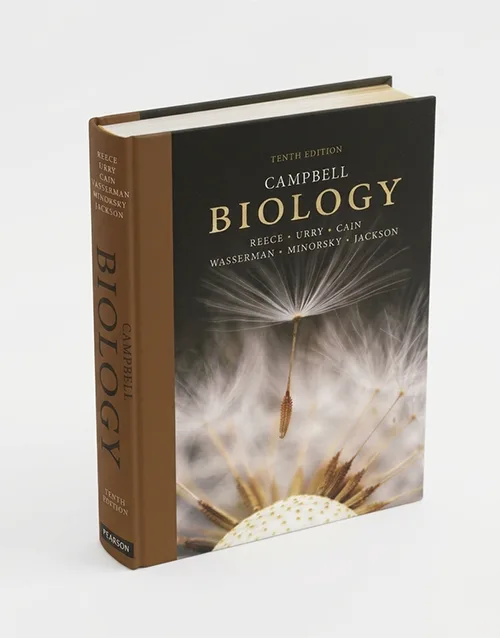


Campbell Biology, Tenth Edition
Campbell Biology, 10th Edition by Jane B. Reece, Lisa A. Urry, Michael L. Cain, Steven A. Wasserman, Peter V. Minorsky, and Robert B. Jackson is a comprehensive textbook introducing the fundamental principles of modern biology. Published by Pearson, this widely used educational resource explores the organization of life, cellular processes, genetics, evolution, biodiversity, plant biology, animal physiology, and ecology.
Biology helps explain how living organisms function, reproduce, develop, interact, and evolve. Understanding these processes requires knowledge that connects chemistry, cellular activity, genetics, environmental relationships, and the diversity of life. This textbook presents these subjects in an organized learning framework, helping students connect biological concepts across different levels of organization.
Understand the Foundations of Biology
The book begins with the chemical foundations of life and introduces the major concepts that explain biological organization. Readers explore how matter, energy, and chemical interactions contribute to living systems.
It establishes the relationship between molecular structure and biological function, helping students understand why chemical processes are essential to cellular activity, metabolism, and the maintenance of life.
These introductory concepts provide a foundation for studying cells, organisms, genetics, evolution, and ecological systems.
Explore Cell Biology and Cellular Processes
Cells are the basic structural and functional units of life. The textbook examines cell structure, membrane organization, organelles, and the processes that allow cells to carry out essential biological functions.
Readers can study membrane transport, cellular communication, energy transformations, and the relationship between cell structure and function. These concepts help explain how cells maintain internal conditions and interact with their surroundings.
The book also introduces cellular respiration and photosynthesis, explaining how living organisms obtain, transform, and use energy to support biological activities.
Study the Genetic Basis of Life
Genetics is a central area of modern biology. The textbook explains how hereditary information is stored, transmitted, expressed, and regulated within living organisms.
Readers can explore DNA structure, gene expression, chromosome organization, inheritance, and molecular mechanisms involved in genetic variation. These topics provide a foundation for understanding how biological traits are passed from one generation to another.
The book also connects genetic principles with modern scientific developments, helping students recognize the importance of molecular biology in medicine, biotechnology, agriculture, and biological research.
Understand Evolution and Natural Selection
Evolution provides a unifying framework for understanding the diversity and relationships of living organisms. The book examines natural selection, evolutionary processes, population genetics, and the evidence supporting biological evolution.
Readers can study how genetic variation and environmental pressures contribute to changes in populations over time. The material also explores the development of new species and the evolutionary relationships among organisms.
These concepts help students understand why evolutionary theory is fundamental to modern biological science.
Explore the Diversity of Life
The textbook introduces the diversity of living organisms and the classification systems used to understand their evolutionary relationships.
Readers can explore the major groups of organisms, including bacteria, archaea, protists, fungi, plants, and animals. The discussion connects organismal characteristics with evolutionary history, biological organization, and environmental adaptation.
This coverage provides a broader understanding of biodiversity and the relationships that connect different forms of life.
Study Plant Structure and Function
The plant biology section examines the structures and physiological processes that allow plants to grow, reproduce, and interact with their environments.
Readers can explore plant anatomy, tissue organization, transport systems, nutrition, reproduction, and development. The textbook connects these subjects with important physiological functions such as water transport, nutrient movement, and photosynthesis.
Understanding plant biology is important for students interested in botany, environmental science, agriculture, ecology, and broader life science research.
Explore Animal Structure and Physiology
Animal biology provides an extensive examination of the structures and functions that support animal life. The textbook explores the major organ systems and explains how their activities contribute to the maintenance of internal stability.
Readers can study animal tissues, organ systems, physiological regulation, development, reproduction, and biological responses to environmental conditions.
Special attention is given to the relationships between different physiological systems, helping students understand how organs work together rather than functioning independently.
Understand Human and Animal Physiology
Physiology examines how the body works and how its different systems coordinate essential activities. The book introduces major physiological processes involving nervous, endocrine, circulatory, respiratory, digestive, immune, and other systems.
Readers can understand how organisms regulate internal conditions, obtain nutrients, exchange gases, remove waste, respond to environmental changes, and maintain homeostasis.
This material provides valuable background for students in biology, health sciences, pre-medical education, and related academic programs.
Explore Reproduction and Development
The textbook examines reproductive biology and the biological processes involved in the development of organisms.
Readers can study reproductive strategies, developmental processes, inheritance, and the interactions between genetic information and environmental influences. These topics help explain how organisms grow and how biological characteristics are established across generations.
Learn About Ecology and Environmental Relationships
Ecology explores how organisms interact with one another and with their physical environments. The book introduces ecological principles at different levels, from individual organisms and populations to communities, ecosystems, and the biosphere.
Readers can study population dynamics, community interactions, energy transfer, nutrient cycling, biodiversity, and environmental change.
The ecological coverage helps students understand the connections between living systems and the environments that support them, making this material useful for biology, conservation, and environmental science education.
Develop Scientific Skills Through Real-World Examples
A major feature of the tenth edition is its emphasis on developing scientific skills alongside biological knowledge. The textbook incorporates Scientific Skills Exercises that use real data to encourage students to practice graphing, data interpretation, experimental design, and mathematical reasoning.
These activities help readers move beyond memorizing scientific information and develop the ability to evaluate evidence and interpret biological observations.
The edition also includes Make Connections figures that visually connect ideas from different chapters. These illustrations help students recognize relationships between biological systems and understand the broader organization of life.
Understand Modern Biological Research
The tenth edition includes contemporary examples demonstrating how advances in DNA and protein sequencing are influencing different areas of biological research.
These examples help readers understand how molecular technologies contribute to discoveries in genetics, evolution, medicine, biotechnology, and other life science disciplines.
By connecting biological principles with scientific developments, the textbook encourages students to appreciate the role of research and technology in expanding scientific knowledge.
Learn Through Detailed Illustrations and Scientific Pedagogy
Campbell Biology is known for its visual learning approach, combining scientific artwork, photographs, explanatory diagrams, and structured learning features.
The illustrations help students understand complex processes such as cellular metabolism, molecular interactions, genetic inheritance, evolutionary relationships, and ecosystem dynamics.
The textbook also uses chapter connections, examples, and review activities to reinforce learning and help readers prepare for university-level biology coursework.
Who Should Read Campbell Biology?
Campbell Biology, 10th Edition is suitable for college and university students studying introductory biology and related life science subjects. It is particularly useful for biology majors, pre-medical students, biotechnology students, and learners preparing for more advanced courses in biological sciences.
Instructors and biology educators can use the textbook to support lectures, assignments, laboratory activities, and classroom discussions. Independent learners may also find it useful as a reference for reviewing cell biology, genetics, evolution, organismal biology, and ecology.
Why Choose the Tenth Edition?
- Comprehensive biology coverage: Explores the foundations of life, cell biology, genetics, evolution, and ecology.
- Connected learning: Uses Make Connections figures to show relationships across chapters.
- Scientific skills: Includes exercises involving real data, graphing, experimental design, and mathematical reasoning.
- Genetics and molecular biology: Explains DNA, inheritance, gene expression, and modern sequencing applications.
- Plant and animal biology: Covers biological structure, physiology, development, and reproduction.
- Ecological understanding: Explores populations, ecosystems, biodiversity, and environmental relationships.
- Visual learning: Uses detailed illustrations, photographs, and scientific diagrams.
About the Book
Title: Campbell Biology
Edition: Tenth Edition
Authors: Jane B. Reece, Lisa A. Urry, Michael L. Cain, Steven A. Wasserman, Peter V. Minorsky, and Robert B. Jackson
Publisher: Pearson
Publication Year: 2014
ISBN-13: 9780321775658
Format: Hardcover
Pages: 1,279
Language: English
For students seeking a detailed introduction to modern biology, Campbell Biology, Tenth Edition provides a comprehensive foundation in cellular processes, genetics, evolution, organismal biology, and ecology, supported by scientific illustrations and practical learning activities.
There are no reviews yet.