

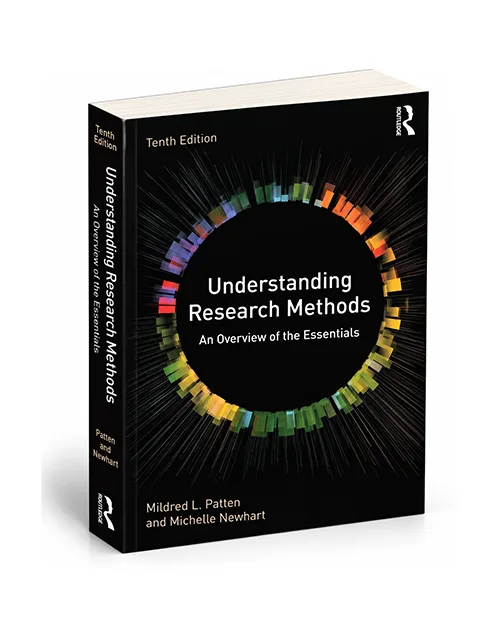


Understanding Research Methods: An Overview of the Essentials, Tenth Edition
Understanding Research Methods: An Overview of the Essentials, 10th Edition by Mildred L. Patten and Michelle Newhart is a comprehensive introductory textbook designed to help students understand the principles and practices of academic research. Published by Routledge, this book explains how research is planned, conducted, analyzed, interpreted, and communicated across different academic disciplines.
Research methods are essential for developing reliable knowledge and evaluating information critically. Students and professionals regularly encounter research findings when making academic, professional, and everyday decisions. This textbook introduces the techniques used to collect evidence, evaluate research claims, understand statistics, and develop meaningful research projects.
Understand the Foundations of Research Methods
The book begins by explaining the relationship between knowledge, scientific inquiry, and research methods. Readers explore how knowledge is developed and why systematic research is important for producing reliable findings.
It introduces empirical research, the role of theory, experimental and nonexperimental studies, causal-comparative research, and program evaluation. These foundational topics help students understand the different approaches researchers use to investigate questions and develop explanations.
The textbook also compares qualitative and quantitative research, explaining their distinctive characteristics and helping readers understand when different research approaches may be appropriate.
Explore Research Ethics and Responsible Research Practices
Ethics is an essential consideration throughout the research process. The book includes dedicated topics on the development of ethical research standards and the ethical principles that guide responsible research.
Readers can examine why researchers must consider the rights, interests, and well-being of participants when designing and conducting studies. The material also helps students understand the importance of transparency, responsible data collection, and the careful interpretation of research findings.
The tenth edition expands its coverage of research ethics and introduces additional discussions about how research decisions influence the quality and integrity of a study.
Learn How to Review and Cite Academic Literature
A literature review helps researchers understand existing knowledge and identify how a proposed study relates to previous research. The textbook explains why researchers review literature, how to locate relevant academic sources, and how to organize information into a structured review.
Readers can study methods for searching electronic databases, structuring literature reviews, connecting published research to their own studies, and preparing critical reviews.
The book also explains academic citation practices and introduces style guides used in scholarly writing. Its appendices include introductory guidance to APA and ASA styles, helping students become familiar with common academic documentation approaches.
Understand Quantitative Research Design
Quantitative research uses numerical information to investigate relationships, test hypotheses, and answer research questions. The textbook introduces the important decisions involved in designing quantitative studies.
Topics include variables in experimental and nonexperimental research, operational definitions, research hypotheses, research purposes, and research questions.
These concepts help students understand how abstract ideas are translated into measurable variables and how researchers develop a structured plan for collecting and analyzing numerical information.
Study Sampling Methods and Research Participants
Sampling is an important part of research design because researchers often collect information from a selected group rather than an entire population. The book explores different approaches to selecting participants and understanding the characteristics of a sample.
It covers biased and unbiased sampling, simple random sampling, systematic sampling, stratified random sampling, and cluster sampling. The discussion also addresses nonprobability sampling and its relationship with qualitative research.
Additional topics examine demographic characteristics, sample composition, sampling bias, sample size in quantitative research, and sample size and diversity in qualitative research.
This coverage helps readers understand why participant selection matters and how sampling decisions can influence the interpretation and generalizability of research findings.
Understand Measurement, Reliability, and Validity
Measurement is central to collecting meaningful research information. The textbook explains the principles of measurement and examines how researchers evaluate the quality of instruments and measures used in a study.
Readers can explore different forms of validity, including judgmental validity and empirical validity. The book also explains reliability and its relationship to validity, as well as different measures of reliability and internal consistency.
Other topics include norm-referenced and criterion-referenced tests, measures of optimum performance, measures of typical performance, and measurement in qualitative research.
These concepts provide a foundation for understanding how research instruments work and how measurement quality affects the credibility of study results.
Explore Qualitative Research Design
Qualitative research focuses on understanding experiences, perspectives, meanings, and social processes. The book introduces different qualitative approaches and explains how researchers collect and interpret nonnumerical information.
Topics include interviews in qualitative research, other methods for collecting qualitative data, grounded theory, consensual qualitative research design, and case study research.
The tenth edition also includes material on mixed methods designs, helping readers understand how qualitative and quantitative approaches can be combined within a research project.
This section is particularly useful for students in psychology, sociology, education, counseling, social work, and other disciplines that use qualitative research methods.
Learn How to Design Experimental Research
Experimental research is used to investigate relationships between variables and evaluate possible causal explanations. The textbook introduces true experimental designs and explains the principles involved in developing controlled research studies.
It also covers pre-experimental and quasi-experimental designs, along with threats to internal validity, threats to external validity, and confounding variables.
These topics help students understand how research design influences the strength of conclusions and why researchers must carefully consider alternative explanations when interpreting experimental results.
Develop an Understanding of Statistics
The book provides an accessible introduction to statistical concepts used in research. Its approach emphasizes conceptual understanding and the interpretation of statistical reports rather than requiring extensive mathematical calculations.
Readers can study descriptive and inferential statistics, scales of measurement, nominal data, distributions, measures of central tendency, and measures of variability.
The statistical topics also include probability, hypothesis testing, Pearson correlation, the t-test, one-way and two-way analysis of variance, chi-square tests, regression basics, and the practical significance of research results.
This organization helps students understand the purpose of common statistical procedures and how the results of research analyses should be interpreted.
Explore Effect Size and Meta-Analysis
Understanding research findings requires more than identifying whether a statistical result is significant. The textbook introduces effect size and explains how it helps researchers evaluate the practical magnitude of a finding.
Readers can examine the interpretation of effect size, its relationship with correlation, and the principles of meta-analysis.
The book also discusses the strengths and weaknesses of meta-analysis, helping students understand how findings from multiple studies can be reviewed and combined to develop a broader picture of research evidence.
Learn How to Prepare Research Reports
Communicating research findings clearly is an essential part of academic research. The textbook explains how research reports are organized and how different sections communicate the purpose, methods, participants, results, and conclusions of a study.
Readers can study the structure of a research report, abstract writing, introductions, literature reviews, participant descriptions, measurement descriptions, research results, and discussion sections.
The final topics also introduce preparation of theses and dissertations, providing useful guidance for students developing more extensive academic research projects.
Learn Through Short Topics, Case Studies, and Exercises
A distinctive feature of Understanding Research Methods is its organization into short, independent topic sections instead of lengthy traditional chapters. This approach allows instructors and students to focus on individual research concepts and arrange material according to their course requirements.
The textbook uses contemporary examples, case studies, figures, and graphs to make research concepts easier to understand. Each topic includes exercises that encourage students to check their understanding, discuss ideas, interpret information, and plan research activities.
The book presents statistical material at a conceptual level, making it suitable for students who may not have an extensive mathematical background. Its goal is to help readers understand statistical information and research findings without requiring them to perform complicated calculations.
Updated Content in the Tenth Edition
The tenth edition includes new and revised material designed to improve the learning experience. New topics address knowledge and research methods, ethical principles, literature connections, citation practices, quantitative research design, modern sampling, qualitative measurement, case study design, and mixed methods research.
Additional material on probability, regression, and research planning expands the book’s coverage of research analysis and application.
The edition also includes updated contemporary examples, revised figures and graphs, and updated appendices covering electronic research databases, statistical information sources, and citation guidance.
Who Should Read Understanding Research Methods?
Understanding Research Methods: An Overview of the Essentials, 10th Edition is suitable for undergraduate and graduate students studying sociology, psychology, education, criminal justice, social work, counseling, communications, business, and related disciplines.
It can support university research methods courses, academic writing, independent research projects, dissertations, and introductory research training. Researchers and professionals may also use it as a reference when reviewing qualitative and quantitative research approaches or interpreting published statistical findings.
Why Choose the Tenth Edition?
- Comprehensive research coverage: Introduces the major concepts involved in academic and social science research.
- Qualitative and quantitative methods: Explains different research designs and approaches to collecting evidence.
- Ethical research: Covers responsible research principles and ethical considerations.
- Sampling and measurement: Explains sampling techniques, reliability, validity, and measurement principles.
- Statistical understanding: Introduces statistics conceptually without requiring extensive calculations.
- Practical learning: Includes contemporary examples, case studies, discussion questions, and research-planning exercises.
- Academic writing: Covers literature reviews, citation, research reports, theses, and dissertations.
About the Book
Title: Understanding Research Methods: An Overview of the Essentials
Edition: Tenth Edition
Authors: Mildred L. Patten and Michelle Newhart
Publisher: Routledge
Publication Year: 2018
Paperback ISBN-13: 9780415790529
Pages: 338 numbered pages
Language: English
For students and beginning researchers seeking a clear introduction to research methodology, Understanding Research Methods, Tenth Edition provides a structured foundation in research design, literature reviews, sampling, measurement, statistics, qualitative methods, and academic report writing.
There are no reviews yet.