

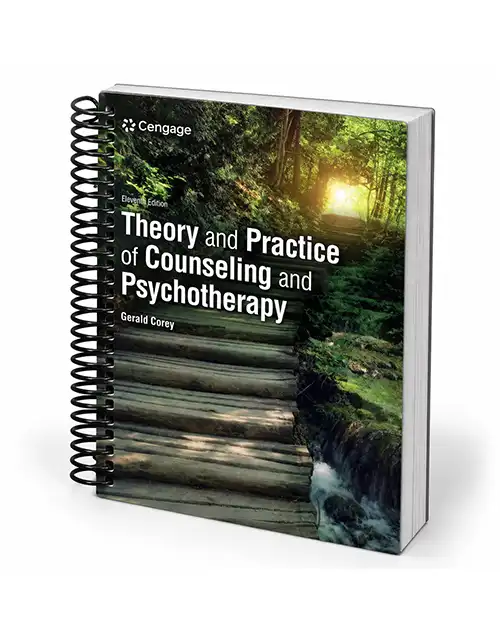


Theory and Practice of Counseling and Psychotherapy, 11th Edition
Theory and Practice of Counseling and Psychotherapy, 11th Edition by Gerald Corey is a comprehensive textbook that introduces major counseling theories and demonstrates how they can be applied in professional practice. Published by Cengage, this widely used educational resource helps readers understand different approaches to counseling, compare their underlying principles, and explore how therapists develop an effective personal approach to working with clients.
Counseling and psychotherapy draw on multiple theoretical perspectives to help individuals understand their experiences, emotions, thoughts, relationships, and behavior. This textbook presents these approaches in an accessible framework, connecting theoretical concepts with practical applications and case illustrations. It is suitable for students studying counseling, psychology, human services, and related mental health disciplines.
Explore Major Counseling Theories
The eleventh edition introduces a broad range of counseling approaches, including psychoanalytic, Adlerian, existential, person-centered, Gestalt, reality, behavioral, cognitive-behavioral, family systems, feminist, postmodern, and integrative perspectives.
Each theoretical approach offers a different way to understand human development, psychological difficulties, personal change, and the therapeutic relationship. Studying these differences helps readers recognize how assumptions about human behavior influence the goals and methods of counseling.
By comparing the major theories, students can build a stronger foundation in counseling practice and develop a more informed understanding of how therapeutic approaches may be selected and adapted to individual client needs.
Connect Theory with Practical Counseling Skills
Understanding a counseling theory is only one part of professional development. Counselors also need to consider how theoretical principles influence communication, the therapeutic relationship, session structure, and the methods used to support clients.
The book connects theory with application, helping readers consider how therapists understand a client’s concerns and approach the counseling process. These discussions can support classroom learning, case analysis, reflective exercises, and preparation for supervised counseling practice.
The text also encourages readers to consider how their own beliefs, values, experiences, and professional goals influence their developing counseling style. This reflective approach is relevant to students preparing to work in counseling and other helping professions.
Learn Through Case Illustrations
A distinctive feature of the book is its use of the cases of “Stan” and “Gwen” to demonstrate how different counseling theories can be applied to individual situations. These illustrations provide a way to compare therapeutic approaches using consistent examples.
By examining the same cases through different theoretical perspectives, readers can explore how counselors may interpret concerns, establish treatment goals, and select interventions differently. This format helps bridge the gap between understanding theoretical concepts and considering their practical implications.
Understand Cognitive-Behavioral and Behavioral Approaches
Behavioral and cognitive-behavioral approaches are important components of contemporary counseling education. The textbook explores how thoughts, emotions, learned behaviors, and environmental influences can be understood within these theoretical frameworks.
Readers can examine how different approaches conceptualize behavioral patterns and psychological difficulties, while learning about the principles that inform therapeutic strategies. Comparing these methods with other theories helps students develop a broader perspective on counseling practice.
Explore Humanistic and Existential Perspectives
Humanistic and existential approaches emphasize different aspects of personal experience, meaning, responsibility, relationships, and individual growth. The textbook introduces these perspectives alongside other major theories, helping readers understand their distinct assumptions and applications.
Studying several approaches encourages critical thinking about the therapeutic relationship and the ways counselors understand clients’ experiences. It also allows students to compare the strengths, goals, and practical considerations associated with different theoretical models.
Study Family Systems and Integrative Approaches
Family systems perspectives consider individuals within the context of relationships and broader systems. Other integrative approaches draw on concepts from more than one theoretical orientation to develop a framework suited to a particular counseling situation.
The textbook introduces readers to these approaches and helps them examine how counselors may connect different ideas when developing an individualized professional style. Understanding such differences is valuable for students learning to evaluate theories rather than treating any single approach as suitable for every situation.
Develop a Personal Counseling Approach
Professional counseling requires ongoing reflection, knowledge of theoretical perspectives, and an understanding of the responsibilities involved in working with clients. The book encourages readers to examine the relationship between their theoretical orientation and their developing professional identity.
As students compare different approaches and their applications, they can begin to identify the concepts that inform their own evolving understanding of counseling. Actual clinical practice requires appropriate education, supervision, ethical decision-making, and compliance with applicable professional requirements.
Who Should Read This Counseling Textbook?
Theory and Practice of Counseling and Psychotherapy, 11th Edition is suitable for undergraduate and graduate students in counseling, psychology, human services, and related disciplines. It may also benefit counselor educators, instructors, and professionals who want an organized reference to major counseling theories.
The textbook can support coursework in counseling theories, psychotherapy, counseling skills, and the foundations of mental health practice. Its combination of theoretical explanations and applied case illustrations helps readers connect academic study with the practical questions that arise in counseling education.
Why Choose the 11th Edition?
- Broad theory coverage: Introduces major counseling and psychotherapy approaches.
- Practical applications: Connects theoretical concepts with counseling situations.
- Case-based learning: Uses the cases of Stan and Gwen to compare theoretical approaches.
- Professional reflection: Encourages readers to consider their developing counseling style.
- Academic relevance: Supports counseling theory, psychology, and human services courses.
- Supplementary learning resources: Cengage describes additional media resources through MindTap; access depends on the purchased format and product access.
About the Book
Title: Theory and Practice of Counseling and Psychotherapy
Edition: Eleventh Edition
Author: Gerald Corey
Publisher: Cengage
Publication Date: January 2023
Copyright: 2024
Print ISBN-13: 9780357764428
Format: Paperback according to the publisher’s catalog
For students and professionals seeking an introduction to major counseling theories and their applications, Theory and Practice of Counseling and Psychotherapy, 11th Edition provides a structured foundation for comparing approaches and understanding their relevance to counseling practice.
There are no reviews yet.