

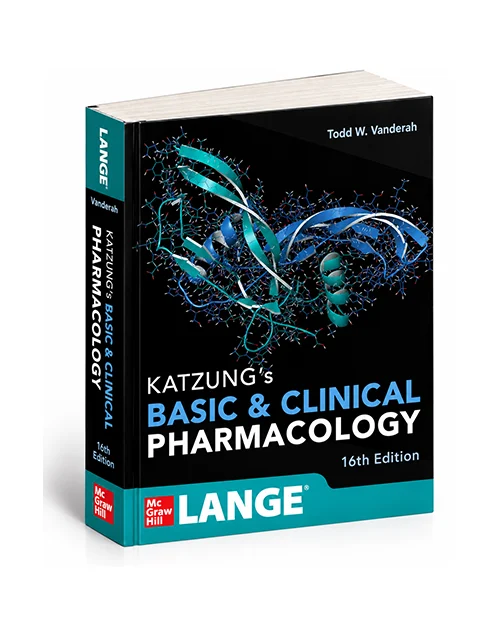


Katzung’s Basic & Clinical Pharmacology, Sixteenth Edition
Katzung’s Basic & Clinical Pharmacology, 16th Edition, edited by Todd W. Vanderah, is a comprehensive medical textbook covering the scientific principles of pharmacology and the clinical application of medications. Published by McGraw Hill under the LANGE imprint, this established reference connects drug mechanisms and physiological processes with the practical considerations involved in selecting, using, and monitoring medicines.
Pharmacology is an essential subject in medical and healthcare education. Understanding how medications work requires knowledge of drug receptors, pharmacokinetics, pharmacodynamics, metabolism, therapeutic effects, and adverse reactions. This textbook brings these subjects together through organized explanations, clinical case studies, drug tables, illustrations, and chapter summaries.
Understand the Basic Principles of Pharmacology
The book begins with the foundations of pharmacology, introducing the nature of drugs, drug development, and drug regulation. Readers can develop an understanding of how medicines are discovered, evaluated, approved, and used in clinical practice.
It also explores drug receptors and pharmacodynamics, explaining how medications interact with biological targets to produce therapeutic and other effects. These concepts provide a foundation for understanding drug action and the differences between medication classes.
Study Pharmacokinetics and Pharmacodynamics
Pharmacokinetics examines what the body does to a drug, including its absorption, distribution, metabolism, and elimination. Pharmacodynamics focuses on the biological effects produced by a medication and its interaction with target systems.
The textbook explains how these principles relate to rational dosing and the time course of drug action. Readers can study the factors that influence drug concentrations, therapeutic responses, and the duration of medication effects.
These concepts are important for understanding why dosing schedules differ among medications and why patient-specific factors must be considered during treatment.
Understand Drug Biotransformation and Pharmacogenomics
Drug biotransformation describes the processes through which the body chemically modifies medications. The book examines drug metabolism and explains its importance in determining drug activity, duration, and elimination.
It also covers pharmacogenomics, which examines how genetic variation can influence medication response and metabolism. These topics introduce readers to the relationship between genetics and personalized approaches to pharmacological treatment.
Explore Autonomic Pharmacology
The textbook provides extensive coverage of drugs that influence the autonomic nervous system. Readers can study the pharmacology of cholinergic and adrenergic systems and understand how different medication groups affect their receptors and physiological functions.
This material is important for understanding medications used in cardiovascular care, respiratory treatment, neurological practice, and other clinical areas where autonomic drug activity plays a role.
Study Cardiovascular Pharmacology
Cardiovascular pharmacology covers medications that affect heart function, blood pressure, vascular activity, and circulation. The book explores the pharmacological principles associated with drugs used in cardiovascular disorders.
Readers can review the mechanisms and clinical applications of different drug groups and understand how medication selection is related to therapeutic objectives, potential adverse effects, and patient monitoring.
Understand Drugs Affecting the Central Nervous System
The textbook examines pharmacological agents that influence the central nervous system. These medications can affect neurological activity, mood, behavior, cognition, and other important functions.
Students can develop an understanding of the mechanisms and clinical uses associated with different groups of central nervous system drugs. These concepts are relevant to several areas of medical practice, including neurology, psychiatry, anesthesia, and pain management.
Explore Autacoids, Inflammatory Mediators, and Related Drugs
The book covers pharmacological agents associated with autacoids and other endogenous mediators involved in physiological and pathological processes.
These subjects help explain how chemical signaling contributes to inflammation, allergic responses, pain, and other biological activities. Understanding these mechanisms provides a foundation for studying medications that influence such processes.
Learn About Drugs Affecting the Respiratory and Gastrointestinal Systems
The textbook explores medications used to treat conditions involving the respiratory and gastrointestinal systems. These sections introduce the drug groups, therapeutic applications, and pharmacological principles associated with different organ systems.
Readers can understand how medication effects relate to physiological processes and how clinical considerations influence the selection and use of drug therapies.
Study Endocrine Pharmacology
Endocrine pharmacology focuses on medications that influence hormones, endocrine glands, and metabolic regulation. The book examines pharmacological treatments associated with endocrine conditions and explains the principles behind their therapeutic use.
It also connects medication mechanisms with clinical applications, helping readers understand how pharmacological treatment can modify hormonal and metabolic processes.
Understand Antimicrobial and Antiparasitic Agents
Antimicrobial pharmacology is a major area of clinical medicine. The textbook covers medications used against bacteria and other infectious organisms, explaining their mechanisms of action and therapeutic applications.
Readers can explore important drug groups and prototypes while developing an understanding of the factors involved in antimicrobial selection and clinical use. The book also includes coverage of antiparasitic agents and other medications used in the treatment of infectious diseases.
Explore Antineoplastic and Immunopharmacological Drugs
The book examines medications used in cancer treatment and drugs that influence immune system activity. These subjects introduce the pharmacological principles involved in treating complex conditions that require specialized therapeutic approaches.
Readers can study the relevant drug groups, mechanisms, and clinical considerations associated with antineoplastic and immunopharmacological agents.
Understand Toxicology and Adverse Drug Effects
Medication safety is an important component of clinical pharmacology. The textbook addresses the effects of drugs beyond their intended therapeutic actions and the importance of recognizing and monitoring adverse reactions.
Its clinical approach helps students understand why medication use must consider therapeutic benefits, potential risks, interactions, and patient-specific factors.
Explore the New Cannabinoids Chapter
A notable addition to the sixteenth edition is a new chapter on cannabinoids. This updated coverage introduces the pharmacological considerations associated with cannabinoid compounds and their relationship to clinical medicine.
The addition expands the book’s discussion of modern pharmacological topics and reflects the publisher’s effort to update the textbook in line with developments in the field.
Learn Through Clinical Case Studies and Drug Prototypes
A defining feature of Katzung’s Basic & Clinical Pharmacology is its consistent chapter structure. Each chapter opens with a clinical case study, introduces relevant drug groups and prototypes, and concludes with summary tables and diagrams.
This organization connects basic pharmacological principles with patient-related clinical problems. It helps students understand how drugs are classified, how they work, and how their therapeutic effects relate to clinical decision-making.
Prepare for Medical Examinations with USMLE-Style Questions
The sixteenth edition includes 50 USMLE-style questions designed to support review and reinforce important pharmacological concepts.
These questions provide an opportunity to test understanding of drug mechanisms, therapeutic applications, and clinical principles. They can be used alongside chapter study and other examination preparation resources.
Study with Full-Color Illustrations and Drug Tables
The textbook includes 330 full-color illustrations and 100 drug tables. These visual resources help organize complex pharmacological information and make it easier to review drug classes, mechanisms, and clinical applications.
Chapter-ending summary tables and diagrams provide concise overviews of important concepts and support revision. The visual presentation also helps readers compare medications and identify key differences among drug groups and prototypes.
Who Should Read Katzung’s Basic & Clinical Pharmacology?
Katzung’s Basic & Clinical Pharmacology, 16th Edition is suitable for medical students, pharmacy students, pharmacology students, biomedical science learners, and healthcare professionals seeking a comprehensive reference on drug action and clinical therapeutics.
It is particularly useful for medical pharmacology courses, pharmacy education, clinical science training, and examination preparation. Its case-based approach and organized medication coverage also make it a valuable reference for learners reviewing the scientific principles behind drug therapy.
Why Choose the Sixteenth Edition?
- Comprehensive pharmacology coverage: Connects basic drug principles with clinical applications.
- Clinical relevance: Addresses medication selection, drug use, and monitoring of therapeutic effects.
- Updated drug information: Includes new drug tables and descriptions of important newer medications.
- New cannabinoids chapter: Expands coverage of an important contemporary pharmacology topic.
- Clinical case studies: Begins each chapter with a case to connect pharmacology with patient care.
- Visual learning: Includes 330 full-color illustrations and 100 drug tables.
- Examination support: Provides 50 USMLE-style questions and chapter-ending summaries.
About the Book
Title: Katzung’s Basic & Clinical Pharmacology
Edition: Sixteenth Edition
Editor: Todd W. Vanderah
Publisher: McGraw Hill
Imprint: LANGE
Copyright Year: 2024
Publication Date: November 21, 2023
Print ISBN-13: 9781260463309
Format: Paperback / Softcover print edition
Language: English
For students and healthcare professionals seeking a detailed introduction to pharmacology, Katzung’s Basic & Clinical Pharmacology, 16th Edition provides a structured reference covering drug mechanisms, pharmacokinetics, pharmacodynamics, therapeutic applications, medication safety, and clinical decision-making.
Clinical note: This textbook is an educational resource. Medication decisions should be based on current prescribing information, applicable clinical guidelines, and patient-specific professional judgment.
There are no reviews yet.