

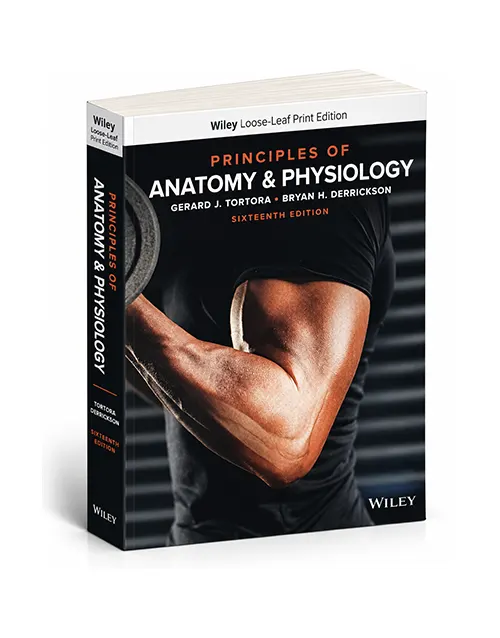


Principles of Anatomy and Physiology, 16th Edition – Paperback Edition
Principles of Anatomy & Physiology, 16th Edition by Gerard J. Tortora and Bryan H. Derrickson is a comprehensive educational textbook that explains the structure and function of the human body. Published by Wiley, this widely used anatomy and physiology reference combines detailed scientific explanations, medical photographs, anatomical illustrations, and clinical connections to help students understand how the human body works.
Anatomy and physiology are closely connected disciplines. Anatomy examines the structures of the body, while physiology explains how those structures function. This textbook brings both subjects together through a homeostatic approach, helping readers understand how body systems work individually and interact to maintain internal balance.
Understand the Organization of the Human Body
The textbook begins with an introduction to the human body, its structural organization, anatomical terminology, and the principles used to study body systems. Readers learn about the levels of organization, from chemical and cellular structures to tissues, organs, and complete organ systems.
These foundations help students understand how the different parts of the body are connected. The book also introduces homeostasis and feedback mechanisms, providing a framework for understanding how physiological processes regulate and maintain stable internal conditions.
Explore the Chemical and Cellular Levels of Organization
The chemical level of organization introduces the substances and molecular interactions that support life. Readers can study atoms, molecules, chemical bonds, and the biological compounds involved in cellular structure and activity.
The cellular chapters explain cell structures, membrane functions, organelles, cellular transport, and the processes that allow cells to carry out essential activities. These concepts provide a foundation for understanding how specialized cells contribute to tissues and organ systems.
Study Tissues and the Integumentary System
Tissues are groups of specialized cells that work together to perform particular functions. The book explains the major tissue types, including epithelial, connective, muscular, and nervous tissues, and describes how their structures relate to their functions.
It also explores the integumentary system, including the skin and its associated structures. Readers can develop an understanding of the skin’s protective role, temperature regulation, sensation, and relationship with other body systems.
Understand the Skeletal System and Joints
The skeletal system provides structural support, protection, movement, and important physiological functions. The textbook covers bone tissue, the axial skeleton, and the appendicular skeleton, explaining the organization and functions of the major skeletal structures.
Readers can study bone development, structure, classification, and the relationships between bones and other tissues. The chapters on joints explain how bones connect and how joint structure influences stability and movement.
Explore Muscular Tissue and the Muscular System
The muscular system is essential for movement, posture, and the production of heat. The book examines muscular tissue and explains the structure and function of skeletal, smooth, and cardiac muscle.
Readers can explore muscle contraction, muscle organization, and the major muscle groups of the body. These principles help students understand how the muscular and skeletal systems coordinate to produce movement and support everyday activities.
Learn About Nervous Tissue and the Nervous System
The nervous system coordinates body activities through electrical and chemical communication. The textbook introduces nervous tissue, neurons, neuroglia, nerve impulses, synapses, and the organization of the central and peripheral nervous systems.
Dedicated chapters examine the spinal cord and spinal nerves, the brain and cranial nerves, and the autonomic nervous system. These topics help readers understand how the body processes information and coordinates responses to internal and external stimuli.
Understand Sensory, Motor, and Integrative Systems
Sensory systems detect information from the environment and the internal body, while motor systems coordinate responses. The book explores sensory receptors, neural pathways, motor control, and integration of information within the nervous system.
It also covers the special senses, including vision, hearing, equilibrium, taste, and smell. These chapters explain how sensory structures detect stimuli and communicate information for interpretation and response.
Study the Endocrine System and Hormonal Regulation
The endocrine system helps regulate growth, metabolism, reproduction, and other important physiological functions through hormones. The textbook examines endocrine glands, hormone secretion, target tissues, and the mechanisms that regulate endocrine activity.
Readers can understand how hormonal signals interact with other body systems and contribute to homeostasis. These concepts are particularly useful for students in nursing, healthcare, biology, and allied health programs.
Explore the Cardiovascular System and Blood
The cardiovascular system transports oxygen, nutrients, hormones, and waste products throughout the body. The book examines blood composition and function, along with the major structures and processes involved in circulation.
Students can study the structure of the heart, the flow of blood through the chambers and vessels, cardiac activity, and the regulation of circulation. These principles help explain how the cardiovascular system supports tissues and maintains the body’s physiological requirements.
Understand the Respiratory and Digestive Systems
The respiratory system supports gas exchange by bringing oxygen into the body and removing carbon dioxide. The textbook explains respiratory anatomy, pulmonary ventilation, gas exchange, and the physiological mechanisms that regulate breathing.
The digestive system chapter coverage introduces the organs responsible for processing food, absorbing nutrients, and eliminating waste. Readers can explore the functions of the gastrointestinal tract and the associated organs involved in digestion and nutrient processing.
Study Other Major Body Systems
Beyond these subjects, the textbook continues into urinary and reproductive physiology, explaining how additional organ systems contribute to maintaining the body’s internal environment and supporting human life.
Through its integrated approach, the book emphasizes the relationships among different systems and how changes in one area may influence other physiological processes. This helps readers develop a broader understanding of the human body rather than studying anatomical structures in isolation.
Learn Through Medical Illustrations and Clinical Connections
A major strength of Principles of Anatomy & Physiology is its extensive visual learning approach. The textbook combines detailed anatomical illustrations with medical photographs to help readers identify structures and understand complex physiological processes.
The sixteenth edition updates anatomical, histological, and cytological terminology, replacing many older eponyms with more current terminology. It also includes clinical connections that demonstrate how anatomy and physiology relate to everyday life, healthcare, and professional clinical situations.
The homeostatic feedback-cycle illustrations help students understand how physiological systems respond to changes and regulate internal conditions. These visual resources are especially useful when studying interconnected processes such as blood glucose regulation, temperature control, and cardiovascular function.
Who Should Read Principles of Anatomy & Physiology?
Principles of Anatomy & Physiology, 16th Edition is suitable for university and college students enrolled in two-semester anatomy and physiology courses. It is particularly relevant to nursing students, allied health students, pre-health learners, biology students, and individuals preparing for healthcare careers.
Instructors can use this textbook to support lectures, assignments, laboratory learning, and course assessments. Independent learners can also use it as a reference for reviewing anatomical terminology, body systems, and the physiological processes that maintain human health.
Important Loose-Leaf Edition Information
This product is the Wiley Loose-Leaf Print Edition. Unlike a traditionally bound hardcover or paperback, a loose-leaf textbook consists of unbound printed pages intended for use in a suitable binder.
The loose-leaf format allows pages to be organized and accessed individually, which can be useful for studying specific chapters and arranging course materials. Please note that a binder or separate digital access package should not be assumed to be included unless explicitly supplied with the product.
Why Choose the 16th Edition?
- Comprehensive coverage: Explores the major anatomical structures and physiological processes of the human body.
- Homeostatic approach: Connects body systems through feedback mechanisms and internal regulation.
- Updated terminology: Incorporates contemporary anatomical, histological, and cytological terminology.
- Detailed visuals: Uses medical photography and illustrated anatomical diagrams.
- Clinical connections: Relates scientific concepts to healthcare and everyday situations.
- Two-semester course support: Designed for comprehensive college-level anatomy and physiology education.
About the Book
Title: Principles of Anatomy & Physiology
Edition: Sixteenth Edition
Authors: Gerard J. Tortora and Bryan H. Derrickson
Publisher: John Wiley & Sons
Publication Date: October 13, 2020
ISBN-13: 9781119662792
Format: Paperback
Pages: 1,296
For students seeking a detailed introduction to human anatomy and physiology, Principles of Anatomy & Physiology, 16th Edition provides a visual and comprehensive foundation in body structure, physiological function, and the homeostatic processes that sustain life.
There are no reviews yet.