

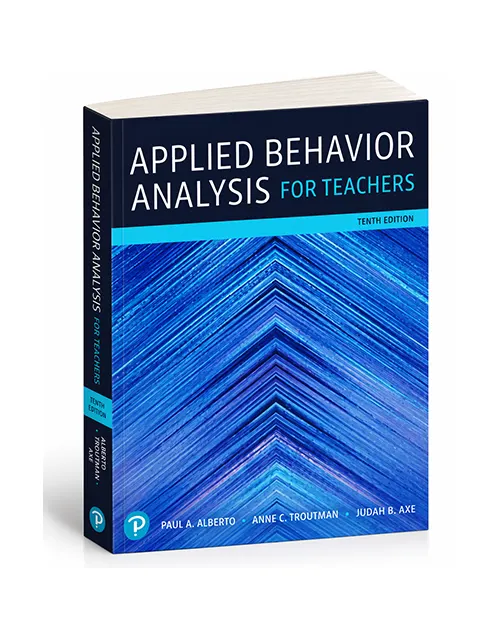


Applied Behavior Analysis for Teachers, 10th Edition
Applied Behavior Analysis for Teachers, 10th Edition by Paul A. Alberto, Anne C. Troutman, and Judah B. Axe is a practical educational textbook that explains how the principles of behavior analysis can be used to support student learning and improve classroom behavior. Published by Pearson, this book combines behavioral theory, research-based practices, classroom examples, and systematic strategies to help educators understand, assess, and respond to student behavior.
Teachers regularly work with students who have different learning needs, abilities, communication styles, and behavioral challenges. Understanding why behavior occurs and how environmental conditions influence it can help educators develop effective teaching strategies. This textbook provides a structured introduction to applied behavior analysis (ABA) and its use in educational settings.
Understand the Foundations of Applied Behavior Analysis
The book introduces the roots and fundamental principles of applied behavior analysis. Readers learn how behavior can be observed, described, measured, and understood in relation to environmental conditions.
These foundations help educators move beyond assumptions about why a student behaves in a particular way. Instead, they learn to examine observable behavior, identify relevant circumstances, and use systematic procedures to understand patterns that may affect learning and classroom participation.
Learn the Responsible and Ethical Use of Behavior Analysis
Ethical practice is an important part of applying behavior analysis in education. The tenth edition includes updated ethical considerations and terminology, reflecting changes in professional standards and contemporary approaches to supporting students.
The book emphasizes the importance of using appropriate, respectful, and research-informed procedures. It also discusses how educators can select behavior-support strategies that consider student needs, individual differences, and the learning environment.
These topics are particularly relevant to teachers and special education professionals who work with students displaying challenging behaviors. They provide a foundation for considering student dignity, professional responsibilities, and appropriate educational interventions.
Develop Clear and Measurable Behavioral Objectives
Effective behavior support begins with clearly defined objectives. The textbook explains how to prepare behavioral objectives that describe the expected behavior in observable and measurable terms.
Clear objectives help teachers identify what they want students to learn or change and provide a basis for evaluating progress. They also help connect instructional goals with the procedures used to collect information and assess whether a particular strategy is working.
Collect and Analyze Behavioral Data
Data collection is an essential part of applied behavior analysis. The book explains procedures for observing and recording behavior, helping educators develop a more objective understanding of student performance.
Readers learn about recording methods, data organization, and the importance of collecting useful information before making decisions about behavior-change procedures. The material also introduces graphing techniques that help educators visualize changes in behavior over time.
Using systematic data can help teachers evaluate whether an intervention is producing the desired results and identify situations where a strategy may need to be reviewed or adjusted.
Explore Single-Subject Research Designs
The textbook introduces single-subject designs and their role in evaluating behavior-change procedures. These designs allow educators and behavior analysts to examine patterns of behavior and assess how changes in environmental conditions relate to observed outcomes.
Understanding these methods helps readers recognize the importance of measurement, comparison, and consistent observation when evaluating interventions. This knowledge also provides a foundation for interpreting behavior-analysis research and applying evidence-informed approaches in educational settings.
Understand Functional Assessment and Behavior Analysis
One of the important topics covered in the book is determining the function of behavior. Functional assessment helps educators examine the circumstances associated with a behavior and identify factors that may influence why it occurs.
The textbook introduces the relationship between antecedents, behavior, and consequences. By examining these elements, readers can develop a more systematic understanding of behavioral patterns and consider possible reasons a behavior may continue.
This approach can help teachers select support strategies based on observed information rather than relying only on assumptions or general responses to challenging behavior.
Apply Strategies That Increase Positive Behavior
The book explores procedures for arranging consequences that increase behavior, including reinforcement-based approaches. These strategies can support the development of academic, communication, social, and classroom participation skills.
Readers can examine how positive consequences relate to learning and how teachers may structure classroom environments to encourage appropriate behaviors. The examples provide a connection between behavioral concepts and practical classroom situations.
Understand Procedures for Reducing Challenging Behavior
Educators may encounter behaviors that interfere with learning, classroom participation, or the safety and well-being of students. The text examines procedures for arranging consequences that decrease behavior and discusses the principles behind behavior-change strategies.
The tenth edition places importance on responsible and ethical application. It also presents positive behavior support approaches that help educators address challenging behaviors without relying on traditional aversive or punitive methods.
Explore Differential Reinforcement, Antecedent Control, and Shaping
Differential reinforcement, antecedent control, and shaping are important concepts in behavior analysis. The book explains how these procedures can be used to support the development of desired behaviors and improve learning outcomes.
Readers can explore how environmental arrangements influence behavior and how reinforcing successive steps toward a goal can support skill development. These principles may be applied to classroom routines, learning activities, communication, and other educational objectives.
Promote Generalization and Independent Student Behavior
Behavior change is most useful when students can apply learned skills across different situations and environments. The book discusses providing for generalization of behavior change and teaching students to manage their own behavior.
These topics help educators consider how skills can extend beyond a single lesson or classroom activity. Supporting greater student independence also involves helping learners recognize expectations, monitor their behavior, and develop strategies for managing their own actions.
Use Classroom-Based Examples and Modern Educational Technology
The tenth edition includes classroom-based examples and updated vignettes that illustrate how behavior-analysis principles can be applied in realistic educational situations. These examples cover students with different abilities and demonstrate how teachers can respond to challenging behaviors.
The book also includes updated recommendations for using modern classroom technologies, along with data-recording sheets, figures, charts, and tables. These resources help readers understand how behavioral information can be collected and organized in educational settings.
Who Should Read Applied Behavior Analysis for Teachers?
Applied Behavior Analysis for Teachers, 10th Edition is suitable for classroom teachers, special education teachers, education
There are no reviews yet.